
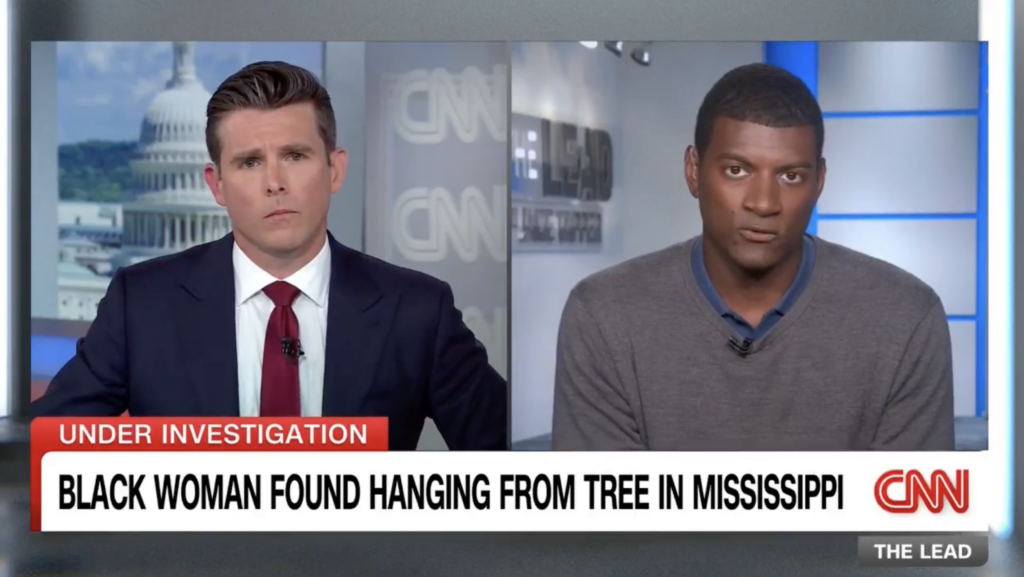
The death of 29-year-old Tasia Fortune, found hanging from a tree behind an abandoned house in Mississippi earlier this month, has sparked a media firestorm — but not for the reasons one might expect. CNN has come under fire for what critics describe as an attempt to insinuate the tragedy was racially motivated, despite a lack of evidence and the omission of potentially relevant details.
In a segment aired Wednesday, CNN’s Omar Jimenez reported on Fortune’s death, with the network’s social media account framing it as: “Police investigating after a Black woman was found hanging from a tree in Mississippi.” The phrasing, critics argue, deliberately evokes the imagery of a lynching in the American South.
Jimenez acknowledged that little is known about the circumstances and that police have not classified the death as suspicious or identified a suspect. But he also made a point of connecting Fortune’s death to a broader racial history.
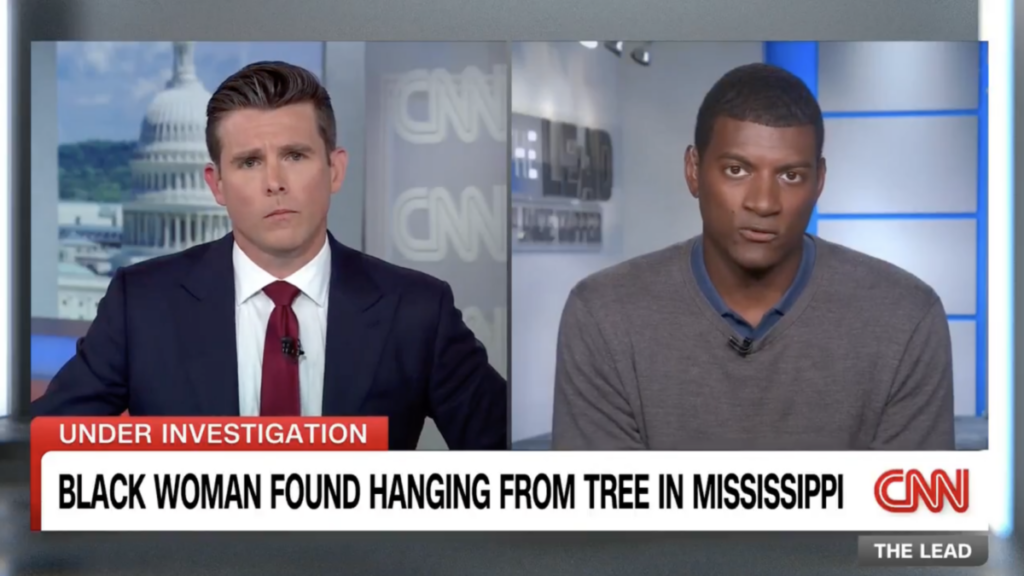
“The raw imagery of a black person hanging from the tree in the American South evokes a very painful history,” Jimenez said.
He further grouped Fortune’s death with two other lynchings in the area — though he noted those two individuals reportedly died by suicide, and one was white. Critics say lumping three unrelated deaths together, then invoking the region’s painful past, is a transparent attempt to manufacture a pattern of racism where none has been established.
Missing context
What CNN left out, according to local reporting, may be more significant than what it included. Four days before CNN aired its report, Jackson-based station WLBT reported that Terence Anderson — described as a “person of interest” in Fortune’s death — had been arrested on an unrelated charge.

Anderson, who is also Black, was interviewed in connection with Fortune’s death. He denied involvement but reportedly acknowledged that the two had been arguing. Police told WLBT that Fortune and Anderson were in a relationship, though Anderson disputed that characterization. Notably, Anderson reportedly lives near the scene where Fortune’s body was found.
To be clear, Anderson has not been charged with Fortune’s death, and his arrest was for an unrelated matter. But the existence of a person of interest — especially one with a reported connection to the victim — is exactly the kind of context viewers would need to make sense of the case.
CNN’s report omitted this information entirely. Instead, the network chose to focus on the “painful history” of lynching, a decision that critics say prioritizes a political narrative over factual reporting.

A familiar pattern?
This is not the first time legacy media has been accused of racializing a tragedy before the facts are known. In recent years, multiple high-profile cases — from the Covington Catholic confrontation to the Jussie Smollett hoax — have shown how quickly outlets can jump to conclusions that later unravel.
In Fortune’s case, the investigation is ongoing. Police have not said whether the death is considered suspicious, nor have they identified a suspect. They also have not suggested race played a role. Yet CNN’s coverage implicitly raises that possibility, using language that carries centuries of weight.
“Two suicides and one death under current investigation do not establish a pattern of racism,” wrote The Federalist, which first flagged CNN’s coverage. The outlet argued that the details about Anderson are “far more relevant” to understanding Fortune’s death than “invoking a history of lynching.”
The Federalist’s critique is likely to resonate with conservatives who have long accused mainstream media of sensationalizing racial incidents. But even some neutral observers may find CNN’s framing problematic given the lack of evidence tying Fortune’s death to a hate crime.
CNN has not responded to requests for comment on the criticism. The network continues to cover the story, but whether it will incorporate the person-of-interest details into future segments remains to be seen.
For now, the central question is whether Fortune’s death will be treated as a tragic, complex case requiring careful investigation — or as a prop in a broader cultural narrative. The answer may depend on which details the media chooses to highlight in the days ahead.
Source: thefederalist.com — https://thefederalist.com/2026/08/13/cnn-is-trying-to-drum-up-another-race-hoax/