
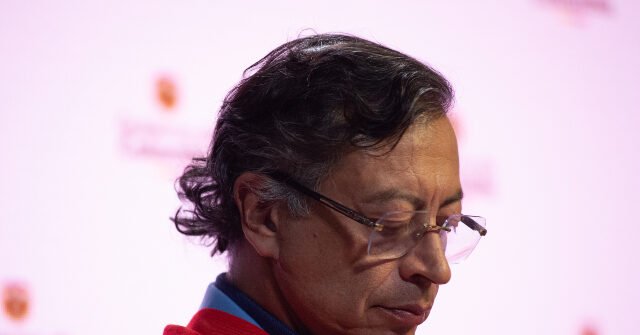
Colombia’s Senate has approved former President Gustavo Petro’s request to travel abroad, a decision that comes just days after a magnitude 7.4 earthquake killed at least 281 people and left dozens more missing. The Marxist ex-president’s departure plans have sparked heated debate in a country still reeling from both the natural disaster and the political aftershocks of his turbulent term.
Petro, who left office on August 7, 2026, after a single four-year term, was succeeded by conservative President Abelardo de la Espriella. Under Article 196 of the Colombian Constitution, a former president cannot leave the country during the first year after stepping down without Senate authorization. Petro submitted his request on Monday, August 10 — the same day the earthquake struck — according to local outlets.
The former president cited commitments of a “personal, social, political, and academic nature” for the coming year, but did not specify where he intends to go or what he plans to do abroad. He asked the Senate to vote on the request at its next session, according to the Colombian newspaper El Tiempo.
A Narrow Path to Approval
After a heated debate, senators approved the travel permit on Wednesday evening with 73 votes in favor and 11 against, per Infobae. The discussion was particularly charged because Petro is the target of more than 200 congressional probes, including allegations of drug addiction, illicit financing during his 2022 presidential campaign, and disciplinary complaints over his conduct during the most recent election cycle.
Some senators argued that letting Petro leave could hamper his ability to respond to those investigations. Yet the approval went through — with a notable assist from the conservative opposition.
Conservative Party’s Conditional Support
The Democratic Center, the conservative party that fiercely opposed Petro throughout his presidency, voted in favor of the request. The decision drew criticism and questioning on social media, prompting the party to release a statement Thursday evening explaining its reasoning.
“Our opposition to Petro does not disregard the Constitution and the rule of law. Investigations and any eventual responsibilities must proceed through the appropriate institutional channels. If a competent authority establishes restrictions, they must be complied with,” the party said.
The party emphasized that it did not support Petro out of sympathy, but rather as a matter of constitutional principle. “This is not about defending Petro. It is about conducting opposition within the Constitution. Petro is monitored, scrutinized, and required to answer politically for his actions. And if legal responsibilities exist, it will be up to the competent authorities to determine them,” the statement continued.
The Democratic Center also noted that while Petro had requested an “open and indefinite” authorization, the party successfully imposed follow-up mechanisms. Petro will be required to report the dates and destinations of his trips, and the authorization is subject to oversight, monitoring, and potential reversal. The party pointed out that previous former presidents had made similar requests after leaving office.
Uribe Defends the Decision
Former conservative President Álvaro Uribe Vélez also weighed in, recording a brief video in which he detailed the party’s conditions and defended the vote. Uribe, who left office in 2010, said he himself had to report to Congress on his trips after his presidency.
“Had that permit not been approved, absent any judicial restriction, former President Petro’s fundamental right to freedom of movement would have been violated,” Uribe argued.
He acknowledged that some might disagree with the party’s stance, but urged Colombians to consider the arguments rather than give in to “visceral accusations” on social media, warning that such behavior could “generate more violence in Colombia.”
Petro’s Response
Petro took to social media Thursday night to confirm that he requested authorization to travel but pushed back against characterizations that he sought to leave “for a year.”
“I have requested authorization from the Senate to leave the country during the coming year, that is a very different matter, but to understand it, one must first read the U.S. Clinton Law,” Petro wrote, referring to U.S. sanctions imposed on him last year.
He asserted, “[M]y power resides in the Colombian people and their love — why would I leave them?” and emphasized that he could teach what he has learned anywhere without abandoning Colombia. “I am not sick, I am still capable of doing new things and putting forward ideas, and that is my right,” he added.
Earthquake Aftermath
The Senate vote came amid the ongoing humanitarian crisis caused by Monday’s earthquake. The latest death toll stands at 281, with nearly 4,000 injured and 379 missing, according to figures published press time. The exact regions most affected were not detailed in local reporting cited in this article.
Petro’s travel request has raised questions about timing — why seek approval now, in the middle of a national emergency? But supporters of the move note that the earthquake struck on the very day he submitted his request, suggesting it was not coordinated with the disaster.
As Colombia begins the slow work of recovery and reconstruction, the political battle over Petro’s departure continues to simmer. His critics worry that leaving the country could allow him to evade accountability for the probes into his administration. His defenders, including the Democratic Center’s leadership, insist the constitutional process was followed and that oversight mechanisms will ensure transparency.
The former president has not yet announced when he will travel or which countries he will visit. His next report to Congress — detailing his dates and destinations — will be closely watched by both his allies and his adversaries.
Source: www.breitbart.com — https://www.breitbart.com/latin-america/2026/08/14/gustavo-petro-to-flee-colombia-after-disastrous-presidential-term-earthquake/