
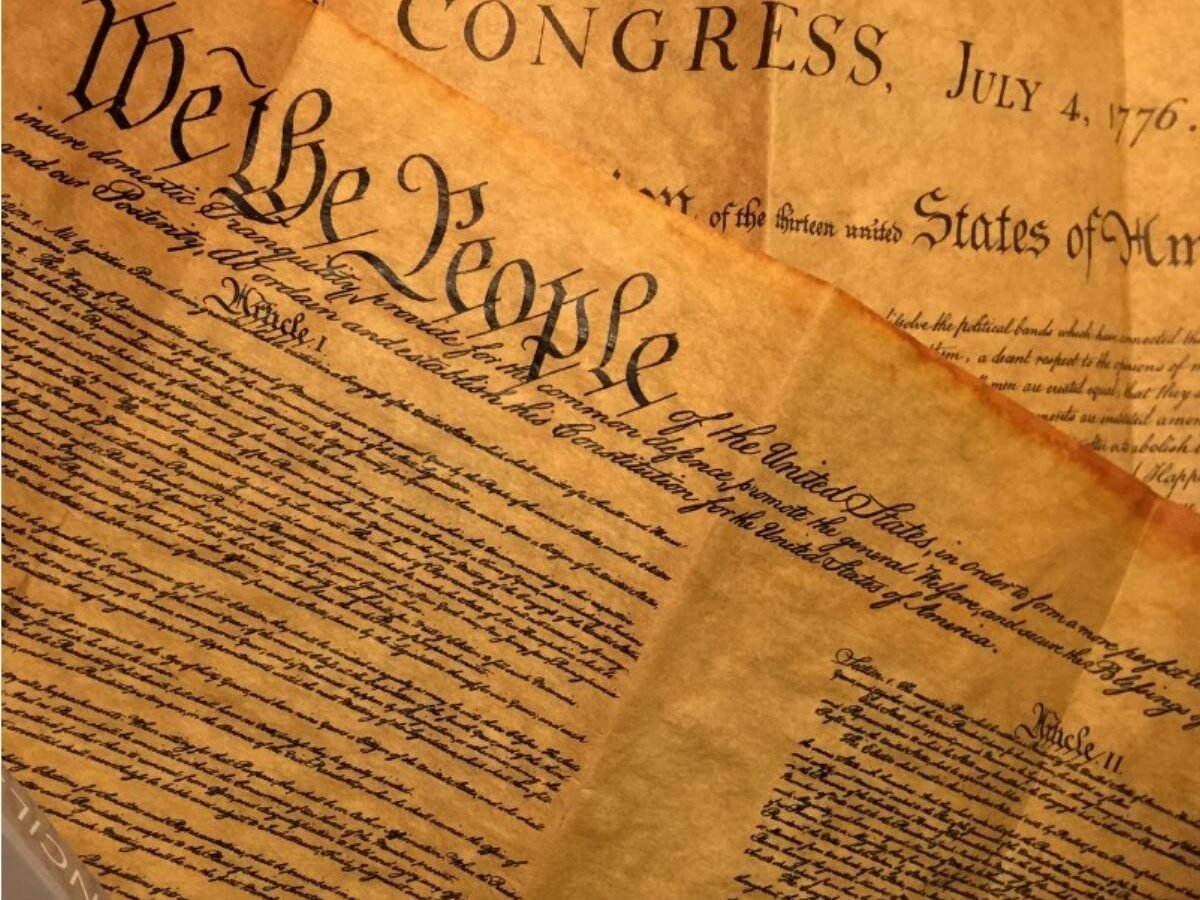
September 17 marks Constitution Day — 239 years since the delegates in Philadelphia signed the document that, roughly nine months later, became “the supreme law of the land.” As John M. Grondelski notes in an American Thinker essay pegged to the anniversary, it is the oldest written national constitution still in effect, a distinction Americans tend to accept as unremarkable.
That complacency is precisely what the essay pushes against. The very idea of a written national constitution has become so normative, Grondelski writes, that even governments which routinely ignore their own charters — especially the rights guarantees inside them — still feel obliged to have one on the books. In the 18th century, that assumption did not exist. Britain, he concedes, could claim a constitution of sorts, but an uncodified one built on custom and tradition rather than the binding force of law. A written constitution, in his telling, short-circuits that temptation.
An anniversary with an argument attached
The essay is not content to celebrate longevity. Grondelski argues September 17 deserves marking because the country still lives under a document that assures the rule of law and what he calls “the possibilities of freedom” — even though the United States of 2026 bears little resemblance to the one of 1787.
From there, the piece pivots to a critique. The Constitution, Grondelski writes, is “under attack,” and has been for a long time, from partisans of a “living Constitution” who hold that the fundamental law means whatever judges say it means — a formulation he attributes to Charles Evans Hughes. The result, in his framing, is an unwritten system of government in which meaning is fixed not by elected officials but by unelected jurists.
That, he says, is not even the gravest problem. The bigger issue is what he calls constitutional bait-and-switch.
Grondelski’s core analogy is contractual. The Constitution, he writes, is a contract across generations — an agreement to be and to live in a particular kind of country — and its text embodies the terms. When the text dissolves into mere suggestion, the social contract to which Americans once assented disappears. What replaces it, in his words, is a ceaselessly malleable screen onto which elites project their own visions of a just society, imposed on a country that never voted for them.
He invokes Abraham Lincoln’s warning that the people would then “have ceased to be their own rulers,” having effectively resigned their government into the hands of activist judges.
The structural fights
The essay identifies a newer, and in its author’s view more dangerous, form of the same attack. Grondelski points to contemporary political activists working to neuter the Electoral College and calling outright for abolition of the Senate. He also cites proposals to pack the Supreme Court as a means of entrenching living Constitutionalism — producing desired outcomes and then claiming the Constitution itself demands them.
The piece reaches back to Benjamin Franklin’s often-quoted line at the signing: a republic, if you can keep it. Grondelski’s read is that every generation faces the same task of keeping the republic by keeping constitutional faith, and that the assignment has not expired.
Poland as a counterfactual
To underline the stakes, Grondelski turns to a comparison that gets less attention than it deserves. America’s was the world’s first written national constitution; Poland’s was the second. The Constitution of the Third of May 1791, inspired by the American example, was a last-ditch effort to reform Polish government and stave off further carving up by Russia, Prussia, and Austria.
The resemblance stops there. Where the American Constitution has now endured 239 years, the Polish constitution — which by Grondelski’s count should be marking its 235th anniversary this year — was quickly abolished by those same three powers. It became, he writes, the incentive for further partition, erasing Poland from Europe’s maps from 1795 until 1918.
The Polish document was, for its era, a democratic constitution for a constitutional monarchy. Grondelski then invites readers into a thought experiment proposed by some historians: what if it had survived? A functioning democratic Poland in the late 18th century, he suggests, would almost certainly have influenced its authoritarian neighbors — which is exactly why they wanted it gone. Would it have accelerated Europe’s springtime of nations? Might Germany have taken a different path than Prussian militarism? Could the power-sharing Hungarians, and later Croats, sought within the Austro-Hungarian Empire have helped democratize that multiethnic state? And what would a successful democratic state on its doorstep have meant for Tsarist Russia?
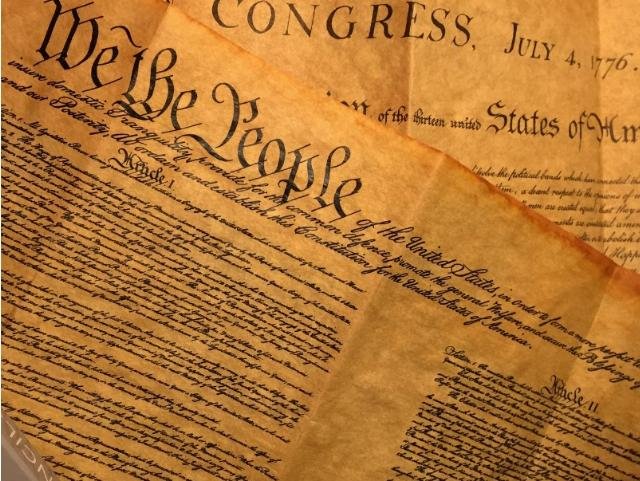
The chain of questions runs to the largest events of the 20th century: if democratic trends had started earlier in any of those countries, might there have been no World War I — and, by extension, no Hitler, no Lenin, no Stalin? Grondelski is careful to concede that history in the subjunctive is not history. We know what happened. But he argues it is still worth reflecting on what might have been, and on the Preamble’s charge to “secure the Blessings of Liberty to ourselves and our Posterity.”
The essay closes on a note that doubles as a pitch for the outlet’s broader mission: the ability to speak one’s mind, it says, matters more than ever to the republic.
What the piece is really arguing
Stripped of the historical detours, Grondelski’s argument is a familiar originalist case delivered with an anniversary hook. The text of the Constitution is the contract; judges who treat it as an evolving instrument are not interpreting the agreement but rewriting it; and the structural proposals now circulating on the left — ending the Electoral College, abolishing the Senate, expanding the Court — are not ordinary policy disputes but attempts to lock in that rewriting permanently.
That framing will persuade some readers and strike others as overstated — after all, Article V exists precisely because the framers expected amendment, and debates over the Electoral College and Senate have been part of American politics since shortly after the founding. But the essay’s central move, the contract metaphor, is doing the heavy lifting: if the Constitution is an agreement among generations, then altering its meaning without the consent of the governed is not evolution but breach.
The Poland comparison serves the same purpose, and it is the piece’s most distinctive contribution. Americans, Grondelski suggests, have no idea how fragile a written constitution can be, because theirs has never been taken away. Poland’s was, and the consequences lasted more than a century.
Whether or not readers accept the policy conclusions, the anniversary argument is straightforward: a document that has structured American life for 239 years deserves more than a passing mention on the calendar. Franklin’s “if you can keep it” was not a one-time warning, in this reading, but a standing instruction — and one that each generation has to answer for itself.
Source: www.americanthinker.com — https://www.americanthinker.com/articles/2026/09/in-praise-of-constitutions/