
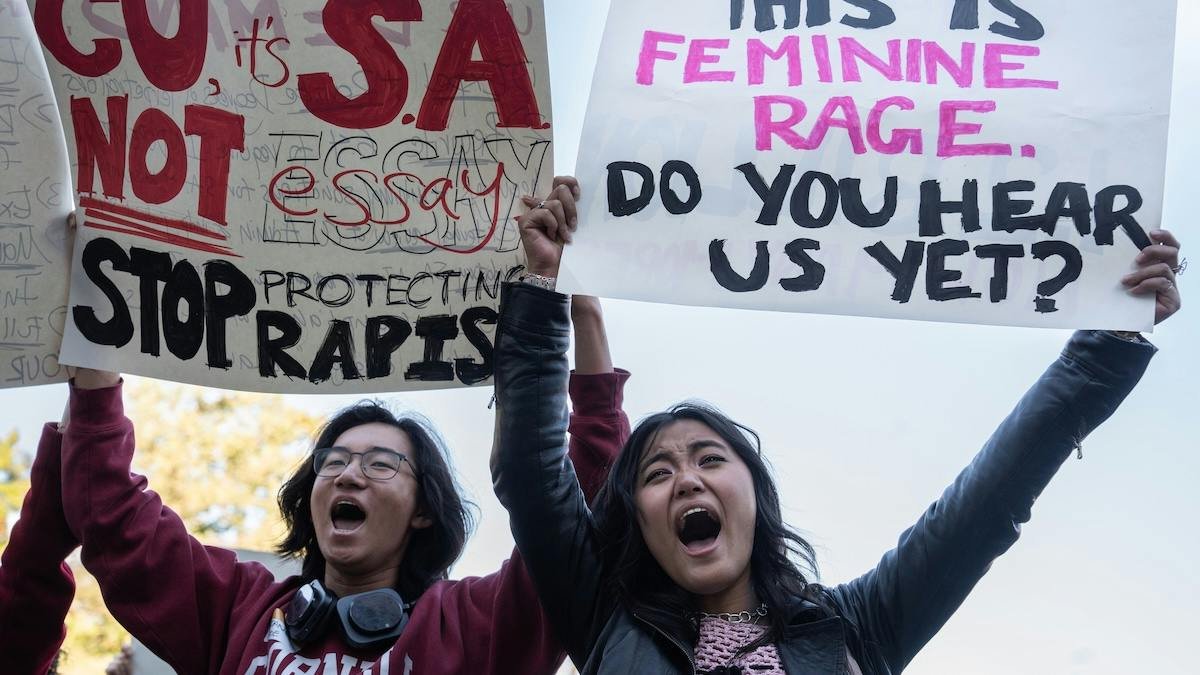
The “Cornell 7” lawsuit, in which a woman identified as Jane Doe alleges she was drugged and sexually assaulted by seven fraternity brothers over several hours, has ignited a firestorm at Cornell University and beyond. The case has become a flashpoint in the national conversation about consent, sexual regret, and the legacy of the #MeToo movement, with women across social media posting videos captioned “I Am Jane Doe” or “We Are All Jane Doe” to protect the accuser’s anonymity.
But as The Daily Wire reports, not everyone sees the case as a straightforward story of victimization. In a featured essay for the outlet’s Upstream section, sex neuroscientist Dr. Debra Soh argues that the incident—and the broader cultural response to it—reveals a troubling confusion between sexual regret and non-consent, a confusion she attributes to the influence of “sex positivity.”
The Allegations and the Evidence
According to the lawsuit, Doe was plied with drugs and alcohol and sexually assaulted by seven fraternity brothers. The allegations have spurred activism on Cornell’s campus and online, with some women sharing their own stories of sexual abuse in solidarity.

However, Soh points to details in the case that she says complicate the narrative. Doe herself admitted to consuming alcohol and ketamine consensually, according to Soh, and text messages show her telling one of the accused men that she loved him and would use violence to defend him, and that “none of the sexual stuff was illegal.” Doe also allegedly told one of the men, who appeared concerned upon entering the bedroom, that “this was normal in the medieval times.”
Soh writes that Doe’s tone only changed after she suffered reputational damage from campus gossip and was disinvited from an upcoming fraternity party—at which point she went to the police.
Sex Positivity Under Scrutiny
Soh argues that the root cause of Doe’s choices lies in the cultural messaging young women receive. “Sex positivity tells women to lead with their sexuality,” she writes, pointing to popular podcasters, influencers, and sex educators who advise women to have sex on the first date and to dismiss men who are uncomfortable with a high number of past partners as insecure.

Combined with early exposure to pornography, Soh contends, this leaves many young women confused about what healthy sexual values look like and unable to demand respect from themselves or their partners.
She also invokes evolutionary psychology, writing that men have a hard-wired aversion to female promiscuity because it obscures paternity. A man who is genuinely interested in a woman, she argues, will not proposition her to have sex with him and his friends.
Research cited by Soh shows that women are more likely to experience regret and feelings of being used after casual sex, and are more likely to be shamed by both sexes for promiscuity.

The Cost of Blurring Lines
The central problem, according to Soh, is that sex positivity’s adherents interpret negative feelings after sex as evidence that something nonconsensual occurred. “They can’t conceptualize the reality that some forms of sex are indeed shameful and distasteful,” she writes.
This failure to differentiate between sexual regret and non-consent, Soh warns, does a disservice to actual victims. She also has advice for young men: do not treat women’s bodies as objects to be passed around, do not engage in group sex or casual sexual activity—especially with strangers or women under the influence—and if a woman shows up alone to an establishment populated with men, the gentlemanly response is to ensure her safety rather than prey on her.
The Cornell 7 case continues to roil the campus and the national debate, with no easy resolution in sight. But for Soh, the stakes are clear: holding young women to the same standard of personal responsibility as young men is not victim-blaming—it is the only way to prevent future harm and to preserve the credibility of the #MeToo movement for those who truly need it.
Source: www.dailywire.com — https://www.dailywire.com/news/sex-positivity-failed-the-cornell-students