

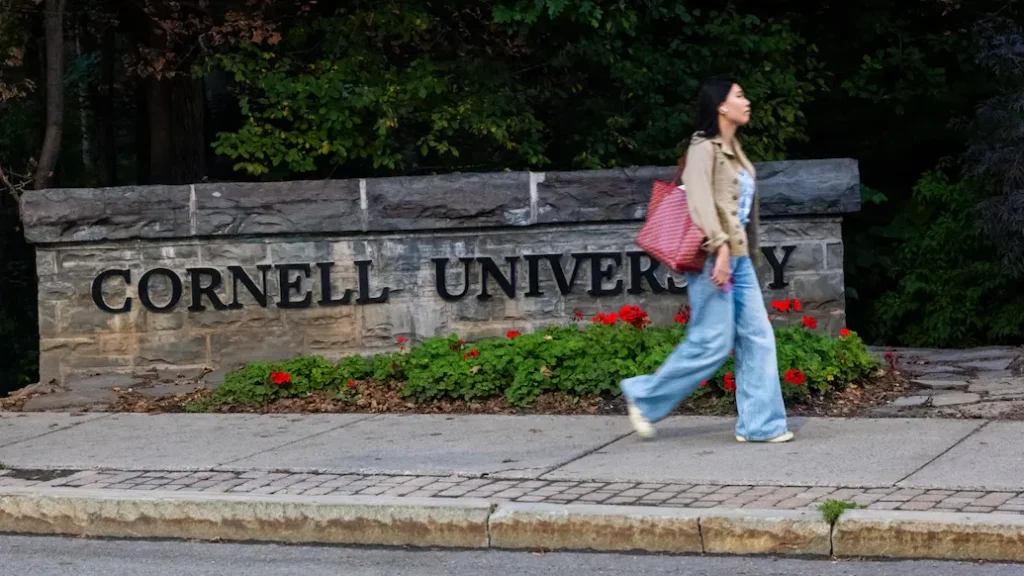
Cornell University has retained Sally Yates, a former deputy attorney general in the Obama administration, to look into a female student’s allegation that she was drugged and gang-raped by seven students—a case that critics say the Ivy League school mishandled when it first surfaced.
According to The Daily Wire, Cornell’s decision to bring in a high-profile Democratic lawyer may be aimed at satisfying campus activists who have pressed for accountability. But the outlet points to a cautionary precedent: the University of Rochester’s 2017 experience with a similarly credentialed outside investigator, which ended with a presidency in ruins, a multimillion-dollar settlement, and no apparent restoration of campus calm.
A playbook that didn’t calm Rochester
In 2016, Mother Jones reported that two junior faculty members, Celeste Kidd and Jessica Cantlon, had accused T. Florian Jaeger, a prominent brain and cognitive sciences professor, of behaving inappropriately—being flirtatious, “creepy,” and socializing with graduate students. The allegations ignited a media and activist firestorm at Rochester, and the university eventually turned to Mary Jo White, a former U.S. attorney and Securities and Exchange Commission chair, to conduct an independent review under special arrangements meant to underscore her independence.
White’s team conducted 140 interviews and reviewed thousands of documents. Her report concluded that the most serious misconduct claims were unsubstantiated. “Despite being labeled a ‘sexual predator’ by his accusers,” the report said, “there have never been allegations of sexual assault, unwanted groping, any use of force, or exhibitionism outside of consensual relationships, and we have found no evidence of such behavior ever occurring.”
The report also said some of the most sensational specifics were provably false. Kidd and Cantlon had claimed Jaeger had sex with a particular woman, according to The Daily Wire’s account of the report; that woman said it never happened. The pair also claimed another woman had been taken advantage of; that woman said the claim was false and that she had told Kidd and Cantlon so beforehand.
White’s review did find that Jaeger had “blurred personal and professional boundaries” years earlier, when he was young, and that he had dated at least one graduate student—conduct that was not barred by university rules at the time but has since been prohibited. Still, it said every current student who spoke with investigators praised him. It also noted that one of the female complainants had herself “met her spouse while she was a professor and he was a graduate student.”
On the question of risqué language, interviewees told White’s team that Kidd “openly talked about sex with colleagues, including specific, graphic comments about her sexual partners,” and “maintained a list of prominent academics in her field with whom she wanted to have sex.” The investigation further concluded that creepy messages Kidd provided had been “heavily edited” and “manipulated in such a manner as to make them essentially devoid of all critical context.”
A department chair who had initially tried to mediate said that after reviewing internal emails late in the process, he saw “widespread lying, deceit, and manipulation in the complaints against Jaeger.”

Settlement, resignation, and a widening gap
Before White was brought in, Rochester had already run a three-month investigation that found insufficient evidence of discrimination or harassment. The women appealed, and a higher official upheld the finding, calling it one of the most thorough he had seen. A university spokesperson told Mother Jones at the time that officials were “highly confident in the integrity of these investigations,” adding that many complaints were “hearsay” and that “no violation of the law or University policy was found.”
That did not quiet the campus. One undergraduate drew international attention by pledging not to eat until Jaeger was fired; he ultimately agreed to go on leave. Seven current and former faculty members and one student filed an Equal Employment Opportunity Commission complaint against Jaeger, the university, and its investigator. The EEOC dismissed the complaint, but pressure intensified. Time magazine included Kidd and Cantlon in its 2017 “Person of the Year” group. Kidd filed another complaint, prompting the university to hire an outside law firm for yet another investigation; that inquiry also did not find in her favor. Kidd called the investigator biased even though he had no prior involvement with the university.
Facing continuing calls for President Joel Seligman’s resignation, Rochester brought in White’s firm. When her report was released in January 2018, the university announced Seligman’s departure the same day. The New York Times headline captured the moment: “Exonerated, University of Rochester President Steps Down.” The Times described the resignation as “all the more extraordinary by the investigators’ report, which discredited many of the claims against the university and found no legal wrongdoing.”
By then, the claimants had filed a lawsuit. White’s report stated that “we do not believe that any potential claimant or plaintiff would be able to sustain a legal claim for sexual harassment,” laying out at length why such claims would fail. The university settled anyway, paying $9.4 million.

Richard Aslin, a former dean who joined the EEOC complaint and the lawsuit after hearing Kidd and Cantlon’s stories, said in a statement: “We hope this settlement encourages people affected by discrimination and retaliation to seek justice and never give up.”
What it means for Cornell
The Daily Wire’s central argument is that outside investigations—even ones conducted by respected lawyers with no ties to the institution—rarely resolve the underlying political conflict when activists have already decided on an outcome. At Rochester, the report that cleared the accused of the worst allegations did not defuse the crisis; it became one more data point for those who believed the process itself was rigged.
Cornell now faces a similar dynamic. Yates, who served as deputy attorney general under President Obama and later as acting attorney general in the early days of the Trump administration before being fired, carries a reputation that cuts both ways: she is widely respected in legal circles, but she is also a polarizing figure in national politics. Whether her findings will be accepted by the students and advocacy groups demanding action remains an open question.
What the Rochester case suggests is that the credibility of the investigator may matter less than the expectations of the audience. When a community has already concluded that a grave wrong occurred, a report that finds otherwise can intensify rather than extinguish the demand for consequences. The university paid $9.4 million for claims its own investigator said would not succeed in court—a fact that both sides can cite as evidence of bad faith.
Cornell has not announced a timeline for Yates’s review, and it is not clear what standards she will apply or how her findings will be released. The Daily Wire’s piece frames the hire as a repeat of a failed strategy—one that assumes a well-credentialed outsider can settle a dispute that has already become a proxy for larger fights about race, gender, and institutional power.
For now, the only certainty is that the allegation at Cornell has drawn national attention, and that the school has chosen a path that, eight years ago at a different university, led to a president’s resignation and a multimillion-dollar payout rather than closure.
Source: www.dailywire.com — https://www.dailywire.com/news/the-last-time-a-college-hired-an-obama-aide-to-investigate-a-sex-scandal-it-didnt-end-well