
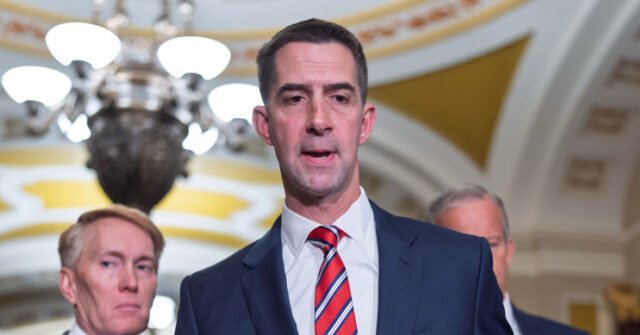
Sen. Tom Cotton (R-AR) is defending his opposition to legislation that would make daylight saving time permanent, arguing that Congress has tried the approach before and repealed it each time after Americans experienced what he called absurdly late winter sunrises.
Cotton made his case in a post on X, which came after President Donald Trump shared the Arkansas senator’s cell phone number on Truth Social and encouraged people to call Cotton and press him to support the Sunshine Protection Act, according to Breitbart News.
“No one likes changing the clock, me included, but Congress has enacted permanent Daylight Savings Time multiple times before and repealed it each time once Americans experienced absurdly late sunrises in the winter,” Cotton wrote. “Arkansans don’t want their kids going to school in the pitch dark, and I’ll always put Arkansas first.”
The dispute centers on the Sunshine Protection Act, which passed the U.S. House in July by a vote of 308-117. It has since stalled in the Senate, where Cotton is among the lawmakers holding it up.
Trump Escalates Pressure Campaign
Trump, in a separate Truth Social post, sharply criticized Cotton for blocking the bill and framed the issue as a matter of putting Arkansas first. The president argued that the legislation would spare residents the twice-a-year ritual of adjusting clocks on everything from home appliances to farm equipment.
“If Tom Cotton were putting Arkansas first, he would give them an extra hour of daylight and, more importantly, they wouldn’t have to run all over their houses, farms, work places, and everywhere else, twice a year, having to change their Clocks, and often forgetting to do so,” Trump wrote. “That is really putting Arkansas FIRST, and I know, because, unlike Tom, I won that Great State, three times, and by almost 40 points!”
The president also noted that he had carried Arkansas by wide margins in three elections, using that as a measuring stick for who best represents the state’s interests.
Trump went on to argue that the House had already done its part. “The House approved, long ago, ‘The Sunshine Protection Act,’ by a very Bipartisan Vote, 308 to 117,” he said. The bill, he added, “has been held up in the Senate, a place where things go to die, by Tom Cotton, for months!”
The president also offered his own account of why previous attempts to enact permanent daylight saving time ultimately failed. He said certain lawmakers from long ago treated the issue as a bargaining chip in negotiations over what he described as more important legislation.
“The reason that it was terminated in the past was that certain Congressmen and Senators, from long ago, used it as a ‘negotiating chip’ for far more important Legislation — And they got plenty!” Trump wrote. “Everybody loved it, but it was given up in order to get bigger, better, and more consequential ‘things.'”
A Long-Running Congressional Fight
The exchange highlights a perennial battle in Congress over whether to end the practice of switching clocks twice a year. Supporters of permanent daylight saving time argue it would align daylight hours with typical waking schedules and eliminate the disruption that accompanies the semiannual time change. Opponents, including Cotton, counter that keeping daylight saving time year-round would push winter sunrise times later, meaning many students and workers would begin their days before the sun comes up.
Cotton’s position rests in part on historical precedent. He noted that Congress has adopted permanent daylight saving time more than once, only to reverse course after the public experienced late winter sunrises that many found objectionable. That argument echoes the experience of the 1970s, when the United States briefly moved to year-round daylight saving time during an energy crisis before returning to the seasonal system.
Trump’s decision to publicize Cotton’s cell phone number marks an unusual escalation between a sitting president and a senator from his own party. The move turned a long-simmering policy fight into a direct appeal to Arkansas voters, with the president effectively urging constituents to lobby their senior senator by phone.
Cotton, first elected to the Senate in 2014, has built a reputation as a conservative voice on national security and immigration. His response to Trump did not challenge the president directly on the substance of the bill, but instead focused on what he said were the practical consequences for Arkansas families.
The Sunshine Protection Act’s path in the Senate remains uncertain. Even with broad bipartisan support in the House and vocal backing from the president, the bill would still need to clear procedural hurdles and secure 60 votes in the Senate, where individual members can slow or block legislation. Cotton’s resistance, combined with the chamber’s crowded calendar, leaves the bill’s future in doubt.
For now, both sides appear to be digging in. Trump has made clear he intends to keep pressing the issue publicly, while Cotton has staked his position on the argument that permanent daylight saving time would mean dark winter mornings for Arkansas schoolchildren. Whether the president’s pressure campaign moves the senator — or the broader Senate — may determine whether the twice-yearly clock change survives another year.
Source: www.breitbart.com — https://www.breitbart.com/politics/2026/10/03/sen-tom-cotton-defends-opposition-to-bill-making-daylight-saving-time-permanent/