
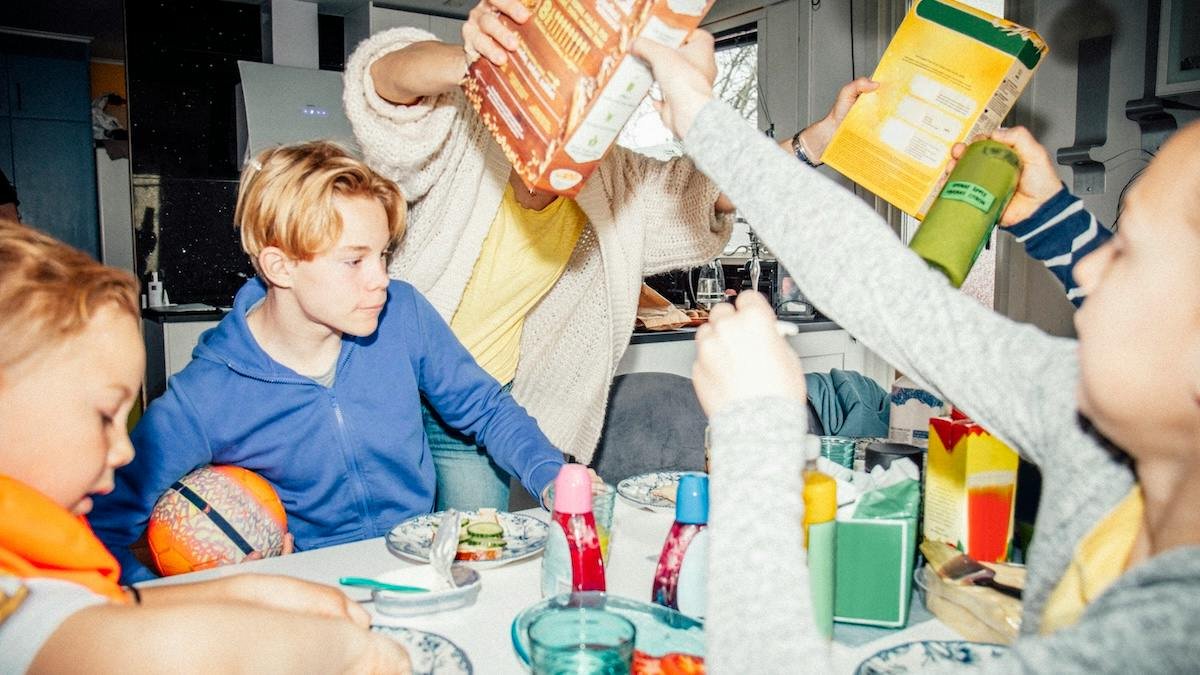
A new essay published by The Daily Wire is pushing back on the polished-home culture that dominates social media, arguing that the drive to present a spotless house is keeping people from hosting friends and family at all — and deepening the country’s loneliness problem along the way.
The piece, part of the outlet’s Upstream section for culture and lifestyle writing, is by Elizabeth Grace Matthew, who describes herself as part of a family of six with two careers and four kids. Her household hosted other families for dinner on both Friday and Saturday of a recent weekend, she writes — a pace she attributes less to organization than to lowered expectations.
“We host poorly,” she writes, describing the approach as simply inviting people into an imperfect house rather than waiting for conditions to be ideal.
A convention panel on the ‘messy house’ approach
Matthew anchors the argument in advice she says Leah Sargeant offered during a panel at a recent women’s convention in Rochester: invite people in even when the house is messy. The essay does not detail the convention’s organizers or the full panel, but presents the recommendation as the practical core of a broader case for casual hospitality.

The obstacle, as Matthew frames it, is the rise of domestic influencers whose immaculate kitchens, styled shelves and staged living rooms have turned ordinary clutter into a source of shame. People who are already stretched thin — coaching Little League, serving on the PTA, cooking for a new mother’s meal train — reasonably conclude they don’t have time for the scrubbing and staging that hosting seems to require, and so they don’t host at all.
That dynamic, she argues, interacts with much larger forces. Far-flung and estranged families, falling birth rates, hollowed-out institutions and secularization all feed isolation, and technology makes it possible to be entertained and satisfied without leaving the house or interacting with another person. Matthew calls these systemic problems no single family can solve — and says they are unlikely to be solved soon.
What individuals can do in the meantime, in her telling, is open the door anyway.
Martha in private, Mary in public
To square daily upkeep with spontaneous hosting, Matthew borrows from the Gospel of Luke story of Mary and Martha, the sisters who host Jesus for dinner. Martha bustles in the kitchen while Mary sits with their guest; when Martha complains, Jesus sides with Mary.

Matthew’s practical gloss on the passage is that a little Martha is useful in daily life precisely so that a person can be Mary when company arrives — and so that company arrives in the first place. She draws a line between what she calls “lived-in messy” and “squalor messy,” arguing that no one should invite guests into genuine filth, but that no family, and especially no children, should be living in it either.
Her recommendations lean on routine rather than deep cleaning: throw out excess belongings, give everyday items a designated place in the main living areas, keep the kitchen wiped down and the dishes washed, vacuum daily and run laundry daily. She admits her own laundry often never makes it out of the baskets — a recent guest who went upstairs saw the piles of clean clothes, she writes, and she didn’t flinch, because the guest was a friend.
A relatively uncluttered, well-functioning house, in her account, makes it comparatively easy to answer the door even if the floors haven’t been mopped and there’s no tablecloth in the cupboard.
Choosing the right guests — and the right standard
Matthew also addresses the fear of judgment directly: if someone looks down on a household for that kind of ordinary mess, that person is the wrong guest. The people worth hosting, she writes, prioritize generosity of spirit over presentation. Inviting someone into your home, in her framing, is a stand-in for inviting them into your life, which means hosting honestly rather than performing.

Her own formula is simplicity plus abundance: minimal fuss over aesthetics, but plenty of hearty, tasty food — or, she allows, too much ordered pizza, rather than anything organic or gourmet.
She notes that friends of hers host more elaborately, with more attention to design, and others host more sparely than she does, and argues that neither approach makes a welcome warmer or colder. Like-heartedness about the value of real-life connection, not like-mindedness about what hosting should look like, is what produces something genuine, she writes — a point she says matters more now that community tends to form around geography or shared political, cultural and religious outlooks rather than a common inherited understanding of hospitality.
The essay closes on the purpose of in-person friendship in what Matthew calls a disembodied age: connecting in a way that grows into mutual, embodied understanding, help and support.
The piece is the latest in a run of lifestyle and culture commentary urging readers to trade curation for contact, a theme that has gained traction as public-health officials, researchers and commentators of various ideological stripes debate the causes of declining social connection. Matthew writes about books, education and culture and also publishes on Substack.
Source: www.dailywire.com — https://www.dailywire.com/news/the-case-for-letting-people-see-your-messy-house