
A personal essay published by The Daily Wire on Wednesday took aim at language used in a recent New Yorker article about pregnancy loss, arguing that clinical phrasing describing early miscarriages as the body “discarding errors” strips unborn children of their humanity.
The essay, written by a mother of two, was built around two lines she said stopped her cold: “A lot of early miscarriages happen as part of a natural process of discarding ‘errors.’” The author said the phrase repelled her — not as a rhetorical device, but as a mother who has taken pregnancy tests, awaited early ultrasounds and counted the days to a due date.
“At no point did I think of what was growing inside of me as some potential ‘error’ my body might need to ‘discard,’” she wrote.
The Daily Wire piece centers on a New Yorker article discussing anthropologist Kate Clancy’s book, “Pregnancy Interrupted.” According to the essay, the New Yorker piece spends considerable space on the uncertainty surrounding early pregnancy — noting that doctors can get gestational age wrong, that measurements can differ, and that standards for diagnosing miscarriage can vary depending on where a woman lives. The article also points to research on pregnancies classified as having “unknown viability,” where about one-fifth eventually turned out to be viable, according to the Daily Wire’s summary.
The writer’s objection is not to the acknowledgment of uncertainty itself, but to the leap she says follows it: that an unborn child whose future is unknown can be described as an “error” that a body may “discard.”
“I’m sorry, but that’s sick,” she wrote. “Yes, SICK. Actually, I’m not sorry.”
From uncertainty to a disappearing baby
As the essay progresses, its author argues that something larger is at stake than a few words. She says that in the language of reproductive biology, the baby increasingly vanishes — pregnancy is framed as something happening to a woman’s body, a medical condition to be managed.
She contrasts that framing with what she describes as the lived experience of women who want their pregnancies. Upon seeing a positive pregnancy test, she writes, a woman does not wait for an official declaration of “viability” before imagining a future. She calculates a due date, wonders whether the baby is a boy or a girl, picks names, and worries about everything she has eaten, drunk, lifted, or touched in the preceding two weeks.
“And God forbid the woman miscarries, nobody needs to sit her down and explain to her that she lost something,” the essay states. “Nobody would dream of telling a grieving mother that her body successfully ‘discarded an error.’ And if you do, you are a psychopath.”
The author says that language used in a discussion of reproductive biology is given a pass because it sounds scientific, even when it would be unthinkable in any other context involving a grieving mother.

“Interrupted” pregnancies and the abortion debate
The Daily Wire essay also seizes on a second phrase from the New Yorker piece — that pregnancy can be interrupted “by a woman’s choice” — after the article walks through biological and environmental reasons a pregnancy might end. The writer argues that placing miscarriage and abortion under the same word, “interrupted,” conflates two very different things.
“A woman losing a baby she desperately wanted did not ‘interrupt’ her pregnancy in the same way another person intentionally murdered an innocent human being God created,” she wrote.
She argues that the shared language is an attempt to make abortion sound “nicer,” and that it blurs a moral line she believes should remain clear.
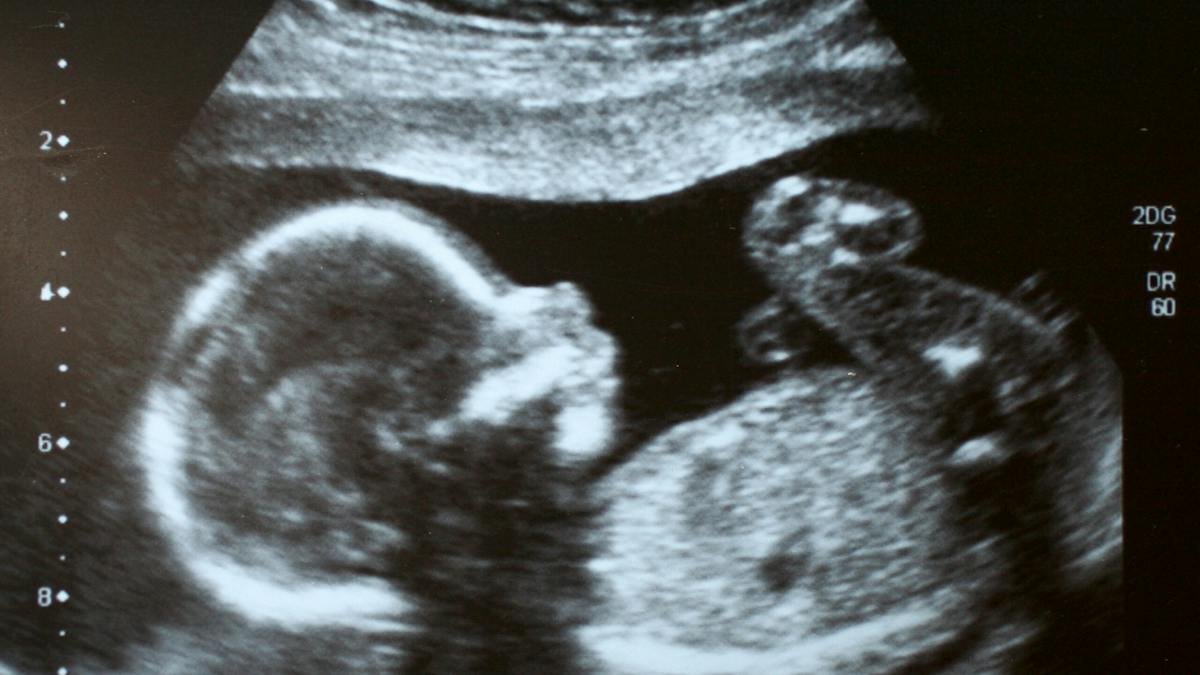
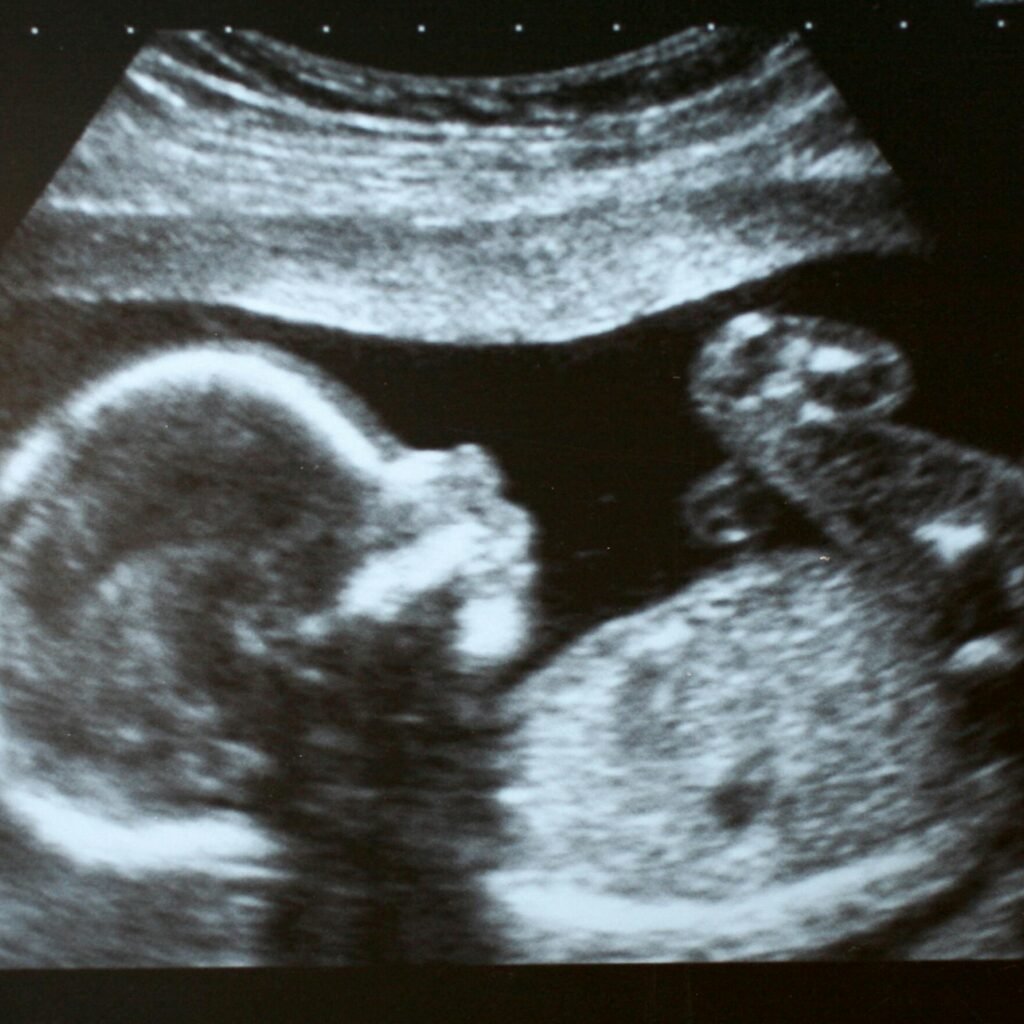
The essay also points to a pattern the author says is common in American culture: the language shifts depending on whether the child is wanted. Hopeful parents throw baby showers, post ultrasound images, decorate nurseries, and speak to “my baby.” She notes her own habit of keeping a hand on her stomach, a gesture she says was mocked when Meghan Markle did it, and one she jokingly confesses to sharing.
“Nobody walks up to an excited pregnant woman and says, ‘Actually, you’re experiencing a developing medical condition of uncertain viability,’” she wrote. “We know what she means when she says, ‘my baby.’ But suddenly, when abortion enters the conversation, nobody wants to say ‘baby’ anymore. It’s an embryo or a fetus.”

Acknowledging what miscarriage is — and isn’t
The piece does not deny the biology of pregnancy loss. Its author concedes that miscarriage is natural, that chromosomal abnormalities are a major cause, and that some pregnancies will tragically never result in a healthy baby being born. But she argues that none of those facts require speaking of a child who dies as though he or she were a defective product.
“If doctors themselves don’t always know what’s going to happen, you’d think we’d be a little more careful with the way we talk about the baby,” she wrote. “We might not know whether that baby is going to survive. That doesn’t mean the baby isn’t there. I don’t understand why we’re acting like those are the same thing.”
The essay closes on the uncertainty that, in her telling, is inseparable from motherhood — the worry of pregnancy, the terror of a newborn, the exhaustion of chasing toddlers. She says the specific fears change as children grow, but the child remains the child.
That, she writes, is why the phrase about “discarding errors” cuts so deep.
“A miscarriage is NOT a successful disposal of defective material,” she wrote. “And a woman who loses her baby didn’t simply have a pregnancy that was ‘interrupted.’ We’re talking about an innocent human life that God created.”
The essay is a piece of opinion journalism, and its claims about the New Yorker article and Clancy’s book are drawn from the author’s reading of that material. The Daily Wire’s piece, and the debate it engages, reflects a broader and ongoing national argument over how the language of medicine, media, and law should describe unborn life — an argument that has only intensified in the post-Dobbs era, as states, courts, and newsrooms continue to wrestle with terminology that carries profound moral weight.
Source: www.dailywire.com — https://www.dailywire.com/news/i-read-two-words-about-unborn-babies-that-stopped-me-cold