
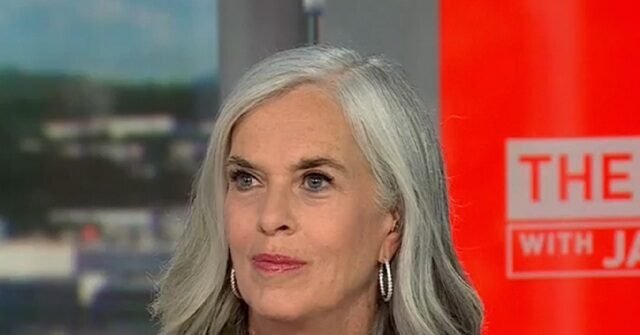
House Minority Whip Katherine Clark (D-MA) pushed back Wednesday against Republican efforts to tie Democratic candidates to the Democratic Socialists of America, arguing that voters are focused on tangible issues rather than political labels.
Appearing on CNN’s “The Situation Room,” Clark responded to a question from anchor Wolf Blitzer about whether the DSA connection complicates races for swing-district Democrats ahead of the November midterms.
“Let me tell you what I’m hearing,” Clark said. “The American people don’t care about these labels. They don’t care about a created inter-Democratic party fight. They want answers. They want people who are going to work for them. And that is what the Democratic party is offering. And that is why we are going to be successful in the midterms.”
Her comments came after Blitzer played a clip of Rep. Alexandria Ocasio-Cortez (D-NY) addressing the same issue. In that clip, Ocasio-Cortez was asked by CNN’s Manu Raju whether Republicans could easily paint Democrats as socialists.
Ocasio-Cortez responded by suggesting that GOP figures like Rep. Marjorie Taylor Greene (R-GA) might have made it easier for Republicans in swing districts, but that voters ultimately make decisions based on their own representation.
“I think people really care about who their representation is, and I don’t think they make votes based on what’s happening somewhere else,” Ocasio-Cortez said in the clip.
Blitzer then pressed Clark directly: “So yes or no, do the Democratic Socialists of America make it more difficult for swing district Democrats to actually win this November?”
Clark avoided a direct answer, instead refocusing the conversation on voter priorities.
The exchange underscores a broader Democratic strategy heading into the midterms: downplay internal divisions and refocus attention on kitchen-table issues. Republicans, meanwhile, have sought to link the party’s more progressive wing to the DSA, arguing that voters will recoil at the association.
Clark’s comments suggest confidence among Democratic leadership that such attacks will fall flat. Her assertion that voters “don’t care” about the socialism label reflects a party-line message that has been echoed by other Democratic figures in recent weeks.
Still, the question of whether DSA-endorsed candidates — or high-profile progressives like Ocasio-Cortez — hurt swing-district Democrats remains a point of debate. Some political analysts note that the label has been used effectively against Democratic candidates in past election cycles, while others point to the party’s recent successes in suburban districts where economic messaging trumped ideological attacks.
Clark’s appearance on “The Situation Room” did not include specific polling data or other evidence to support her claim, but she framed the issue as one of voter sentiment rather than partisan maneuvering.
The midterm elections, now just weeks away, will likely test whether the party’s leadership is right about what voters care about — or whether Republicans can turn the socialism label into a decisive factor in competitive races.
Source: www.breitbart.com — https://www.breitbart.com/clips/2026/09/02/house-dem-whip-clark-the-american-people-dont-care-about-socialism-label/
Background and context
The latest developments around Dem Whip Clark: Voters ‘Don’t Care’ About Socialism Label as GOP Ties Dems to DSA come amid a broader debate over politics, institutional accountability, and the policy choices that shape everyday life. Understanding the immediate facts is only the first step; the wider impact depends on how officials, institutions, and the public respond in the days and weeks ahead.
FedFront’s coverage focuses on verifiable details, identifiable sources, and the practical consequences of political decisions. Readers should review official statements, primary documents, and court or agency records before drawing final conclusions about any disputed claims.
Why it matters
Stories like this can influence legislation, regulatory enforcement, public trust, and the balance of power between government institutions. Even when the immediate headline fades, the underlying policy, legal, or political questions often continue to shape future decisions.
What to watch next
- Official responses, statements, or policy changes
- Legislative, regulatory, or court action
- Follow-up reporting and independent verification
- Public reaction and broader political fallout
FedFront will continue monitoring this story and update coverage as new information becomes available.
Source: www.breitbart.com
Related coverage
- 49ers Reporter Grant Cohn Erupts at Rival Journalist for ‘Hugging Players’ in Locker Room
- Hollywood Studios Push AI Requirements for VFX Houses in Latest Industry Shift
- Daily Wire Slams Robert Pattinson’s ‘Primetime’ as ‘Evil Propaganda’ Against Chris Hansen
- University of Wyoming Alumna Argues Sorority Case Before Tenth Circuit in Denver