
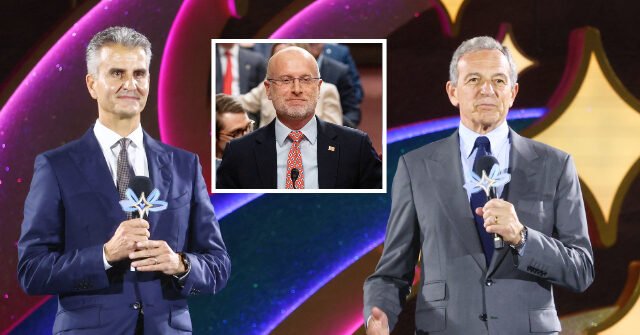
Disney and its broadcasting arm ABC have filed a lawsuit against the Federal Communications Commission (FCC) to block an early license renewal process for eight television stations the company owns and operates. The move escalates a bitter dispute over whether ABC has met its public-interest obligations, and it comes at a time when the FCC is also examining allegations of discriminatory hiring practices and an apparent attempt by ABC to sidestep political candidate equal-time rules.
According to a report from Breitbart News, the current broadcast licenses for these stations are not scheduled to expire until 2028 through 2031. The FCC, however, has moved to begin the renewal process ahead of that schedule—a step that ABC and Disney argue is unprecedented and politically motivated. In its lawsuit, ABC has requested a preliminary injunction to stop the process, asserting that the early renewal request is political retaliation against protected speech. The legal action marks the first time in decades that the FCC has sought early renewal, a rarity that underscores the high stakes involved.
The FCC’s decision to push for early renewal stems from two main concerns, according to the Breitbart report. First, ABC has characterized its daytime talk program The View as a news show, which would exempt it from FCC regulations that require broadcasters to provide equal time to opposing political candidates in the lead-up to an election. That stance has drawn scrutiny, with the FCC apparently viewing it as an attempt to skirt federal rules. Second, the FCC has been examining claims that Disney engaged in illegal DEI—diversity, equity, and inclusion—hiring policies that allegedly violate civil rights laws. The commission stated that it has been looking into these allegations for over a year.
In response to the lawsuit, the FCC released a statement defending its actions. The statement read, in part: “All broadcasters have a legal obligation to operate in the public interest—even Disney. The FCC has been examining claims that Disney engaged in illegal DEI discrimination for over a year. Disney is obviously very concerned about the FCC’s proceeding, as evidenced by their ongoing campaign of disinformation as well as their decision to ask a court to stop the FCC from further pursuing matters. The FCC will continue to follow the facts and law wherever they lead.”
The dispute touches on a fundamental tension in American broadcasting: broadcasters use publicly owned airwaves free of charge, but in exchange they are expected to serve the public interest. The FCC’s argument is that Disney has failed to meet that obligation, pointing to programs like The View and Jimmy Kimmel’s late-night show, which the commission and its critics say exhibit a consistent, one-sided political stance with no rebuttal or alternative viewpoint offered on air. Breitbart characterized this as ABC using its platform as a “super PAC for the Democrat Party,” though that characterization reflects the outlet’s opinionated tone rather than a formal legal accusation.
Disney’s legal challenge also highlights what critics call a striking hypocrisy. Breitbart noted that in 2006, a group of Democratic senators, led by then-Senator Harry Reid of Nevada, threatened ABC’s broadcast license over the miniseries The Path to 9/11. That miniseries was critical of past failures to confront the threat posed by Osama bin Laden and al-Qaeda, including during the Clinton administration. The senators’ letter invoked the Communications Act of 1934, reminding ABC of its duty as a trustee of the public airwaves to act in the public interest. At the time, Disney capitulated, airing a censored version of the miniseries and, according to Breitbart, burying it entirely—never re-airing it, releasing it on home video, or making it available online, despite a reported $40 million production cost and high ratings.
Breitbart argues that Disney’s willingness to cave to political pressure in 2006 contrasts sharply with its current defiance of the FCC. The outlet suggests that the current lawsuit is less about principle and more about protecting Disney’s ability to use ABC as a political vehicle. However, the source article is explicitly opinionated, and its framing is part of a broader criticism of Disney and ABC’s programming choices.
The lawsuit and the FCC’s actions raise significant questions about the limits of broadcaster independence, the definition of news programming, and the scope of federal regulation over political content. For now, the courts will decide whether the FCC’s early renewal request stands or whether Disney and ABC can halt the process while the underlying issues are resolved.
As the legal battle unfolds, observers will be watching closely to see how the FCC balances its regulatory authority against First Amendment protections for broadcasters. The outcome could have implications not only for Disney and ABC but for the broader broadcast industry, which has long navigated the tension between free speech and public-interest obligations.
Neither Disney nor ABC has issued a public statement responding to the FCC’s remarks beyond the lawsuit itself, and further details of the case are expected to emerge as the legal proceedings continue.
Source: www.breitbart.com — https://www.breitbart.com/entertainment/2026/08/18/nolte-disney-grooming-syndicate-and-abc-sue-fcc-over-early-renewal-demand/