
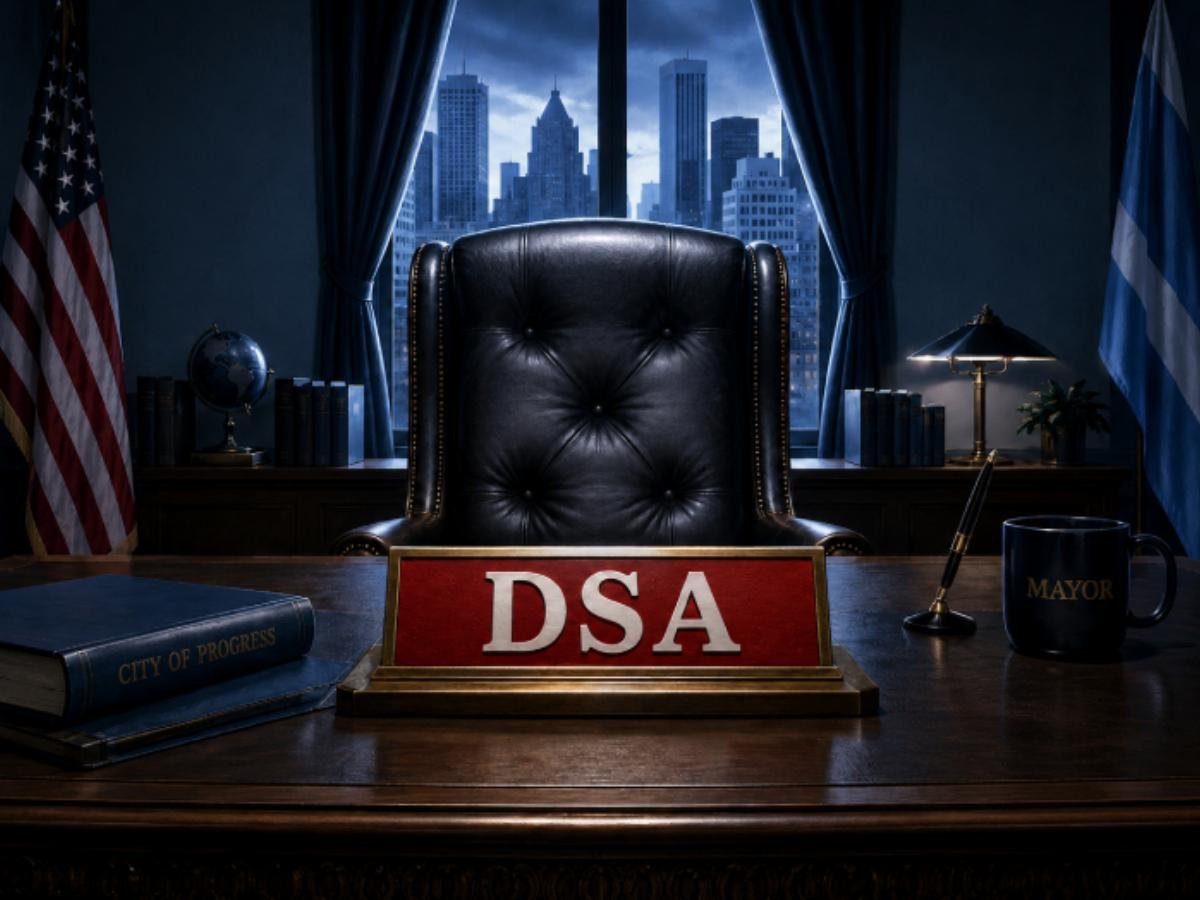
From Seattle to New York, the Democratic Socialists of America (DSA) is making its presence felt — and according to a new analysis, its candidates are winning where it matters most: in the country’s most liberal enclaves.
Writing for American Thinker, columnist Silvio Canto, Jr. highlights growing concern that DSA-backed politicians are increasingly taking control of city halls in deep-blue districts, often with little or no general-election opposition to moderate their platforms.
DSA’s Winning Strategy: Focus on Safe Seats
Canto points to research from the Brookings Institution noting that “DSA candidates are largely winning in places that are already liberal and Democratic.” That strategy, while effective in solidly blue areas, is creating complications for the Democratic Party as a whole.
In competitive House and Senate races, Democratic nominees are having to distance themselves from far-left policy positions that are unpopular with independents — all while trying not to alienate their base. The result, Canto argues, is a party caught between its activist wing and the broader electorate.
“The far left is getting louder and bolder,” he writes, “but its victories are limited to the areas Democrats already control.”

Why Blue City Residents Should Be Worried
For voters living in cities where Democrats dominate every level of government, the stakes are higher. In those places, the primary is effectively the only election that matters — and once a DSA-backed candidate wins it, there’s no general election to serve as a check.
Canto warns that this dynamic could lead to a wave of DSA mayors in cities like Minneapolis, Seattle, and New York — places where city councils are often just as ideologically aligned. He suggests that residents who disagree have few options: move to the suburbs, watch businesses flee, or endure a decline in public services.
“It will be a disaster for more and more good people stuck in these cities,” he writes, painting a picture of rising crime, struggling schools, and an expanding urban-suburban divide.
Local Wins, National Headwinds
The phenomenon is not entirely new, but its electoral implications are becoming clearer. As DSA candidates consolidate power in blue strongholds, the national Democratic Party is forced to answer for their most controversial stances. In competitive arenas like Michigan and Florida, that can become a liability.
Canto urges Republicans to capitalize on the trend, framing the 2026 midterms as an opportunity to tie Democratic candidates to the most radical voices in their party — a strategy he describes as making them “wear Mamdani and his ilk like an albatross around their necks.”
The reference to Mahmood Mamdani, a Columbia University professor whose views on Israel have drawn controversy, suggests the DSA’s foreign policy positions could be a flashpoint in upcoming races.
What This Means for the Political Landscape
For now, the DSA’s approach appears to be working in the places it targets. But the long-term consequences are less certain. If the party’s influence drives more Democrats to the left in safe seats, it could alienate moderate voters in swing districts — a trade-off that Canto argues will ultimately hurt the party nationally.
At the same time, the growing divide between liberal cities and conservative suburbs and rural areas is becoming a defining feature of American politics. Canto predicts the trend will accelerate, with city-suburb tensions rising as DSA officials push policies that many middle-class families find untenable.
“These DSA candidates will expand the divide between cities and suburbs and rural areas,” he concludes.
As the 2026 election cycle heats up, the question is whether the DSA’s local successes become a national liability — or a model for future left-wing organizing. For now, the evidence suggests that in blue America, the revolution — if it comes — will be administered at the municipal level, with no general election to check it.
Source: www.americanthinker.com — https://www.americanthinker.com/blog/2026/09/your-next-blue-city-dsa-mayor/