
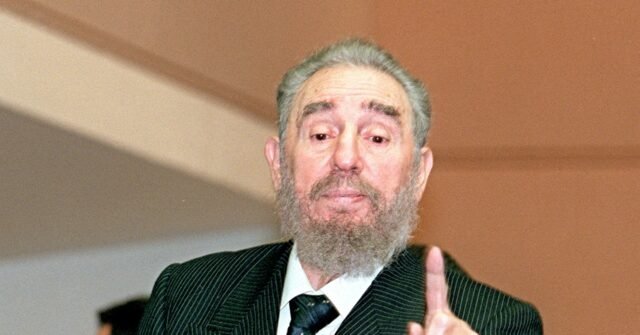
Democratic Socialists of America Co-Chair Ashik Siddique defended the organization’s recent commemoration of Fidel Castro’s 100th birthday, arguing that younger Americans see Cuba’s pre-revolution past as deeply unequal and that the revolution expanded universal healthcare, according to a Wednesday appearance on CNN News Central.
In a tense exchange with co-host Boris Sanchez, Siddique said many people—”especially younger Americans”—are examining Cuban history and noting that before the Cuban Revolution, the island was “one of the most unequal societies in the Western Hemisphere,” with “brutal conditions” under a power structure where U.S. corporations profited off Cuban labor. He acknowledged that Cuba has repression now, but credited the revolution with expanding things like universal healthcare.
DSA’s Castro Statement Draws Scrutiny
The interview came after the DSA released a statement marking 100 years since Castro’s birth, describing him as “an organizer” and “a fighter.” Sanchez pressed Siddique on whether that message would resonate with Florida voters, many of whom have family ties to Cuban exiles who fled the Castro regime.
Siddique pointed to recent election results, saying DSA candidates are campaigning on cost-of-living issues, and that “more and more people are not happy with a government that spends, now, over $1 trillion on a military budget, on expanding the ICE budget to tear communities apart.” He argued that the party’s focus on Medicare for All, living wages, and childcare is what voters want.
Sanchez, who shared a personal story about his grandfather being imprisoned by Castro after fighting against dictator Fulgencio Batista, questioned how lauding Castro could help the DSA win over voters who suffered under his dictatorship. Siddique responded by emphasizing that U.S. military regime change and economic blockades have not expanded democracy, citing Iraq and Afghanistan.
Blame on U.S. Sanctions
Siddique repeatedly blamed the U.S. embargo and sanctions for Cuba’s current hardships, including electricity and food shortages, saying that “for over 60 years, under economic sanctions from the United States, that have limited trade into Cuba, that has been starving the Cuban people.” He called for ending the embargo and returning to the opening under the Obama administration.
When Sanchez asked whether Castro was “a beacon of democracy,” Siddique said, “I wouldn’t say that,” but again highlighted the revolution’s healthcare gains and Cuba’s medical exports. He added that “Cubans have to be the ones deciding Cuba’s future” and that lifting sanctions would give Cuba the “breathing room it needs for political change to even be possible.”
Sanchez closed by noting that economists disagree on how much of Cuba’s problems stem from the embargo versus the Cuban government’s own policies, and suggested more conversations with those who fled the regime would be useful.
Source: www.breitbart.com — https://www.breitbart.com/clips/2026/08/19/dsa-co-chair-people-especially-younger-people-see-cuba-was-unequal-pre-castro-castro-expanded-healthcare/