

An essay published by The Federalist on the 25th anniversary of the September 11 attacks calls on Americans to reclaim the country’s founding principles, arguing that the nation’s cultural difficulties stem not from flaws in those principles but from a widespread acceptance that they were wrong to begin with.
The piece, titled “Saving The US Means Becoming Unapologetically American Again,” opens by recalling a gathering of roughly 120 men at a church in Richmond, Virginia, in March 1775, where Patrick Henry delivered the “Give me liberty or give me death” line that the author describes as the animating spirit of the country a quarter-millennium later.
From there, the author pivots to September 11, 2001, describing the hijacking of four planes by 19 men as a day that reshaped how Americans see themselves and the world. The essay addresses Osama bin Laden’s stated justifications for the attacks, which the author characterizes as the claim that American capitalism and imperialism brought oppression to the Middle East and North Africa.

The 9/11 Blame Debate
The essay singles out online influencer Hasan Piker, describing him as a friend of New York Mayor Zohran Mamdani, for a past statement that “America deserved 9/11.” The author argues that bin Laden’s religious motivations, which the piece says were clearly stated by the attackers themselves, have gone largely unmentioned 25 years later.
The author goes on to describe Islam as both a religious and political ideology, drawing a contrast with Christianity by asserting that Islam spread through conquest while Christianity spread through the martyrdom of its founders.
Beyond religious framing, the essay disputes bin Laden’s portrayal of the Middle East before American intervention. It points to the first Persian Gulf War and the clan warfare that consumed Mogadishu in the 1990s as evidence that the region has long been marked by sectarian conflict, resource disputes, and religious violence predating significant U.S. involvement. The author concludes that Americans were attacked for their ideals — not in spite of them.

Central to the argument is the claim that American excellence, which the piece roots in liberty, meritocracy, and individual rights, provokes resentment among those whose competing ideologies cannot match what the author says the American system draws out of people. The essay contends that America was targeted because it serves as a visible counterexample to other religious and political philosophies, and that because it could not be defeated through trade, conventional warfare, or persuasion, it had to be attacked through subversion and violence.
Domestic Divides and a Canadian Voice
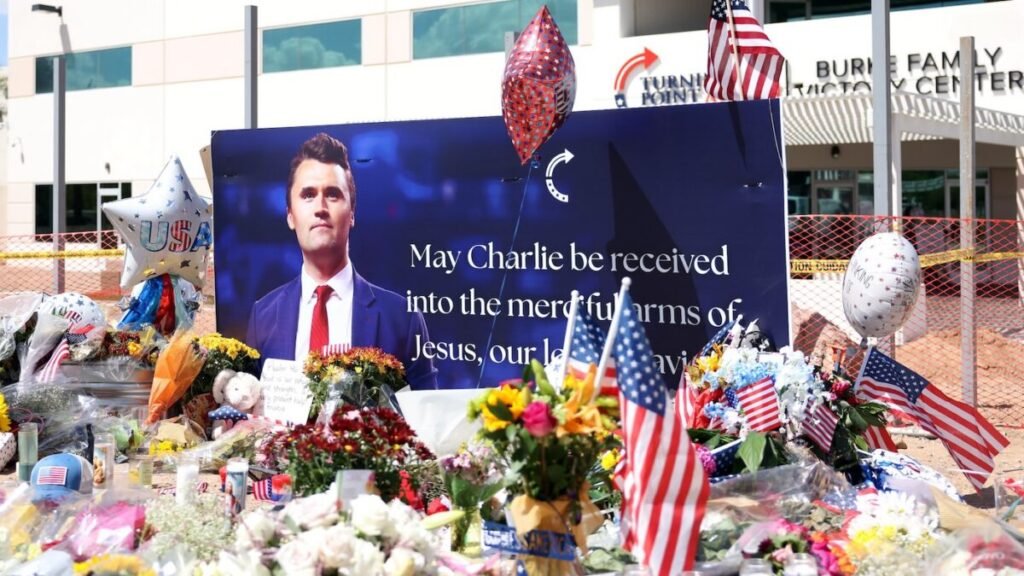
Turning to the present, the author writes that some Americans have retreated from the spirit of the founders while others have rejected it entirely. The essay cites two statistics: that a majority of Americans under 30 view socialism positively, and that 39 percent of that group say political violence is acceptable. The author links these attitudes to the killing of Charlie Kirk, describing Kirk’s ethos as aligned with the same spirit that animated Patrick Henry 250 years earlier. The essay characterizes Kirk’s death as “unfortunate” and frames it as the point where those two trends — sympathy for socialism and tolerance of political violence — met.
The author identifies as Canadian and explains a personal affection for America grounded in its principles. Those principles, the piece says, defeated the world’s strongest empire at its peak, enabled the invention of the telephone, the lightbulb, and the airplane, put a man on the moon, and allowed free men to build the New York City skyline — which the essay calls both the envy of the world and a target of terrorism precisely because of what it represented.
The essay’s prescription is direct: reject the claim that America is a colonial empire founded on genocide, reject the idea that capitalism is inherently evil, and stop treating opposing philosophies and cultures as equal to what America was founded on. The author argues that if those opposing ideologies were genuinely equal, they would not need subversion and terror to compete with the United States.
The piece closes by returning to Henry’s words, writing that without liberty there is only death, and that liberty dies only when good people stop fighting for it. The published version of the essay includes a fundraising appeal at the end asking readers to support The Federalist’s journalism through donations to its affiliated 501(c)(3), the FDRLST Real Journalism Fund.
Context for the Anniversary
The essay arrives at a moment of renewed debate over how the September 11 attacks should be remembered and taught a generation later. Arguments over the role of religion in the attacks, the legacy of the wars that followed, and the durability of American civic identity have all resurfaced around the 25-year mark. The Federalist piece stakes out one position in that conversation: that the country’s troubles are self-inflicted, rooted in a loss of confidence rather than in any failure of the founding vision itself.
Whether that framing resonates beyond the outlet’s readership remains an open question. The essay’s own cited data on younger Americans’ views of socialism and political violence suggests the author sees a generational gap that will not close on its own. The piece’s answer is cultural rather than legislative — a call to live out first principles rather than legislate them — which places it within a broader conservative argument that America’s problems are matters of conviction and civic faith, not policy alone.
Source: thefederalist.com — https://thefederalist.com/2026/09/11/saving-the-united-states-means-becoming-unapologetically-american-again/