
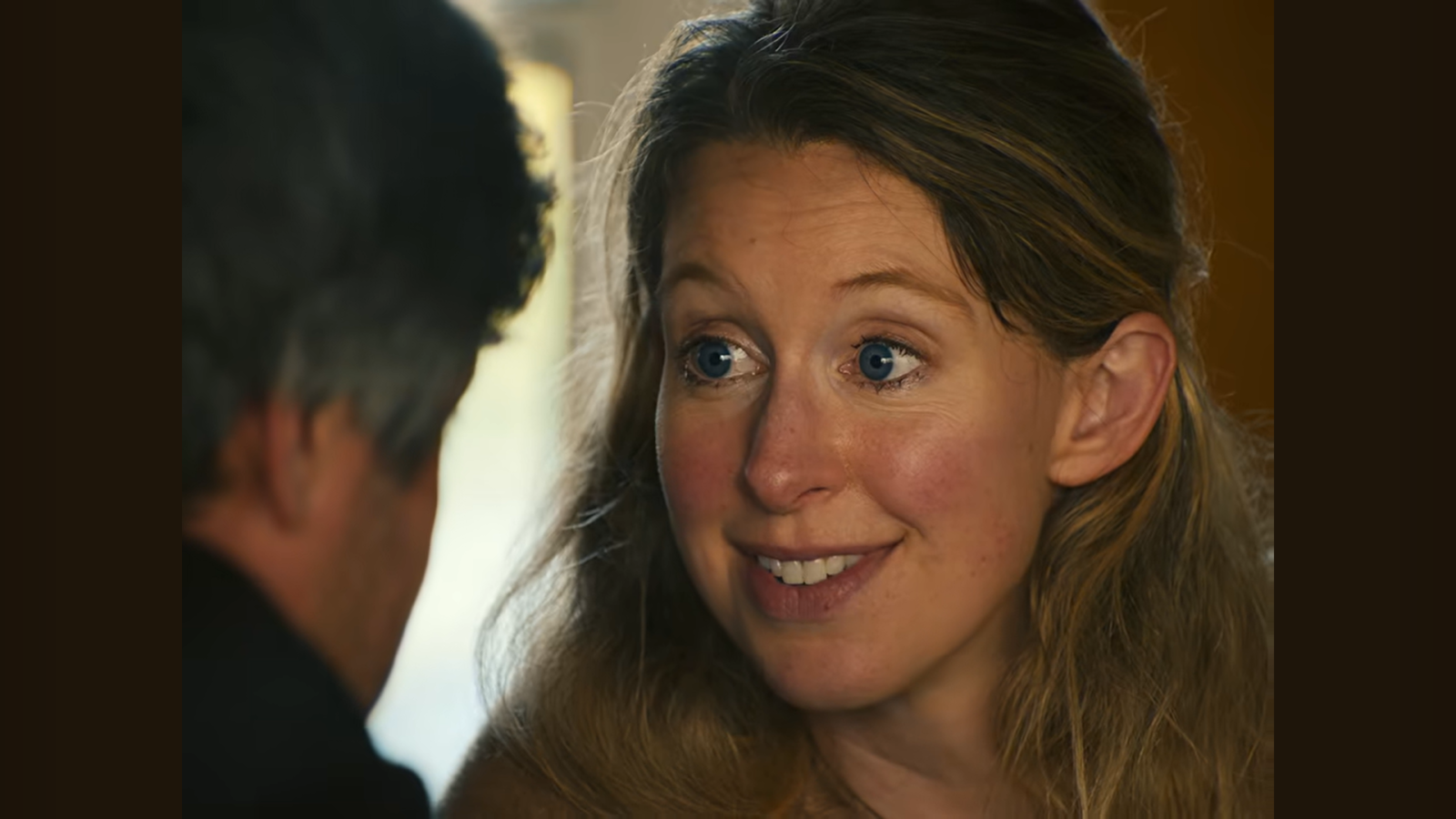
A new essay in The Federalist is drawing a direct line between Elizabeth Holmes, the disgraced Theranos founder, and Lindsay Clancy, the Massachusetts mother whose case has become a flashpoint online — arguing that the instinct to celebrate one and excuse the other comes from the same place.
The piece, published September 9, opens with a clip from an upcoming documentary called You Can See Everything, which The Federalist describes as chronicling the final days before Holmes was sent to prison. In the teaser trailer, Holmes speaks to co-director Nathan Fielder — the comedian known for his deadpan, reality-bending projects — and tells him, “I’m not that person, I can promise you that. I don’t have anything to deceive you on; of course I’m not deceiving you. I’m engaging with you as a human being. Why would I deceive you?”
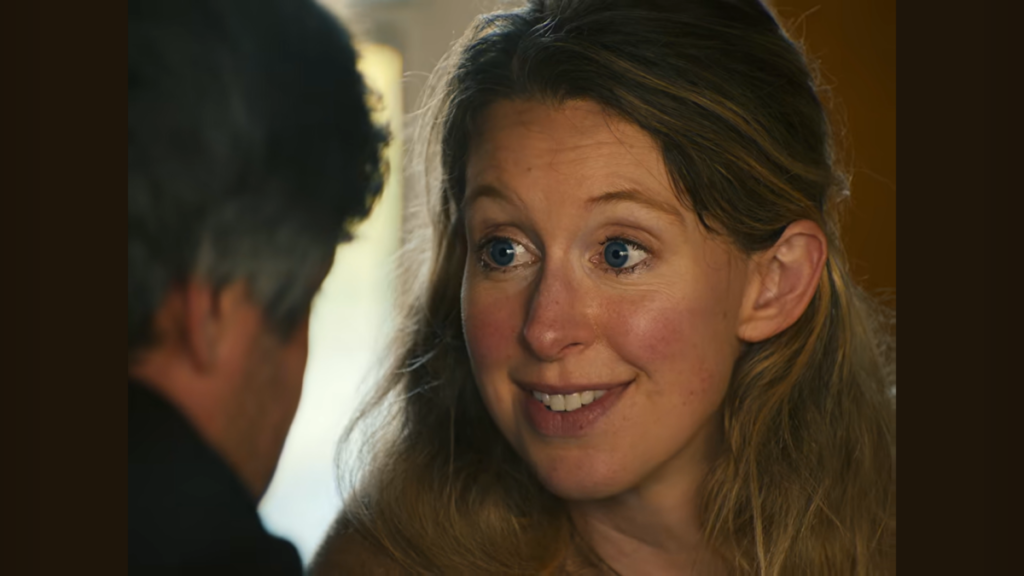
The Federalist acknowledges the clip has already generated a wave of internet memes, but uses it as a springboard for a darker argument. Holmes, the outlet notes, rose to fame as CEO of Theranos, a medical technology company once valued astronomically amid claims it had developed revolutionary blood-testing technology. Those claims collapsed under investigative reporting beginning in 2015, the company’s valuation evaporated by 2018, and Holmes was convicted of defrauding investors in 2022. She received 11.5 years in prison and began serving her term in 2023.
According to the essay, Holmes’s on-camera demeanor in the trailer — a fixed smile, steady stare, and practiced sincerity — registers as textbook manipulation. The piece calls it a plunge into the “sincerity uncanny valley”: the right words, the right expression, but something deeply wrong underneath. It lists a lack of empathy, habitual manipulation, irresponsibility, and an absence of remorse as hallmark traits, and argues that those traits are precisely the ones rewarded in modern institutions.

From Theranos to the Courthouse
The essay pivots sharply from Holmes to Lindsay Clancy, whose case has drawn intense national attention and an online fandom of supporters. The Federalist describes TikTok videos spinning theories to excuse Clancy’s actions or redirect blame, women gathering outside the courthouse in solidarity, and defenders who, in the outlet’s framing, downplay the victims: Clancy’s three murdered children.
It also points to a recent interview given by three jurors from the case. According to the essay, those jurors praised Clancy’s defense attorney as “funny,” “entertaining,” and full of “compassion” for Clancy, while describing the lone holdout juror as “very arrogant.” One juror reportedly said the holdout “had the hardest time getting off the fact that Lindsay Clancy killed her children.” The Federalist seizes on that line as evidence of a broader willingness to absolve a woman of strangling her three children — and to pressure the one juror who would not go along.

The author is careful to distinguish between biology and culture. The essay concedes that it is not claiming a large share of the population is born as “unfeeling would-be monsters.” Instead, it blames a culture of chronic immorality and an attention economy that rewards anti-social behavior. The sociopathic girlboss, the piece argues, doesn’t just get rich — she gets famous, and in an attention-addicted culture, fame may be the stronger lure. The manipulator gets what she wants and an audience while doing it.
A Broader Cultural Diagnosis
The essay widens from there. It argues that sociopathic tendencies show up in HR departments, the federal bureaucracy, the NGO network, politics, and journalism, and that these roles attract people who derive fulfillment from wielding petty power, deceiving others, and breaking social norms with impunity. It cites interactions with the DMV, TSA security, and HR managers, and claims most of those roles are held by women, a claim the piece ties to its broader thesis about the Clancy fandom being overwhelmingly female.
The essay also points to mental health data as context: a record number of Americans, women in particular, report serious mental health issues; more than half of leftist white women under 30 say a medical professional has told them they have a mental health condition; antidepressant prescriptions have climbed sharply, with usage among young women rising 63.5 percent from 2020 to 2022, according to the figures cited in the piece.
The Federalist’s conclusion is a warning about emulation. Children, the essay says, see unhinged behavior on TikTok, in classrooms, on CNN, and sometimes at home, and they copy it — threatening to produce further generations of what the piece calls mentally unwell sociopaths. The toleration and rewarding of those behaviors online, the argument goes, is not just a curiosity of the digital age but a threat to the social fabric.
The essay is less a news report than a cultural polemic, and it leans heavily on juxtaposition: an imprisoned tech fraudster insisting she is not deceiving anyone, and a jury that, in the outlet’s telling, almost let a mother walk free. Whether readers accept the link is another matter, but the piece is unambiguous about its thesis — that the same personality type is being celebrated in boardrooms and excused in courtrooms, and that the rest of us are paying for it.
Source: thefederalist.com — https://thefederalist.com/2026/09/09/elizabeth-holmes-and-lindsay-clancy-defenders-are-cut-from-the-same-sociopathic-cloth/