
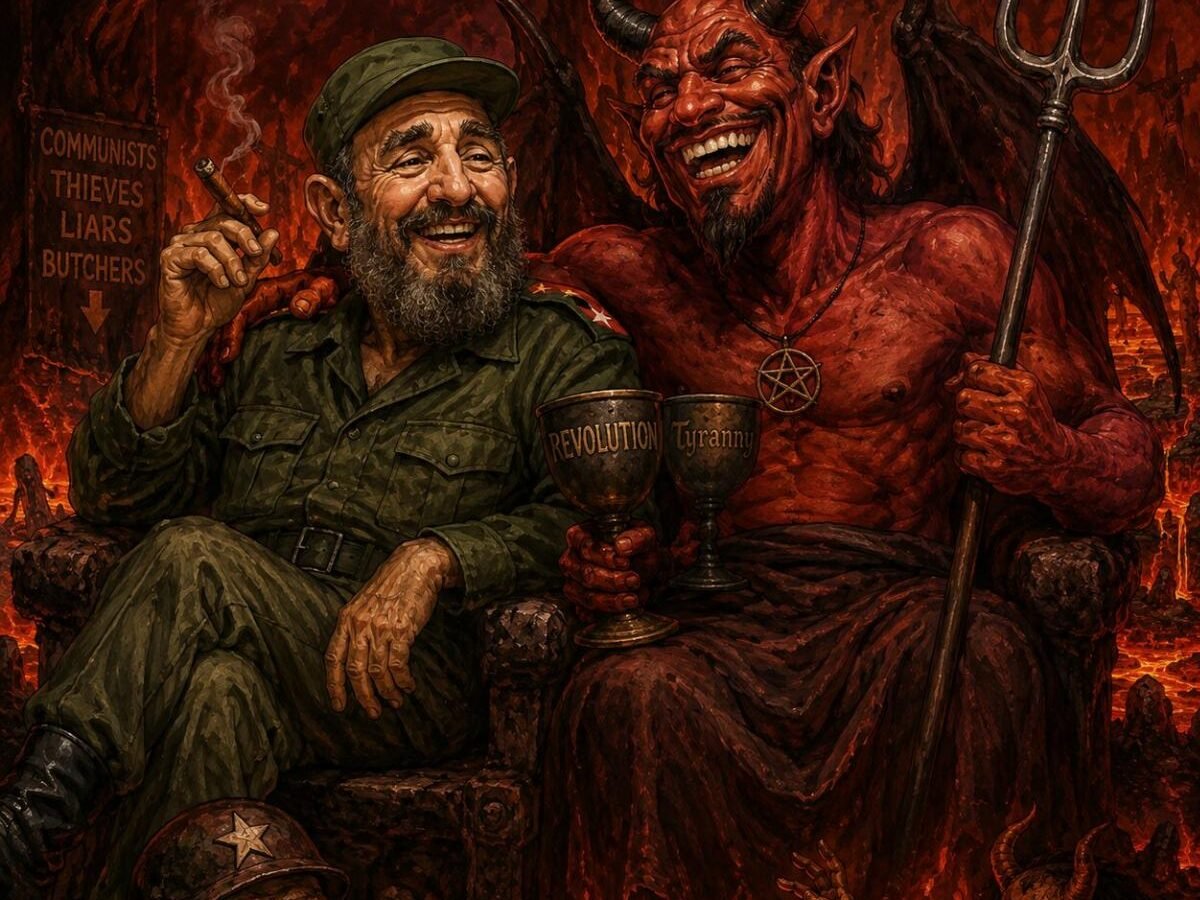
Fidel Castro would have turned 100 this week, and Cuba’s communist government has been preparing celebrations. But for many Cuban-Americans, there is little to commemorate. In an American Thinker op-ed, Silvio Canto, Jr. writes that the centenary is not a moment for nostalgia but for reckoning with what he calls “the biggest lie of the 20th century.”
Canto, whose parents were Cuban immigrants, draws on family memory to counter the official narrative. His father, he says, recalled a different Cuba—imperfect, but one where no one built rafts to leave. His mother described a happy place, full of immigrants from Spain and elsewhere seeking a better life. Against that backdrop, Canto measures the revolution’s promise against its reality.
A Revolution That Never Delivered
The op-ed cites John Suarez’s reporting on the centenary: Castro died in 2016, having handed power to his brother Raúl in 2006. The dictatorship, Suarez notes, is hosting international visitors to celebrate the anniversary. But the numbers tell a different story. In 2006, Forbes estimated Castro’s personal net worth at $900 million. His defected bodyguard, Juan Reinaldo Sánchez, wrote in The Double Life of Fidel Castro about the leader’s 29 luxury homes, four yachts, and a private island—while 89 percent of Cuba’s population lives in extreme poverty, according to the source.
Before the 1959 revolution, Cuba had a sizable middle class and strong labor unions protecting workers’ rights. Even under the Batista dictatorship, an independent judiciary survived, and lawyers represented their clients, not the state. Canto argues that all of that ended within months of the Castro brothers taking power—and it has yet to return.
Elites, Not the Working Class
The revolution was supposed to empower the working class, but Canto contends it simply replaced one elite with another. The Castro family, military leaders, and their inner circle now sit on cash reserves of $18 billion, living in opulent wealth across Cuba, Europe, and the United States, while millions of Cubans go hungry and die of treatable diseases. Those elites now occupy the homes that were “nationalized”—stolen, in Canto’s view, from the Cubans who built or paid for them.
Canto shares his own family’s experience: his father’s uncle had two homes in Havana; they were “nationalized,” and Aunt Clara never saw a dime after he died. He adds a pointed aside to New York City officials, saying, “This is how they do it.”
A Lie Bought by Leftists
Canto argues that the revolution’s myth was willingly purchased by leftists around the world who hate the U.S. more than they care about the Cuban people. He also takes a swipe at those who got their history from Godfather 2, dismissing its portrayal of revolutionary Cuba as “nonsense” that did not match the reality his parents lived.
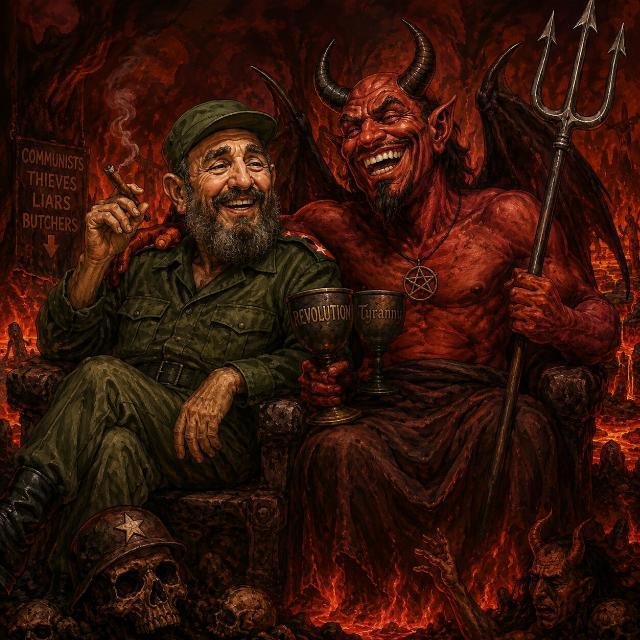
There is, he concludes, nothing to say about Fidel at 100—except perhaps a dark wish. “I just hope that there is a lot of global warming going down there where he is paying for everything he did up here.”
The op-ed is part of a broader conservative critique of the Castro legacy, but its core argument is personal: that the revolution’s promise was a lie, and the Cuban people have paid the price ever since.
Source: www.americanthinker.com — https://www.americanthinker.com/blog/2026/08/happy-100-fidel-i-hope-it-burns-down-there/