
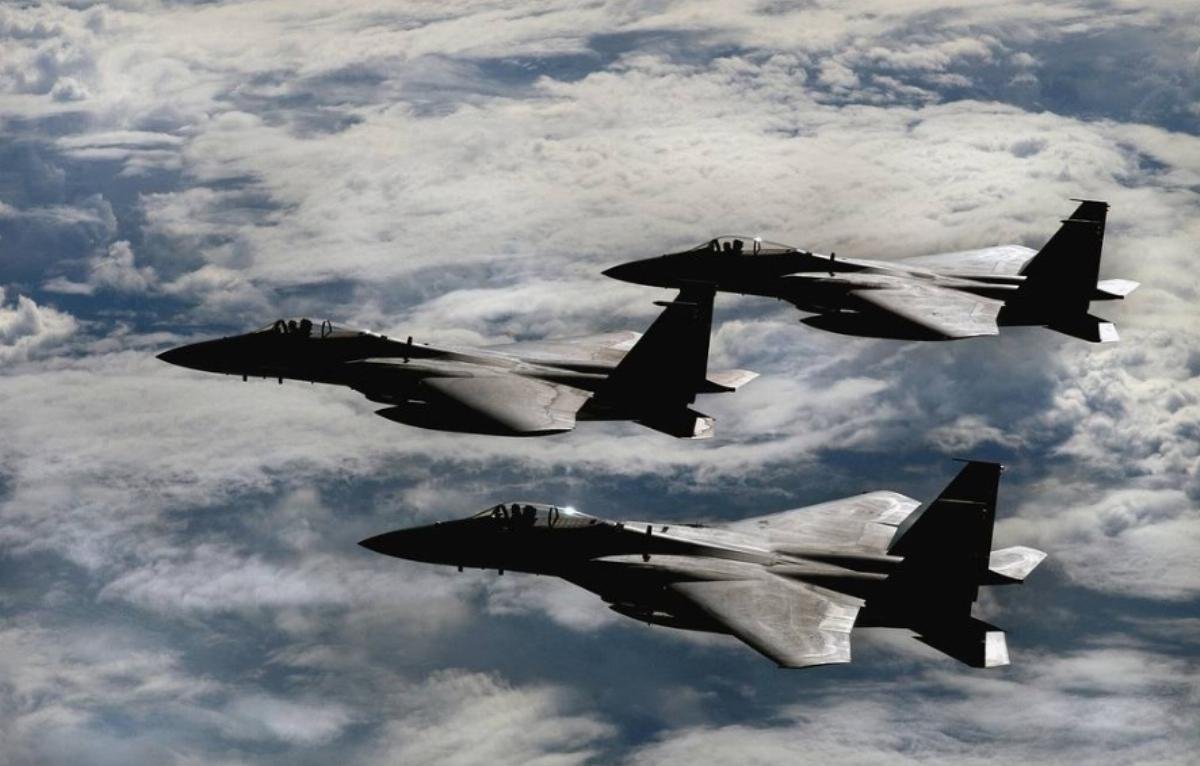
In a provocative new essay, Scott S. Powell, a senior fellow at the Discovery Institute, argues that the United States’ on-again, off-again approach to military action against Iran mirrors the disastrous appeasement policies of Britain and France toward Nazi Germany in the 1930s. Writing for American Thinker, Powell calls for a decisive and overwhelming U.S.-led coalition to achieve what he terms Iran’s “total defeat,” warning that hesitation only emboldens the regime.
Powell draws direct parallels between the historical path to World War II and the current standoff with Iran, noting that Hitler’s early violations of the Treaty of Versailles, the remilitarization of the Rhineland, and the annexation of Austria all proceeded without serious Western resistance. Each concession convinced Hitler that Britain and France lacked the will to stop him, Powell writes, and he suggests Iranian leaders may be reading similar signals from U.S. vacillation today.
The Munich Analogy and Failed Negotiations
Central to Powell’s argument is the Munich Agreement of September 1938, where Britain’s Neville Chamberlain and France’s Édouard Daladier, with Italian dictator Benito Mussolini brokering the terms, ceded Czechoslovakia’s Sudetenland to Hitler in exchange for a promise of peace. Chamberlain returned to London declaring “peace for our time,” but the agreement proved hollow. Hitler violated it within six months, marched into Czechoslovakia, and then invaded Poland in September 1939, igniting a global conflict.
Powell sees a similar pattern in the U.S. approach to Iran. He describes Operation Epic Fury, a U.S. military campaign against Iran that has reportedly cycled through roughly six rounds of escalation, threats of major strikes, pullbacks for talks, partial agreements, and collapses over enforcement disputes—particularly over the Strait of Hormuz and Iran’s nuclear program. As of this writing, the operation is in another fragile pause for negotiations, with no comprehensive settlement reached.
According to Powell, Iran does not view these cycles as failed negotiations but as a successful strategy to stop U.S. bombing, buy time to rearm with help from China and Russia, and move the conflict closer to the U.S. midterm elections. He suggests the Trump administration may be “played for fools” by this pattern.
Regional Allies Losing Faith
Powell reminds readers that in the early days of Operation Epic Fury’s massive bombings, Iran launched missile and drone strikes on several Sunni neighbors, including the United Arab Emirates, Qatar, Kuwait, Oman, Saudi Arabia, and Bahrain. These attacks, Powell argues, have likely left these nations confounded and demoralized by what he calls “on-again, off-again” U.S. hesitancy.
A recent example of eroding trust, he notes, is Oman’s decision to enter into its own negotiations with Iran over control of the Strait of Hormuz. Powell speculates that Oman may prefer a deal with “the devil they know” rather than relying on the United States, citing American failures in Iraq and the widely criticized withdrawal from Afghanistan under the Biden administration.
The broader Sunni Arab allies, Powell writes, are aware of the “fickle nature” of American electoral politics and may not fully trust Trump’s staying power ahead of uncertain midterm elections. This could prompt them to distance themselves from initiatives like the Abraham Accords, Powell warns, given the perceived inconsistency of U.S. foreign policy.
A Call for Overwhelming Force
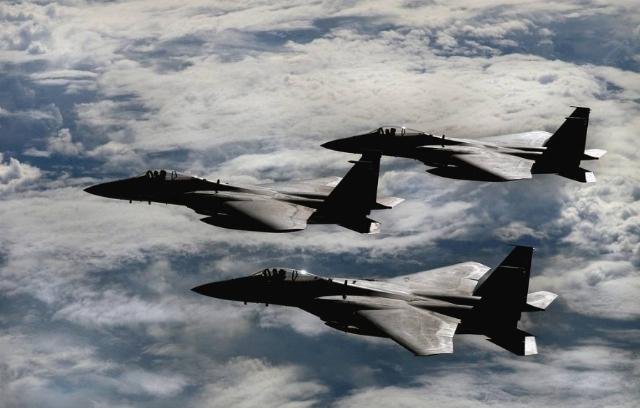
Powell argues that the United States has the military assets to achieve decisive victory if it acts boldly. He points to roughly 400 U.S. fighter aircraft positioned in and around the Strait of Hormuz, and notes that neighboring Sunni nations collectively possess about 600 advanced fighter aircraft, mostly purchased from the United States. He also mentions that Kurdish forces, largely Sunni and friendly to the U.S., already have boots on the ground in Iran.
Strong, quiet leadership by the Trump team, Powell contends, could forge a U.S.-Sunni or U.S.-Israeli-Sunni coalition with overwhelming force. “After all,” he writes, “this is their neighborhood not ours.”
Powell asserts that Iran is already “a militarily defeated nation,” and allowing the regime to rebuild would be a tragic missed opportunity to liberate the majority of Iranians who, he claims, want democracy. It would also, he argues, be a dereliction of duty to the broader Middle East, and would deliver a death blow to Hamas, Hezbollah, and the Houthis, dramatically improving prospects for regional peace.
“If there was a time to get this done and bring the Iran regime to its knees in total defeat,” Powell concludes, “that moment is now.”
Source: www.americanthinker.com — https://www.americanthinker.com/articles/2026/08/now-is-the-time-for-iran-s-total-defeat/