
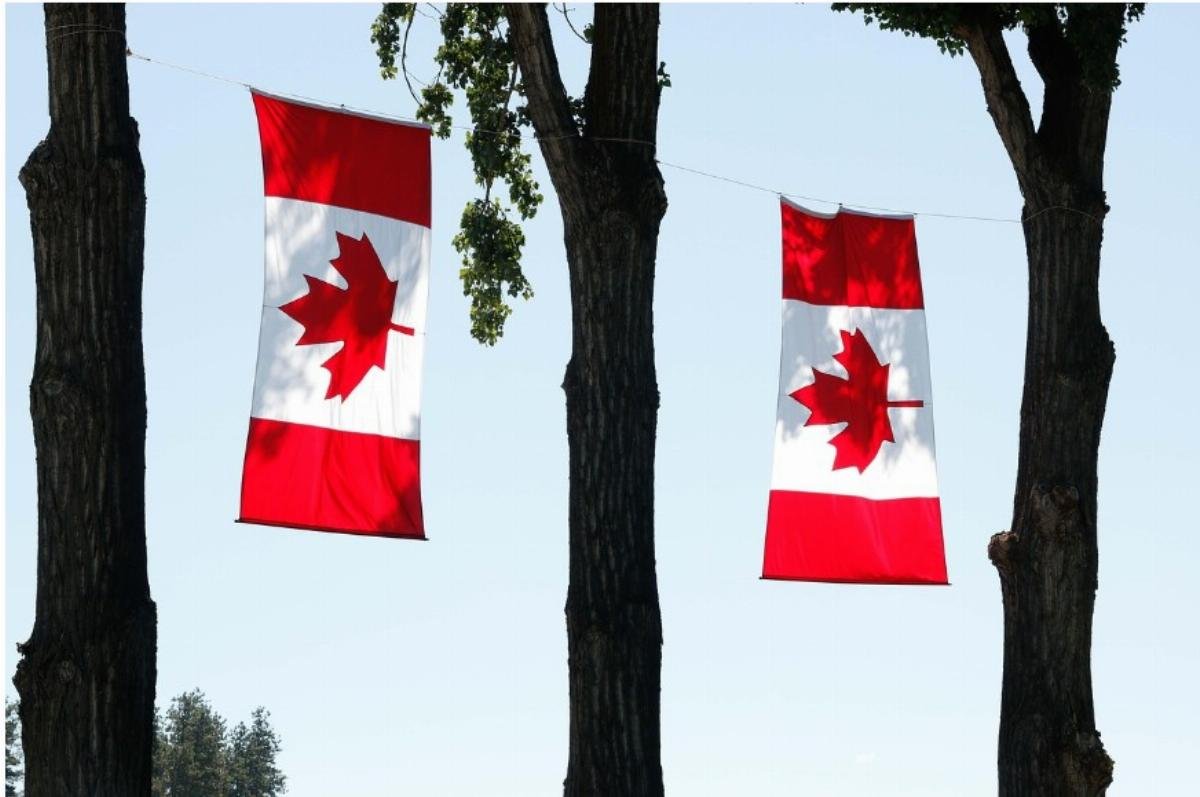
When the last-minute trade talks between the United States and Canada collapsed, most observers chalked it up to tough negotiation tactics or a genuine impasse over tariffs. But a new analysis from the conservative outlet American Thinker suggests the failure was something far more calculated: a political move aimed squarely at the U.S. midterm elections.
The piece, written by Janica Bevec, argues that the collapse was designed to have a temporary but potent effect — making President Trump’s tariff policy look bad and amplifying the Democrats’ newest campaign message: “affordability.”
According to the analysis, the resulting economic pressure on voters — including spiking gas prices — could be weaponized to turn public opinion against Trump and the Republican agenda, with the ultimate goal of helping Democrats win more seats in the midterms and potentially regain control of Congress.
A familiar pattern
Bevec draws a parallel to Boris Johnson’s trip to Ukraine nearly five years ago, describing it as another last-minute intervention when there was still a chance to prevent a wider conflagration in the Russia-Ukraine conflict. That window, she notes, was lost when the peace process was derailed — with some accounts suggesting fingers pointed toward London.
The implication is that a similar dynamic is at play now, with globalist forces working to destabilize both Russia and the United States simultaneously.
“Could their strategy be to take down both countries?” the piece asks. “Russia through war, the USA through a strategy of ‘a thousand cuts’ — open borders and destabilization; the DNC and its destructive agendas; and China’s growing inroads into Canada, just to name a few?”
China’s Canadian foothold
That growing Chinese presence in Canada is a central concern of the analysis. Bevec describes a long-term strategy by Beijing that includes buying influence with Canadian politicians, establishing a military foothold, and potentially maneuvering for control of the Trans Mountain pipeline to the Pacific.
That pipeline, she notes, could ship badly needed oil directly to China — all while positioning Beijing to access Canada’s enormous resource reserves “by whatever means necessary.”
The piece reminds readers just how resource-rich Canada is, particularly across its vast northern territories. That’s where, in the Western Hemisphere, the real wealth lies — just as Russia’s northern expanses hold comparable riches on the other side of the Arctic.
The Arctic as the prize
At the heart of the analysis is the Arctic itself. Bevec argues that globalists, working through the World Economic Forum and former Bank of England governor Mark Carney, are pursuing a steady march toward control of these resources — a march that has so far gone undeterred.
Carney, who now serves as Canada’s prime minister, is singled out for particular scrutiny. “Remember, Mark Carney kisses the king’s ring,” the piece notes, alluding to Canada’s constitutional monarchy and Carney’s ties to the British establishment. “So what’s a billion given here when trillions are at stake? The Arctic is the prize.”
The Trump administration, meanwhile, is described as playing defense — aggressive but still reactive, bolstered by support from pro-America billionaires who are friends of the president.
Reading between the lines
It’s worth noting that American Thinker is a staunchly conservative publication, and this analysis reads as a strongly opinionated take rather than a neutral news report. The claims about a coordinated globalist plot, London’s alleged role in derailing peace talks, and Carney’s supposed complicity are presented as assertions and speculation, not established facts.
Still, the piece highlights a real political dynamic: trade disputes between the U.S. and Canada have genuine economic consequences, and those consequences inevitably become fodder for domestic politics on both sides of the border. Whether the collapse was orchestrated for electoral gain or simply the result of divergent interests, the timing is certainly convenient for Democrats seeking to hammer home their affordability message ahead of the midterms.
The broader question — who ultimately benefits from instability in North American trade relations — is one that cuts across party lines. If the Canadian government believed it could extract better terms by waiting out the U.S. election cycle, that would be a calculated gamble. If, as Bevec suggests, the moves were designed to hurt Trump politically, that would represent a far more aggressive intervention in U.S. domestic affairs.
Either way, the stakes go well beyond the price of lumber or dairy. At issue is control over some of the most resource-rich territory on Earth, at a moment when Arctic access is becoming a geopolitical flashpoint.
As the midterms approach, expect the trade file to remain a live political weapon — and expect both parties to keep a close eye on what happens in Ottawa, and in Beijing.
Source: www.americanthinker.com — https://www.americanthinker.com/blog/2026/08/what-s-really-going-on-with-canada/