
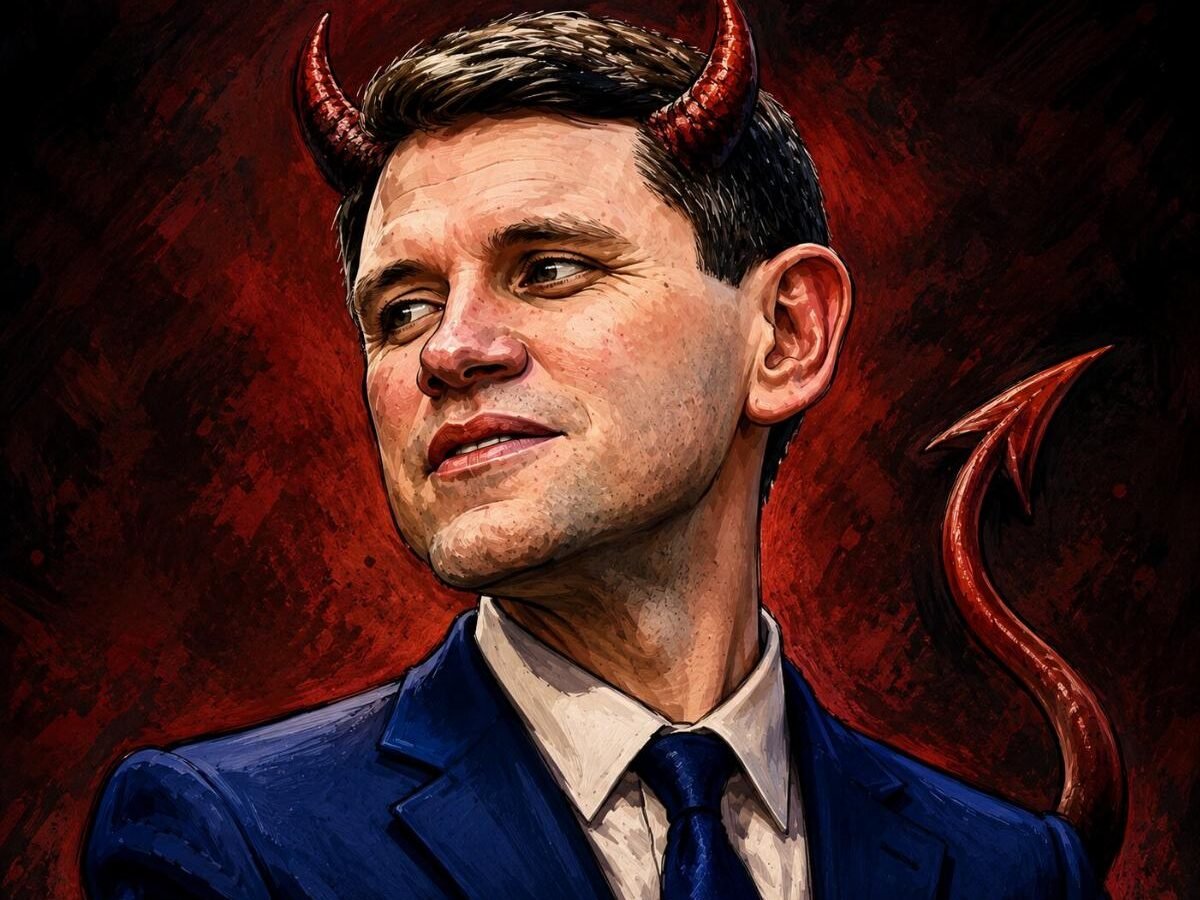
It is a strange alchemy that sometimes happens in the mind of a writer: a movie scene, a politician’s face, and suddenly the two fuse into a single unnerving image. For columnist Thom Nickels, that moment came after watching Roman Polanski’s 1999 cult classic, The Ninth Gate, and then stumbling upon a photo of James Talarico, the Democratic nominee for Senate in Texas. The resemblance, he argues, is not superficial but deeply symbolic.
The Polanski Parallel
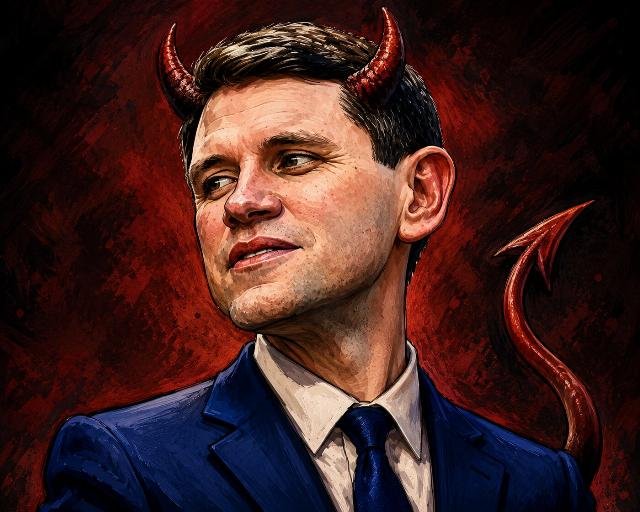
In The Ninth Gate, the Devil’s followers are not monstrous or overtly evil. They are, as Nickels describes, polite to a fault, holding doors for the elderly, saying ‘please’ and ‘thank you,’ and offering loving kindness to strangers. They are nice because the Devil wears a smiling face, and because Lucifer was the most beautiful of the fallen angels. For Nickels, Talarico embodies this same unsettling charm—a well-dressed, impish figure with a plastic-sculpture haircut, a kind of menacing Howdy Doody. It is a description that borders on caricature, but the point is sharp: evil, in this telling, is not always ugly.
Talarico’s Christian Rhetoric
Talarico, who spent time as a Presbyterian seminarian, presents himself as a devout Christian. His grandfather was a Baptist preacher, and his famous line—’Democracy is a spiritual practice’—has become a hallmark of his campaign. On Stephen Colbert’s show, he drew a sharp line between his faith and what he calls ‘Christian nationalism.’ ‘There’s nothing Christian about Christian Nationalism. Christian Nationalism is the worship of power in the name of Christ,’ he said. He insists that his Christianity is ‘biblical,’ focused solely on loving God and loving one’s neighbor, and that politics is ‘another word for how we treat our neighbors.’
But Nickels sees this as a distortion. Talarico, he argues, has cleverly redefined Christianity to fit a leftist agenda, discarding any teachings that conflict with progressive politics. He cites Talarico’s views on abortion, which he justifies with a reading of the Annunciation: that the angel Gabriel offered Mary a choice, implying she could have declined to give birth to the Son of God. To Nickels, this is a perversion of the concept of free will, turning it into a divine sanction for abortion.
The Obama Effect
Nickels is not alone in noticing a certain quality in Talarico’s speaking style. He calls it the ‘Obama effect’—the polished cadence, the familiar hand gestures, the silver tongue. Even Joe Rogan, often skeptical of political figures, told Talarico he should run for president. This effect, Nickels writes, is swaying independents and even some Republicans in Texas, a state that has not elected a Democrat to statewide office in decades. Talarico is already ahead in the polls, a development Nickels calls ‘very troubling.’
The comparison to Obama extends beyond style. Talarico’s platform—defending DEI, open borders, transgender military service, and opposition to defunding ICE—echoes a progressive vision that Nickels believes is at odds with the Christianity Talarico professes. Talarico’s support for transgender children, whom he calls ‘an inspiration,’ and his opposition to restrictions on gender-affirming care, are particular flashpoints.
A Battle of Characters
Talarico’s opponent, Texas Attorney General Ken Paxton, is, in Nickels’s view, the better candidate—but he ‘scores zero on the charisma charts.’ This is a classic political dynamic: the polished, telegenic challenger against the staid incumbent. Ann Coulter has quipped that Democrats always get excited over any candidate who appears to be a heterosexual white male, since that is a declining part of their base. Yet Paxton’s perceived lack of charm may be his undoing.
The Devil’s Betrayal
In The Ninth Gate, the Devil worshippers come to a bad end, because the Devil does not rule by love but by betrayal. Nickels extends this metaphor to Talarico’s political ascent, which he argues is built on distortions of Christianity—including claims that God is non-binary, that there are six sexes, that abortion is permissible, and that governments banning such things are guilty of ‘Christo-fascism.’ This, Nickels contends, is ‘taking what he likes from Christianity and discarding everything else,’ a wickedness ‘straight from a screenplay by Roman Polanski.’
Whether one agrees with Nickels’s vivid characterizations or dismisses them as hyperbole, his piece raises a timeless question: how do we judge the sincerity of a politician’s faith? For Talarico, the answer may lie with Texas voters this fall. For Nickels, the answer is already clear—the Devil, as ever, wears a smiling face.
Source: www.americanthinker.com — https://www.americanthinker.com/articles/2026/08/james-talarico-a-classic-polanski-villain/