
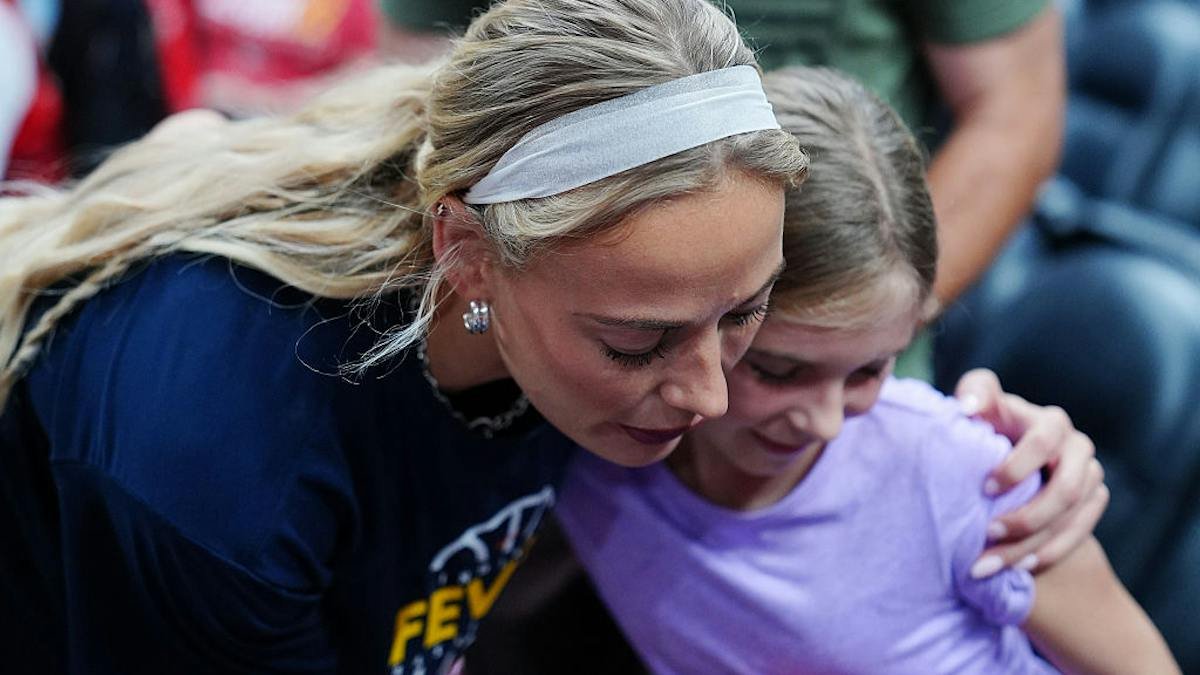
Jennifer Sey, chief executive of the apparel brand XX-XY Athletics, says she will return to the Target Center in Minneapolis on Thursday for the Indiana Fever’s final regular-season game of 2026 — a venue where she says she was harassed during an earlier visit this season. In an essay published by The Daily Wire, Sey recounted attending her first WNBA game on August 2, when she says a man with a bullhorn screamed obscenities at her. She wrote that she had gone to the arena to thank Fever player Sophie Cunningham.
Sey pointed to an ESPN interview in which Cunningham said she wanted “to protect young girls in a locker room, or young girls in sport who shouldn’t have to go against biological men.” According to Sey, the comment drew a wave of criticism in which Cunningham was labeled a bigot, a transphobe, and a grifter, among other things. Sey argued that the response demonstrated the cost borne by women who speak publicly about biological sex in sports.
A growing presence at WNBA games
In her account, Sey described a broader pattern of supporters — including women, girls, feminists, parents of daughters, and people across the political spectrum — turning out at Fever games to express thanks to Cunningham rather than to protest. She cited a 16-year-old named Ahnaleigh Wilson, who wore an XX-XY Athletics shirt to a game in Seattle and held a sign reading “thank you.” Sey wrote that a Storm co-owner screamed at the teenager, reducing her to tears, and that other attendees spat at her.
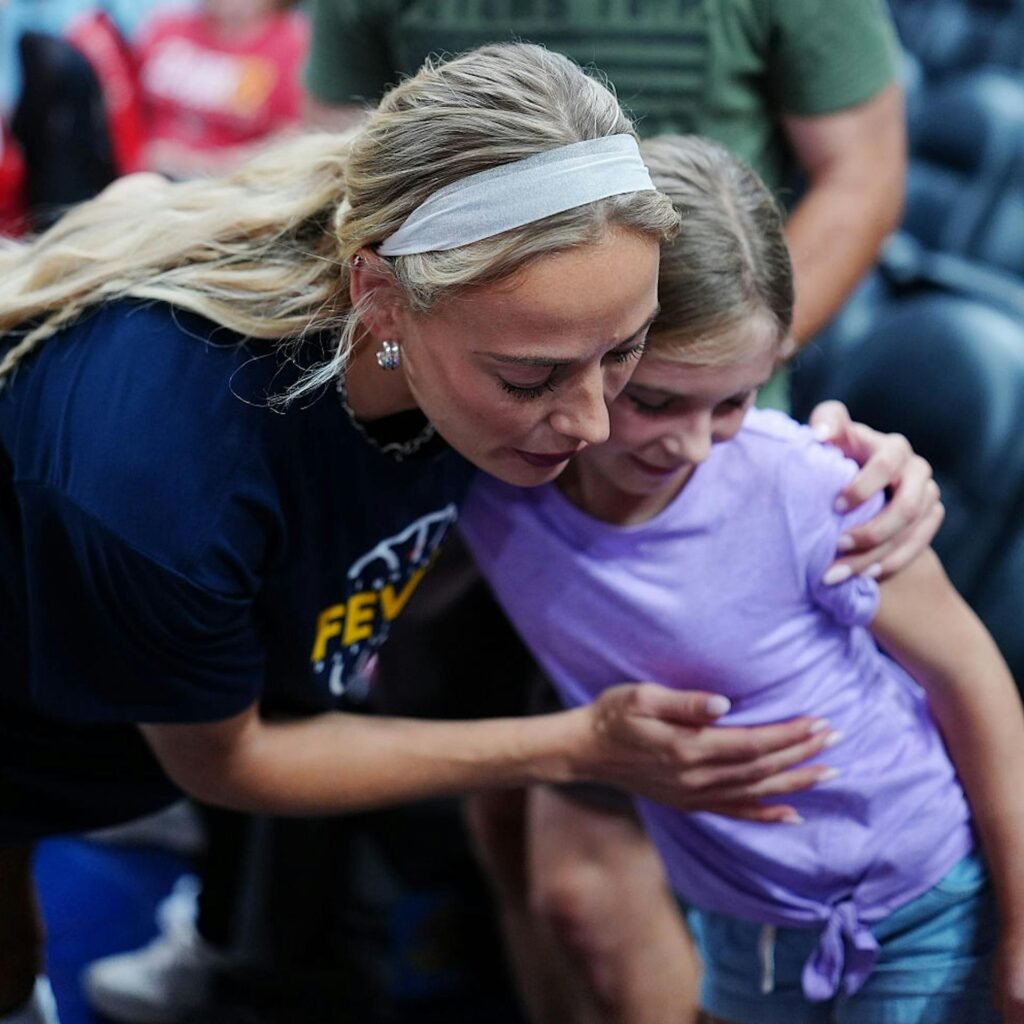
Sey’s own experience in Minneapolis on August 2, as she described it, was worse. She said protesters confronted a group of middle-aged women and teenage girls, and that a man repeatedly used a misogynistic slur. She also alleged that the man tried to put his hands on former collegiate swimmer Riley Gaines when Gaines arrived, and that he held a bullhorn in people’s ears, preventing them from speaking even to one another.
“They are losing, and they are frantically deploying the same tactics of silencing, bullying, coercion, physical attacks — that they’ve been using for years to ‘win,'” Sey wrote. “Only those tactics aren’t working anymore. We aren’t afraid. And we won’t be silenced.”
Kendall Kotzmacher and a contested state semifinal
Central to Sey’s account is Kendall Kotzmacher, a softball catcher from Hugo, Minnesota, whom Sey described as a four-year letter winner, four-time All-Conference selection, and First Team All-State honoree as a senior. Kotzmacher transferred to White Bear Lake for her senior season to pursue a state championship alongside her younger sister, according to Sey.

Sey wrote that in the 2025 Class AAAA semifinal, Kotzmacher was behind the plate when Champlin Park sent a biological male to the mound — a pitcher she described as roughly six feet tall with a man’s frame and power. Kotzmacher also had to bat against him, Sey wrote, and the ball spun in a way no girl her age in Minnesota could produce. White Bear Lake scored two runs, the most any opponent managed against him in the postseason, but lost 3–2 after he hit a half-swing double in the final inning to set up the winning run, according to Sey’s retelling.
Sey wrote that Kotzmacher said afterward she would have accepted losing to a team that earned its place fairly, but not to a male in a girls’ tournament. After the game, Sey said, Kotzmacher sobbed in her sister’s arms, and when the younger girls she coaches asked why she was crying, she told them she hoped they would never have to understand. Sey noted that Kotzmacher hit a home run during the team’s record-breaking postseason run, but argued that none of it became the story.
According to Sey, Kotzmacher was harassed and threatened after speaking out, and at the Minneapolis rally a man with a megaphone told her — in front of her mother and sister — that she should have been aborted.

Senate testimony and a return to the arena
Sey wrote that Kotzmacher is scheduled to be in Washington, D.C., on September 23 for a Senate hearing on males competing in women’s sports, and that she has submitted testimony. On September 24, Sey said she will sit in the arena with Kotzmacher and with Amy Sousa, whom Sey described as recently ejected from a Portland Thorns game before kickoff for wearing the same shirt Ahnaleigh wore in Seattle. Sey wrote that Sousa and her friends then went to The Sports Bra, a bar that markets itself as a home for women’s sports, ordered food, and faced the television without engaging other patrons — only to be told to leave when their plates arrived because their shirts had offended people.
Sey framed the return to Minneapolis as a refusal to be pushed out of public life. “The culture was taken with force — policy capture, institutional cowardice, social punishment, and the redefinition of woman as a feeling anyone can claim,” she wrote. “We will take it back with the same stubbornness, but not with the same lies.”
She rejected the characterization of the effort as a campaign against transgender people, describing it instead as a campaign for the categories that make sport, safety, and fairness possible. Sey also invoked Title IX, arguing it was not written so that males could take podiums, scholarships, and locker rooms. “Little girls should not have to absorb the cost of an adult ideology,” she wrote.
Sey is an author, filmmaker, and retired national champion gymnast. Her essay closed by tying the individual stories together — Cunningham, Wilson, Kotzmacher, and Sousa — as examples of people who, in her telling, paid a price for speaking plainly about biological sex. She said the effort is bigger than any one player or a t-shirt, and that the question at stake is whether girls retain a right to their own sports, their own spaces, and a firm boundary.
Source: www.dailywire.com — https://www.dailywire.com/news/my-stand-with-sophie-cunningham-for-women-and-girls-in-the-fight-for-womens-sports