
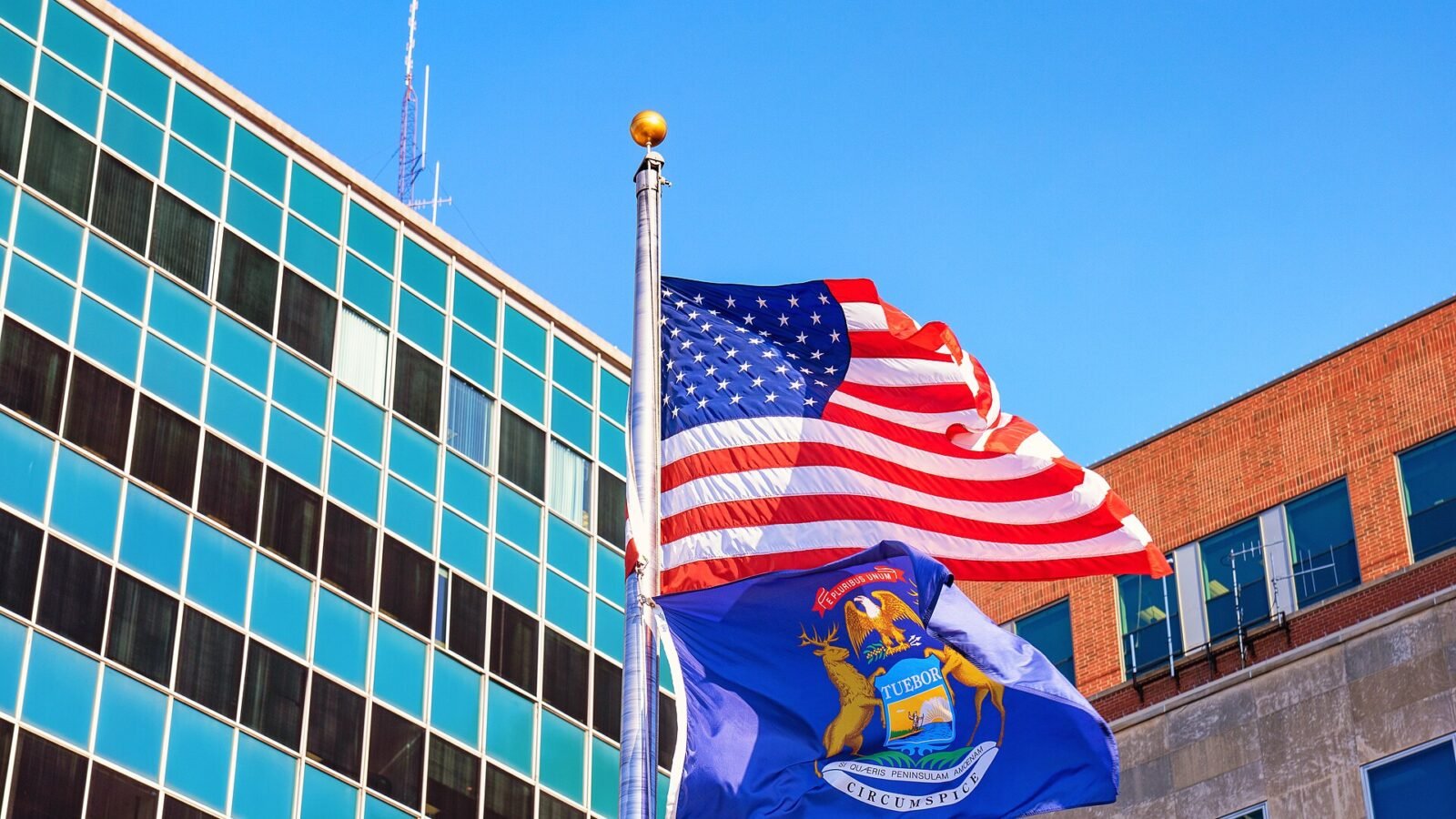
Supreme Court Justice Brett Kavanaugh on Thursday rejected an emergency request to force Michigan election officials to place a constitutional amendment requiring proof of citizenship for voting on the state’s November ballot, according to an order released by the Court.
The denial, which came without explanation as is typical for such emergency applications, effectively ends the effort by Americans for Citizen Voting to get its initiative before Wolverine State voters this fall. The proposed amendment would have required Michigan voters to verify their U.S. citizenship when registering to vote and mandated photo identification for in-person voting.
Kavanaugh, who handles emergency applications from the 6th Circuit — which includes Michigan — declined to refer the matter to the full Court for consideration.
Deadlocked Board and Signature Dispute
The controversy traces back to an Aug. 24 meeting of the Michigan Board of Canvassers, where members split along party lines in a 2-2 vote over whether the group had gathered enough valid signatures to advance the measure, according to The Detroit News.
The group needed 446,198 signatures to qualify for the ballot and reported collecting more than 700,000. However, a review of a 1,000-signature sample found that Americans for Citizen Voting fell just short of the required threshold, the outlet reported.
Much of the board’s debate centered on five specific signatures that were deemed invalid. Supporters submitted affidavits from the individuals who signed the petition, attesting that they had signed and were qualified to do so, but those affidavits were turned in after the deadline for challenges, according to The Detroit News.

The group also complained about the timing of the process, noting that its signatures were submitted on March 4, yet the Bureau of Elections did not issue its staff report until Aug. 17 — more than five months later.
Legal Path to the Supreme Court
Americans for Citizen Voting initially sought relief at the Michigan Supreme Court, but brought its emergency application to the U.S. Supreme Court after the state court allegedly failed to act in a timely manner. The group’s filing noted that the Michigan Supreme Court “has done nothing — not even to request a response from Respondents” to its Aug. 27 application, despite state law requiring the fall ballot to be certified no later than Sept. 4.
In its response brief, the state of Michigan asked the Supreme Court to reject the group’s application.

The denial comes amid ongoing controversy over election integrity measures in Michigan, which has been a focal point of debates over voter verification and ballot access. The Federalist previously reported that state Democrats have repeatedly opposed efforts to ensure only U.S. citizens are voting in Michigan elections, despite such policies enjoying broad support across ideological lines.
Michigan has also drawn scrutiny for what critics describe as a lack of transparency in its election processes.
With the Supreme Court application now denied, the citizen-only voting amendment will not appear on Michigan’s 2026 ballot, leaving supporters to consider future avenues for advancing the proposal.
Source: thefederalist.com — https://thefederalist.com/2026/09/03/kavanaugh-declines-to-order-citizen-only-voting-initiative-on-michigans-fall-ballot/
Background and context
The latest developments around Kavanaugh Rejects Bid to Force Citizen-Only Voting Initiative onto Michigan Ballot come amid a broader debate over politics, institutional accountability, and the policy choices that shape everyday life. Understanding the immediate facts is only the first step; the wider impact depends on how officials, institutions, and the public respond in the days and weeks ahead.
FedFront’s coverage focuses on verifiable details, identifiable sources, and the practical consequences of political decisions. Readers should review official statements, primary documents, and court or agency records before drawing final conclusions about any disputed claims.
Why it matters
Stories like this can influence legislation, regulatory enforcement, public trust, and the balance of power between government institutions. Even when the immediate headline fades, the underlying policy, legal, or political questions often continue to shape future decisions.
What to watch next
- Official responses, statements, or policy changes
- Legislative, regulatory, or court action
- Follow-up reporting and independent verification
- Public reaction and broader political fallout
FedFront will continue monitoring this story and update coverage as new information becomes available.
Source: thefederalist.com
Related coverage
- NBC Host: Oregon’s ‘Really Strong Gun Laws’ Didn’t Stop School Shooting — District Had Already Banned Concealed Carry
- U.S. Jobless Claims Hit 57-Year Low as Unemployment Benefits Applications Drop to 189,000
- Marsha Blackburn Vows to ‘Build a Red Wall’ Against Socialism as She Makes Her Case for Tennessee Governor
- Goodell: NFL Will Add International Team, ‘No Doubt’ It Happens