
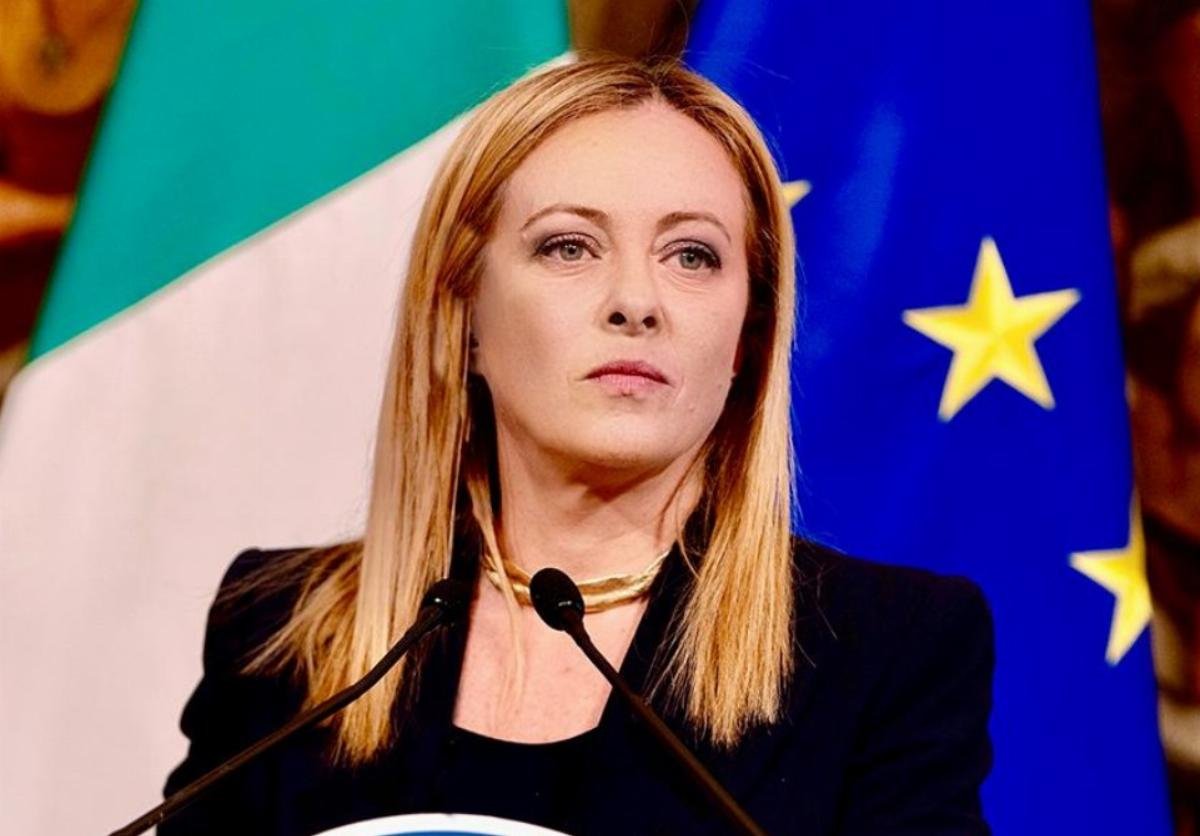
When roughly 72,000 people, mostly young men, surged across the border from Morocco into the Spanish enclave of Ceuta on the night of July 31, the Spanish government called it a manageable event. Within days, Madrid said about 70,000 had left again, officially “voluntarily.” But for Italian Prime Minister Giorgia Meloni, the images from Ceuta were not a blip — they were a catalyst.
According to a detailed account published by American Thinker, Meloni reacted the very day of the chaos by suspending the Schengen Agreement with regard to Spain, and her Foreign Minister Antonio Tajani later formalized the closure of the Schengen area to Spanish traffic, citing national security concerns. In a post on X, Meloni said Italy would not stand idly by and would take extraordinary measures if necessary to protect the country from negative consequences.
The move was not just a defensive gesture. Meloni, together with Denmark’s Social Democratic Prime Minister Mette Frederiksen, initiated an open letter to EU institutions that was signed by 22 member states, calling for a coordinated response to illegal migration and stronger external borders. The letter, as described in the report, signals a growing national-conservative bloc within the EU that is pushing back against the socialist mainstream on migration policy.
“The Ceuta crisis exposes the dividing line between the socialists in the EU and the slowly but surely emerging national-conservative front,” the American Thinker piece argues. For Meloni and her allies, the episode is a turning point — a moment when the EU’s lack of effective border protection became undeniable.
A Crisis in Numbers
The scale of the Ceuta event is striking. Around 72,000 people crossed into the enclave during the night of July 31. Spanish figures show that approximately 70,000 left within days, officially described as voluntary returns. Madrid said the situation was under control, but critics in Rome viewed it as a capitulation to sheer numbers.
The American Thinker article notes that the Spanish government initially portrayed the influx as a kind of party invasion, then as a wave of poverty migration, and finally, reluctantly, as an organized and aggressive political act. The mainstream media, the piece says, struggled to frame the event accurately.
Central to the criticism is Spain’s Prime Minister Pedro Sánchez, a socialist who has become, in the article’s words, “a bridgehead for illegal migration into the EU — a Merkel multiplier.” Only weeks before the crisis, Sánchez’s government registered 1.3 million applications to legalize immigrants residing illegally in the country — more than double the original estimate. That figure, combined with a Supreme Court ruling that effectively made the sea route a safe route to Spain, has alarmed migration hawks across Europe.
The ruling, as described, allows forced returns only for those who forcibly cross border fences; anyone arriving by boat is afforded state privileges. That legal framework, the article argues, turns Spain into a gateway for illegal migration into the EU.
Meloni’s Playbook
Meloni’s response to Ceuta is part of a broader strategy to build a national-conservative front within the EU. The open letter co-signed with Frederiksen — herself a Social Democrat — is a notable attempt to broaden the coalition beyond traditional right-wing circles. The two leaders are positioning themselves as advocates for a tougher border regime and a more pragmatic EU that focuses on core responsibilities rather than moralizing bureaucracy.
The American Thinker piece suggests that Meloni and Frederiksen are outlining a viable option for the EU’s future: a jointly financed, highly professional external border protection system, alongside a deregulated internal market. In this vision, the EU would concentrate on external security and free competition within, rather than expanding bureaucracy and pursuing a moralizing path on migration.
“National law stands in the way for now,” the article notes, but the political momentum may be shifting.
The report also highlights the electoral defeat of Hungarian Prime Minister Viktor Orbán as a setback for the national-conservative cause. His successor, Péter Magyar, has been working, according to the piece, under enormous pressure to dismantle “Fortress Hungary” and bring the country back into the migration flow. That development, while significant, does not erase the broader trend of national-conservative voices gaining ground across Europe.
A Dividing Line
The Ceuta crisis, then, is more than a border incident. It is a flashpoint that has clarified the political battle lines within the EU. On one side are socialist-led governments like Spain’s, which the article accuses of using migration as a battering ram against bourgeois European societies. On the other is an emerging national-conservative front, whose informal spokesperson appears to be Meloni.
The American Thinker piece does not hide its own sympathies, describing the left’s agenda as the “Islamo-Marxist” fusion of radical socialist ideals with a Sharia-based reinterpretation of society, and arguing that migration from North Africa and the Middle East is being used by the united Left to erode European traditions and cultures. It also points to the influence of Angela Merkel, whose 2015 open-door policy, the article claims, opened the floodgates to chaos.
For Meloni and her allies, the lesson of Ceuta is simple: a state without borders is not a state, but a settlement zone — a product of chaos. The question now is whether the 22-signatory letter and the suspension of Schengen for Spain mark a real turning point or merely a symbolic protest. According to American Thinker, the dispute over Ceuta “describes the dividing line between the socialist forces within the EU and the emerging national conservatives,” and Meloni is determined to push that line forward.
“Now more than ever, the ability to speak our minds is crucial to the republic we cherish,” the article concludes, a sentiment that resonates with the conservative readership of American Thinker. For now, the fog is lifting — and what it reveals is an EU sharply split over how to handle its borders.
Source: www.americanthinker.com — https://www.americanthinker.com/articles/2026/08/the-fog-is-lifting/