
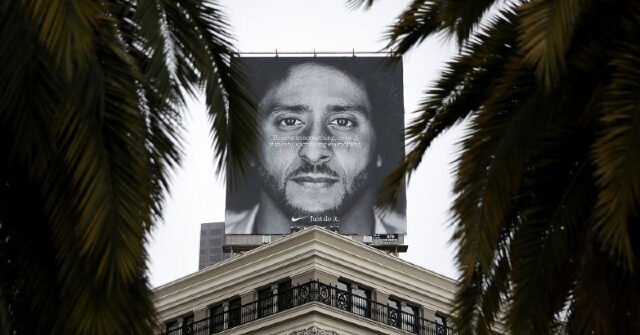
Nearly a decade after Colin Kaepernick first knelt during the national anthem, the athletic apparel giant that embraced him is facing a financial free fall. Nike’s stock has tumbled nearly 80% from its 2021 high, erasing roughly $200 billion in market value — a staggering collapse for a company that once defined American sportswear.
The numbers are brutal. Shares that peaked at $177.51 in 2021 now sit at levels not seen in 12 years. Sales have slumped as the brand struggles to keep pace with shifting consumer habits and intensifying competition from rivals like Hoka, On, and a resurgent Adidas.
But for Senator Ted Cruz (R-TX), the decline isn’t just a business story — it’s a cultural reckoning. In a social media post, Cruz laid out exactly why he, and millions like him, walked away from the swoosh.
“Sad & predictable,” Cruz wrote on X. “For my whole life, I wore nearly 100% Nike for athletic wear. Kaepernick pissed me off, but when they canceled the Betsy Ross shoe, it showed that their marketing plan was America-hate. I went out & bought brand new shoes, shorts, t-shirts.”
“Turns out I wasn’t the only one,” he added. “#GoWokeGoBroke.”
The Kaepernick Gamble
Nike’s troubles trace back to 2018, when the company made a calculated bet on Kaepernick — the former NFL quarterback who hadn’t played a down since 2016. By signing him to a prominent marketing campaign, Nike appeared to monetize the very controversy that had made Kaepernick a polarizing figure across the country.
For many consumers, the move was a turning point. Critics accused Nike of cynically exploiting the anthem protests to sell shoes to a younger, more progressive audience — while alienating its traditional, patriotic customer base.
Kaepernick’s defenders long maintained that his kneeling was never about disrespecting the flag or the military. But that argument became harder to sustain in 2019, when Kaepernick publicly objected to a Nike shoe featuring the Betsy Ross flag.
The Betsy Ross Breaking Point
Designed for Fourth of July celebrations, the shoe featured the iconic Revolutionary War-era flag with 13 stars in a circle. To Kaepernick, however, that symbol represented a time when Black Americans were still enslaved — and he said so publicly.
Nike caved. The company pulled the shoe from shelves before it ever reached most stores.
For Cruz and countless others, that decision was the final straw. The Betsy Ross flag wasn’t a symbol of hate — it was a founding emblem of American independence. By bowing to Kaepernick’s demand, Nike signaled that it would prioritize progressive politics over patriotism, even at the cost of its own core demographic.
A Bet That Backfired
At the time, Nike executives likely believed the Kaepernick campaign would pay off with younger, urban consumers — a key growth market. And in the short term, it did. The ad generated massive buzz, and the company saw an initial spike in online sales.
But the long-term damage was severe. The brand that once stood for athletic excellence and American grit came to be seen, at least in many parts of the country, as a political statement rather than a sports company.
As competition heated up and consumer preferences shifted toward niche, performance-focused brands, Nike found itself caught in the middle — too political for some, not innovative enough for others.
The result: a steady erosion of market share, declining revenues, and a stock chart that looks like a ski slope.
The Woke Broke Debate
Cruz’s “Go Woke Go Broke” framing taps into a broader conservative critique of corporate America — the idea that taking progressive stances on social issues is a surefire way to alienate customers and shareholders alike.
Not everyone agrees with that assessment. Some analysts point to Nike’s other missteps: supply chain issues, a loss of focus on core products, and the rise of DTC competitors that out-innovated the old guard.
But the numbers are hard to ignore. Losing $200 billion in market value isn’t just a cyclical downturn; it’s a fundamental failure to connect with the American consumer.
For Cruz, the lesson is clear: when a company chooses a political agenda over its customers’ values, the market will eventually deliver its verdict.
“Turns out I wasn’t the only one,” he said.
Nike has not publicly responded to Cruz’s comments, but the company faces an uphill battle to regain its lost luster. Whether it can rebuild trust with its traditional fanbase or pivot to win over a new generation remains an open question.
What’s certain is that the swoosh that once adorned the feet of champions now represents something far more complicated — a cautionary tale about mixing politics with commerce in a deeply divided America.
Source: www.breitbart.com — https://www.breitbart.com/sports/2026/08/20/nike-loses-nearly-200-billion-in-market-value-since-2021-as-stocks-plunge-to-12-year-low/