
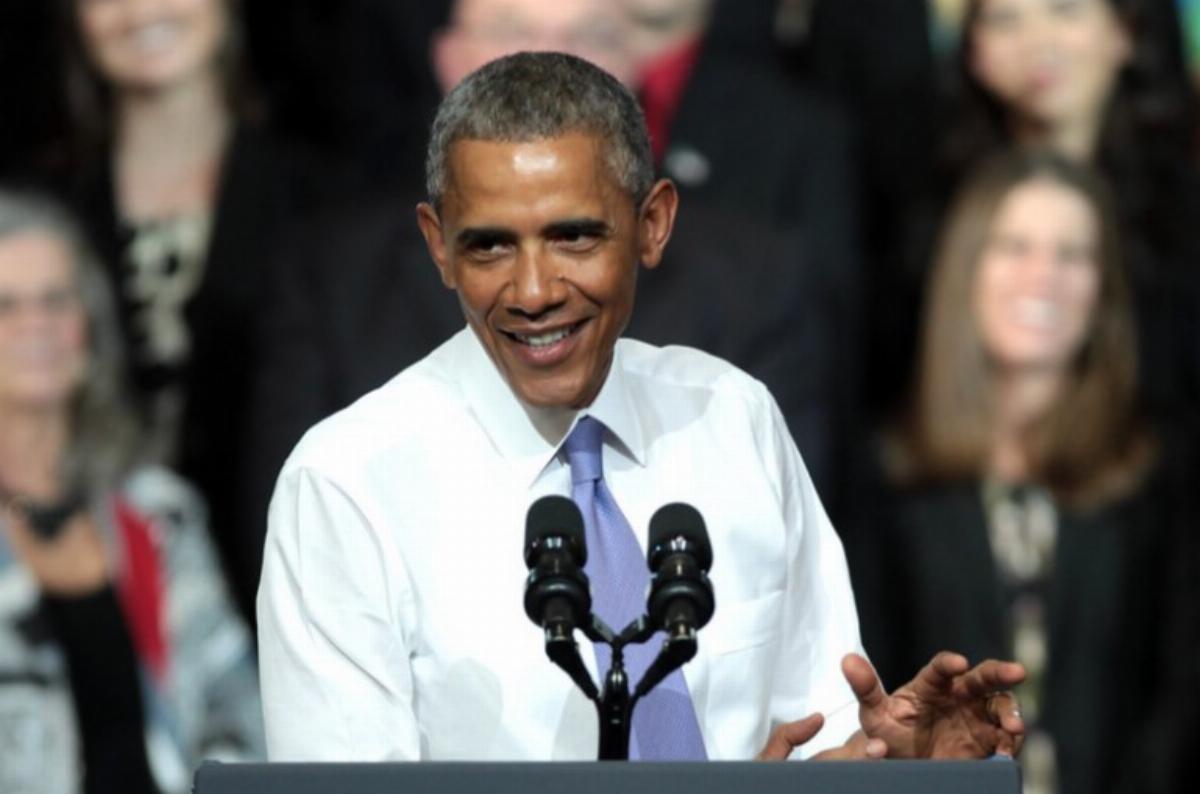
Barack Obama does not come out of political retirement casually. That is the premise of a new American Thinker column by J.B. Shurk, who argues that the former president’s recent warnings about artificial intelligence are less about the technology itself than about who gets to control it — and that the timing, weeks before midterm elections, is no accident.
Shurk’s piece, published September 17, frames Obama’s return to the national megaphone as a deliberate escalation. The former president, he writes, “wants his communist-curious comrades to scare voters about potential threats from AI in the final weeks of election season.” The implication is straightforward: fear sells, and fear moves votes.
A pattern the author says he’s seen before
Where the column gets interesting is not in its assessment of AI policy but in its attempt to place the current moment inside a longer narrative. Shurk reaches back to Obama’s presidency, arguing that the former president and then-Attorney General Eric Holder exploited racial tensions rather than easing them — a claim he supports by asserting that crime statistics contradicted the narrative of widespread police abuse, which he says Obama and Holder advanced anyway with help from a compliant press. By the end of that presidency, Shurk writes, race relations had deteriorated, street protests had erupted, and police officers had been assassinated.
That is contested territory, and Shurk states it as settled fact rather than argument. Readers who lived through those years will bring their own conclusions about cause and effect. What matters for the column’s logic is the template it establishes: a leader identifies a threat, amplifies it, and converts the resulting anxiety into political power. Shurk says Obama did it with policing, and is now doing it with AI.
He is careful to distinguish between the technology and the politics. “Obama’s not against the technological reality of artificial intelligence,” Shurk writes. “He just wants to make sure Democrats are in complete control of it.” The mechanism, as he describes it, is the classic one: write rules and regulations that favor preferred companies, grant those companies a form of monopoly power, and collect political loyalty in return.
The author’s three-step theory of governance
That transactional model is the spine of Shurk’s argument. He lays it out as a three-part sequence: first, government manufactures a problem that frightens the public; second, corporate media amplifies that problem until voters demand action; third, government proposes laws that expand its own authority while narrowing individual freedom. Fear, in this telling, is not a byproduct of governance but its engine.
Shurk then walks through what he considers the two most instructive examples. The first is climate change, which he describes as fifty years of shifting alarms — cooling, then warming, then “climate change,” then extreme weather — accompanied in his view by revised predictions and dubious statistics, all leading to the same prescribed remedy of carbon taxes and regulation. His rhetorical flourish on the subject is pointed: an ancient planet, he suggests, was supposedly on the brink until someone realized higher taxes could save it.
The second example is the pandemic. Shurk’s account is blunt and, on several points, contested — he asserts that government-funded research in China led to global infection, that lockdowns and mandates amounted to a dress rehearsal for totalitarianism, that debate was censored, and that large retailers profited while smaller competitors were forced to close. He presents these as evidence of a recurring arrangement between big government and big business, one that consistently transfers power away from ordinary people.
Whether or not a reader accepts that framing, the structural argument is consistent: in each case, a crisis arrives, the public is told that only government action can resolve it, and the resolution happens to enlarge government’s reach.
What the author wants voters to weigh
Turning to AI, Shurk notes that the fear is not coming only from politicians. Tech executives, he writes, are publicly warning that their own creations could kill us all, while financial speculators predict social collapse and government figures like Obama insist that bureaucrats need more power to manage the risk. Everyone powerful and wealthy, he observes, seems to be shouting the same instruction: regulate us before we hurt you.
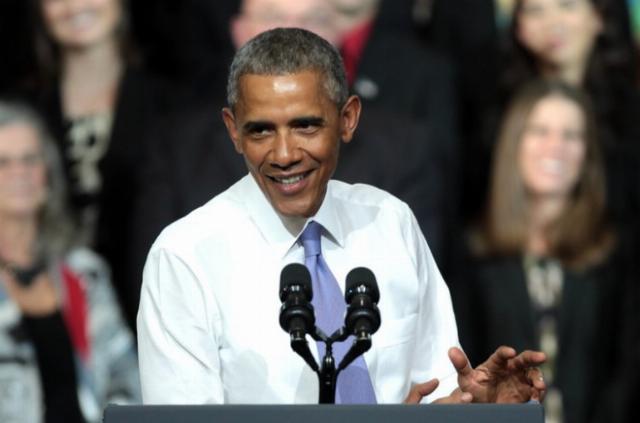
His question to readers is deliberately uncomfortable. Should we once again demand that governments produce solutions that happen to strip away our freedom? Or should we pause and notice how closely today’s AI panic echoes the climate and pandemic panics that preceded it? Shurk does not pretend to be neutral about the answer. “Barack Obama doesn’t come out of retirement unless there’s a golden opportunity to scare people into handing his friends more power,” he writes.
The closing passage is where the column shifts from analysis to warning. If Democrats gain control over AI, Shurk contends, the technology’s default settings will reflect a particular ideological worldview — one that he says would treat contested claims about gender as settled fact, shape market transactions in the name of climate policy, minimize the historical death toll of communism, and frame nationalist political movements as equivalent to Nazism. A government monopoly over the greatest information repository ever built, he argues, would become an instrument for advancing what he calls a totalitarian playbook.
That is an expansive claim, and the column does not attempt to demonstrate how such control would be exercised or by what mechanism it would be achieved. It rests instead on the pattern Shurk believes he has identified across several decades of Western governance.
His conclusion returns to where he began, with a warning about warnings themselves. “When Barack Obama tells you to be afraid, he wants to take something from you,” he writes. “If you don’t let him scare you, he can’t succeed.”
Whether that lands as insight or as partisan reflex depends heavily on what a reader already believes about Obama, about AI regulation, and about the motives of the institutions now urging caution. What Shurk has produced is less a policy critique than a theory of political persuasion — one that asks voters to treat every crisis framing with suspicion, and to count the cost of the solutions before accepting the premise of the problem.
Source: www.americanthinker.com — https://www.americanthinker.com/articles/2026/09/blowhard-obama-is-back-to-stoke-ai-fears/
Source: www.americanthinker.com
Related coverage
- The Left’s Hypocrisy on Marriage vs. Submission: A Double Standard in Modern Relationships?
- Philly’s Jewish Businesses Overwhelmed With Support After Antisemitic Boycott Attempt Fails
- Shaming the Shameless: Why the Left’s Nihilism Is a Fool’s Errand, Says Retired Prosecutor
- Why Fantasy Books Are the Ultimate Escape From Today’s Chaotic News Cycle