
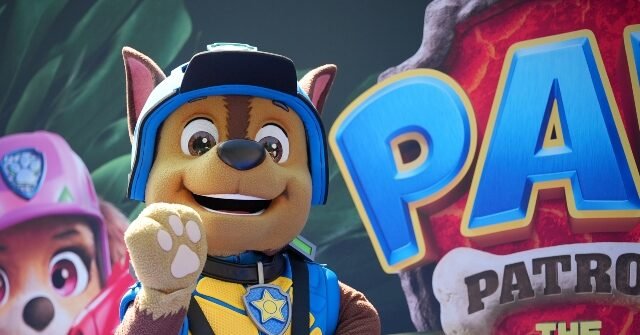
A new wave of scholarly criticism is taking aim at one of the most popular children’s shows on television: Paw Patrol. According to a report from Breitbart, academics have leveled accusations that the animated series—beloved by preschoolers for its team of rescue pups—actually promotes authoritarian capitalism and serves as pro-police “copaganda.”
The critique, as detailed by Breitbart, frames the show’s central premise as one that subtly reinforces troubling political and economic ideologies. Rather than simply being a harmless tale of adorable dogs saving the day, the scholars argue that Paw Patrol presents a worldview in which a hierarchical, militarized rescue force operates under the unquestioned authority of a single leader—mayor-like figure—while business interests are given unqualified primacy.
The Scholarly Argument
According to the Breitbart article, the scholars behind the accusations contend that the show’s narrative structure glorifies a form of “authoritarian capitalism.” In this reading, the pups’ missions frequently involve restoring order in ways that prioritize property and commercial activity, often without democratic oversight or community input. The show’s reliance on a central command, led by the character Ryder, is said to model a top-down decision-making process that mirrors authoritarian governance rather than collaborative or democratic problem-solving.
Moreover, the term “copaganda” is deployed to describe how the series allegedly sanitizes and celebrates police work. The pups, who often operate in quasi-law-enforcement roles—responding to emergencies, catching wrongdoers, and enforcing rules—are presented, per the scholars’ view, as unambiguously heroic figures whose actions are never questioned. This, they argue, ingrains in young viewers an uncritical acceptance of police authority at a time when real-world policing is subject to intense scrutiny.
Culture War Collision
Breitbart’s coverage highlights that these academic critiques have quickly become fodder in the broader culture war over children’s media. The outlet frames the scholars’ position as emblematic of a left-leaning academic trend that seeks to police entertainment content for ideological purity. For many conservative commentators and parents, the attacks on Paw Patrol exemplify an overreach by elites who, in their view, cannot tolerate a simple, pro-social children’s show without imposing political interpretations.
Notably, Breitbart does not provide the names of the specific scholars or the academic institutions involved, nor does it cite a particular paper or conference where these accusations were made. The report is presented as a summary of the accusations, with the outlet’s own dismissive tone evident in the headline’s use of the word “Really.” This suggests that the claims may be anecdotal or from a niche academic circle, rather than a formal study.
Reactions and Implications
The backlash to the scholars’ claims, as relayed by Breitbart, revolves around the notion that Paw Patrol is merely a fun, action-oriented show for young children. Defenders argue that the pups embody teamwork, bravery, and helpfulness—values that are universally positive—and that reading sinister political messages into the show is a stretch. The outlet’s coverage is likely to resonate with audiences who already view academia with suspicion, reinforcing a narrative that scholars are disconnected from mainstream sensibilities.
For the show’s creators at Spin Master and its broadcast partner Nickelodeon, this is unlikely to change anything in the near term. Paw Patrol remains a merchandising juggernaut, spawning feature films and countless toys, and its animated canines continue to dominate preschool viewing habits worldwide. But the scholarly critique adds a new layer to the ongoing debate about how much political content parents should parse in children’s entertainment.
A Broader Trend
This is not the first time that children’s media has come under academic fire. Past critiques have targeted everything from Peppa Pig for allegedly promoting gender stereotypes to Thomas the Tank Engine for glorifying the class system. The Paw Patrol controversy fits into a pattern of academics dissecting popular culture for hidden ideological messages, a practice that supporters say is intellectually valuable but detractors contend is an overreaction.
Breitbart’s report underscores the polarized nature of this discourse. On one side, scholars see a need to critically examine the media that shapes young minds, arguing that even innocuous shows carry structural biases. On the other side, many parents and commentators reject such interpretations as unhelpful and out of touch, preferring to let children enjoy entertainment without overlay of political analysis.
As of the time of Breitbart’s report, neither the show’s producers nor the network had publicly responded to the accusations. It remains to be seen whether the scholars’ concerns will gain traction in academic journals or public discourse beyond the initial coverage.
For now, the debate over Paw Patrol serves as a flashpoint in the larger conversation about what children watch—and who gets to decide what it means.
Source: www.breitbart.com — https://www.breitbart.com/entertainment/2026/08/14/really-scholars-accuse-childrens-paw-patrol-of-promoting-authoritarian-capitalism-pro-police-copaganda/