
The U.S. housing market took its sharpest hit yet in September as mortgage rates marched toward 7.40 percent, dragging pending home sales to a record low and pushing construction activity lower, according to data released Tuesday and reported by Breitbart.
The National Association of Realtors said its pending home sales index dropped 7.3 percent for the month — a far deeper slide than the 0.5 percent decline economists had projected. The index settled at 66.0, its lowest reading since the series started in 2001. Measured against September of last year, pending sales are down 11.3 percent.
The construction side of the market told a similar story. Commerce Department figures showed housing starts fell 5.2 percent to a seasonally adjusted annual rate of 1.221 million, missing forecasts of roughly 1.3 million and sitting 7.4 percent below the year-earlier pace.
Taken together, the reports cap a bruising week of housing data, following Monday’s news that builder confidence has sunk to its lowest point in more than 14 years. The common thread, economists say, is the cost of borrowing.
Mortgage Rates at a Near Three-Year High
Freddie Mac data show the average 30-year fixed mortgage rate climbing from 6.66 percent in late August to 7.28 percent at the start of October. It hit 7.40 percent on October 8 and held there through last week — the highest level in nearly three years.
Lawrence Yun, chief economist at the Realtors group, laid the blame squarely on financing costs. Market conditions weakened in September because of fast-rising mortgage rates, he said, noting that while job growth and income gains can support home purchases, affordability is more sensitive to rate movements than to either of those factors.
The pullback in signed contracts was broad. Contract signings fell 9.2 percent in the West, 8.2 percent in the South, 6.5 percent in the Midwest and 4.2 percent in the Northeast. Every region also posted a decline compared with September 2025.
Pending sales track signed contracts on existing homes before closings occur, and they typically lead completed sales by one or two months. That timing suggests the September weakness will likely show up as weaker closings later in the fall.
Builders Pull Back as Single-Family Starts Falter
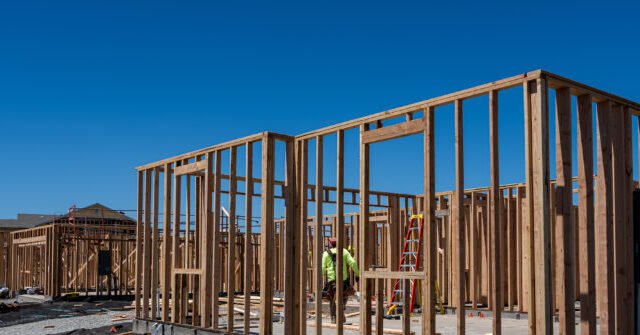
Construction data reflected the same cooling. Single-family housing starts fell 4.6 percent to an annualized 859,000 — the lowest in a year — after August’s figure was revised down to 900,000 from an earlier estimate of 918,000, meaning that month’s rebound was softer than first believed.
Multifamily starts, which include apartments and condos, dropped 6.7 percent to a 362,000 annualized rate, a 24.9 percent decline from a year ago.
Building permits, a forward-looking gauge, offered little relief. Total permits edged down 0.2 percent to a 1.400 million annualized rate, but that small headline number masked a steeper drop in the single-family segment, where permits fell 4.0 percent to 845,000 — the weakest level in about three and a half years. Permits for buildings with five or more units bucked the trend, rising to 503,000.
The downbeat construction picture was reinforced by Monday’s National Association of Home Builders/Wells Fargo Housing Market Index, which fell three points to 29 in October, the lowest since June 2012. Any reading under 50 means more builders see conditions as poor rather than good.
Each component of the survey weakened: the gauge of current sales conditions slipped to 33, expectations for sales over the next six months fell to 32, and prospective buyer traffic dropped five points to 18, the lowest since April 2012 outside the pandemic’s initial shock.
Builders are increasingly cutting prices to bring buyers in. Forty-three percent reduced prices in October, the largest share since the association began tracking the measure in 2020, with an average reduction of 6 percent. Another 65 percent said they are offering sales incentives.
At the same time, rates are rising alongside builders’ own costs — construction financing, materials, energy and labor have all grown more expensive.
Robert Dietz, the builders association’s chief economist, said the market remains squeezed by supply-side constraints and significant affordability challenges. Demand has not disappeared, he said, but higher mortgage rates, elevated construction costs and weaker consumer confidence are keeping more buyers on the sidelines.
A Squeeze on Affordability From Both Directions
The slump creates an awkward problem for housing affordability. Costlier borrowing has chilled demand and slowed sales, but the simultaneous retreat in construction could shrink the supply of new homes in the years ahead — limiting the inventory that would eventually help bring prices down.
So far, though, a broad decline in home prices has not materialized despite the collapse in transactions. Yun attributed that to a limited number of distressed properties, with both buyers and sellers waiting in hopes that mortgage rates will eventually turn more favorable.
He also suggested the recent run-up in rates may be nearing its end, though he flagged rising energy prices and inflation as lingering uncertainties.
Source: www.breitbart.com — https://www.breitbart.com/economy/2026/10/20/housing-slump-worsens-amid-higher-rates/