
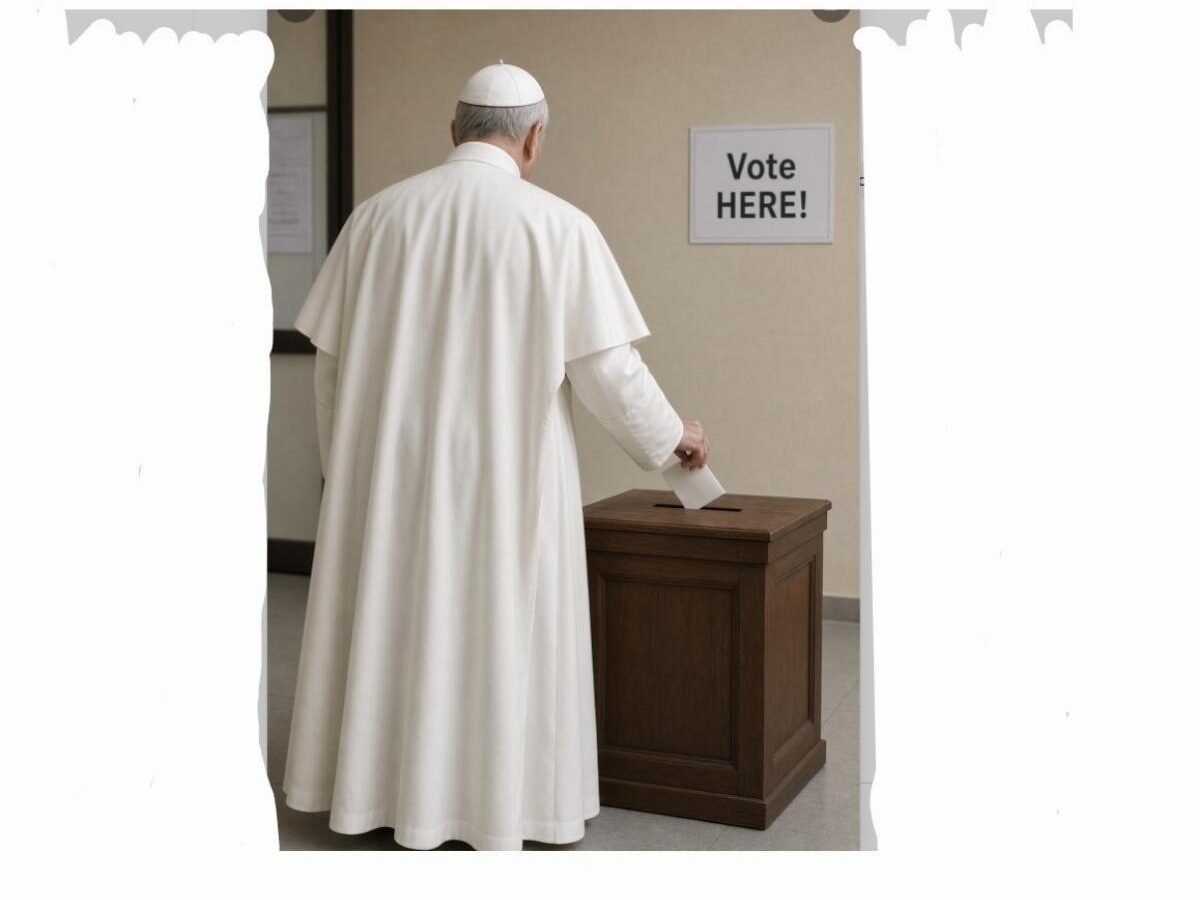
In an unexpected development that blurs the lines between spiritual authority and civic duty, Pope Leo XIV has reportedly cast an absentee ballot in the 2026 U.S. midterm elections, despite serving as head of the Catholic Church from Vatican City.
American Thinker reports that news of the pontiff’s participation in American electoral politics “somehow got out,” with Fox Digital breaking the story after information apparently circulated among social media influencers. The leak suggests the vote was intended to remain private, though the circumstances of how this information became public remain unclear.
The Citizenship Question
The pope’s eligibility to vote hinges on his American birth. Pope Leo XIV was born in the United States, which grants him citizenship regardless of his current residence in Vatican City. American citizens living abroad retain their voting rights and can participate in federal elections through absentee ballots, typically cast in the last state where they maintained legal residence.
What makes this situation particularly unusual is not the legal mechanics — countless American citizens living overseas vote in U.S. elections every cycle — but rather the symbolic weight of the papacy itself. The Bishop of Rome traditionally maintains a posture of political neutrality on matters of partisan politics, particularly in individual nation-states. Popes have historically weighed in on moral and ethical dimensions of policy debates, but direct participation in electoral politics represents a departure from typical Vatican protocol.
Precedent and Protocol
The Catholic Church has long navigated the tension between its universal spiritual mission and the reality that its members live as citizens of specific nations with their own political systems. While the Church advocates for positions on issues ranging from abortion to immigration to economic justice, the pope’s personal participation in a national election introduces a new dimension to this relationship.
Previous pontiffs have generally avoided overt partisan engagement, though they’ve certainly expressed opinions on policy matters with political implications. Pope Leo XIV’s decision to exercise his right to vote — if the reports are accurate — represents either a calculated acceptance of dual identity as both spiritual leader and American citizen, or perhaps a less carefully considered choice that inadvertently became public.
The Leak and Its Implications
According to American Thinker, the information first appeared on social media before Fox Digital’s formal reporting, suggesting the disclosure may have been unintentional or perhaps strategically released by someone with knowledge of the pope’s voting activity. The mechanics of how someone would know the pope cast a ballot — given the secret nature of voting — raises questions about whether the pope himself disclosed this information, whether someone in his circle shared it, or whether election officials somehow revealed it.
The fact that this information “got out” at all speaks to the challenges of maintaining privacy in the digital age, even for the leader of the world’s 1.3 billion Catholics. Whether the pope intended his vote to remain confidential or whether he was comfortable with it becoming public knowledge would significantly alter the interpretation of this story.
Political Neutrality and the Modern Papacy
The revelation, if confirmed, invites broader questions about the role of religious leaders in democratic processes. Should a pope — whose spiritual authority extends across national boundaries and political systems — participate in partisan elections? Does exercising one’s legal right to vote constitute an endorsement of a particular political direction, or is it simply the fulfillment of civic responsibility?
Different constituencies will likely interpret Pope Leo XIV’s reported vote through different lenses. Some may see it as a positive example of civic engagement, a reminder that even spiritual leaders remain citizens with responsibilities to their countries of origin. Others might view it as an inappropriate mixing of religious authority with partisan politics, potentially undermining the pope’s position as a voice above national political divisions.

The 2026 Context
The 2026 midterm elections occur at the halfway point of a presidential term, traditionally serving as a referendum on the sitting administration’s performance. Control of Congress often hangs in the balance during midterms, making them consequential for the direction of national policy. If Pope Leo XIV cast a ballot in these elections, he was necessarily making choices about Senate and House races, and potentially state and local contests as well.
Without knowing the specific content of the pope’s ballot — information that should remain confidential under election law — observers can only speculate about what motivated his participation. Did particular issues or candidates align with Church teaching in ways that compelled him to vote? Or was this simply a matter of maintaining his connection to his country of birth through the most fundamental act of citizenship?
Questions Going Forward
The story raises practical questions about future papal elections and Vatican protocol. If a pope born in the United States chooses to vote, what about popes from other democracies? Should the Vatican establish guidelines about papal participation in national elections? Or should each pope navigate this question individually, based on their own understanding of their dual role as spiritual leader and citizen?
The leak of this information, regardless of how it occurred, transforms a private act into a public discussion. Whether Pope Leo XIV intended to make a statement through his vote or simply exercised a right he viewed as separable from his papal duties, the revelation ensures the matter will be debated within and beyond Catholic circles.
As this story develops, the Vatican’s response — or lack thereof — will be telling. Will Church officials confirm the report, contextualize it, or decline to comment on what they may view as a private matter? The answer will help define how future popes approach the intersection of citizenship and spiritual authority.
For now, the reported casting of an absentee ballot by the sitting pope stands as an unusual footnote to the 2026 midterms, one that illustrates the complicated relationship between religious leadership and political participation in an interconnected world.
Source: www.americanthinker.com — https://www.americanthinker.com/blog/2026/10/the-pope-votes/