
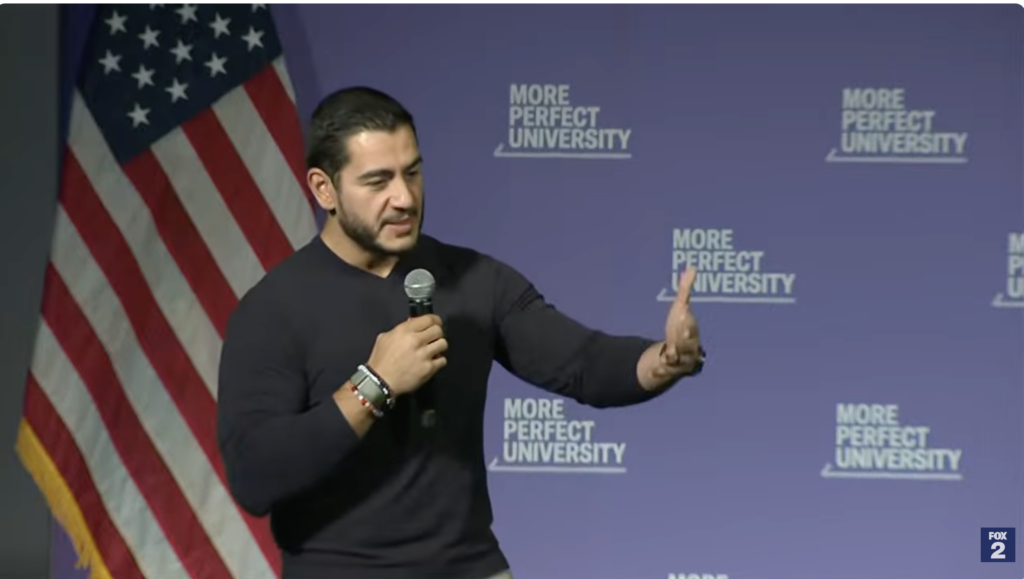
Abdul El-Sayed, the Democratic nominee for U.S. Senate in Michigan, spent part of this week attacking President Donald Trump over the revocation of White House press credentials for three outlets — MS Now, CNN and Politico — telling reporters at a campaign stop alongside Kamala Harris that it was “nice to see” the networks covering the news and that Trump “hates the idea of democracy.”
“That’s why he denies elections and is interfering with the freedom of the press,” El-Sayed told Deadline Detroit, according to an account of his remarks.
Those comments are now colliding with a resurfaced document from more than a decade ago. According to reporting by The Washington Free Beacon, El-Sayed was one of 46 signatories to an Arabic-language statement published in 2012 on the Egyptian news portal Al-Ahram Gate that called on then-President Mohamed Morsi to “purge the media and the police.”
A letter from Egypt’s post-revolution power struggle
The statement, signed by people described as “leaders of the Egyptian community” living in the United States, was published after Morsi — a Muslim Brotherhood figure who had won Egypt’s first post-Mubarak presidential election — issued a decree granting himself sweeping powers to quell unrest. El-Sayed, who was born in Michigan to Egyptian immigrants, was among the signers, the Free Beacon reported Wednesday.
The text of the letter, as quoted in the reporting, reads: “We, leaders of the Egyptian community, support the revolutionary decisions taken by the president, and we call on him to purge the media and the police as quickly as possible.”
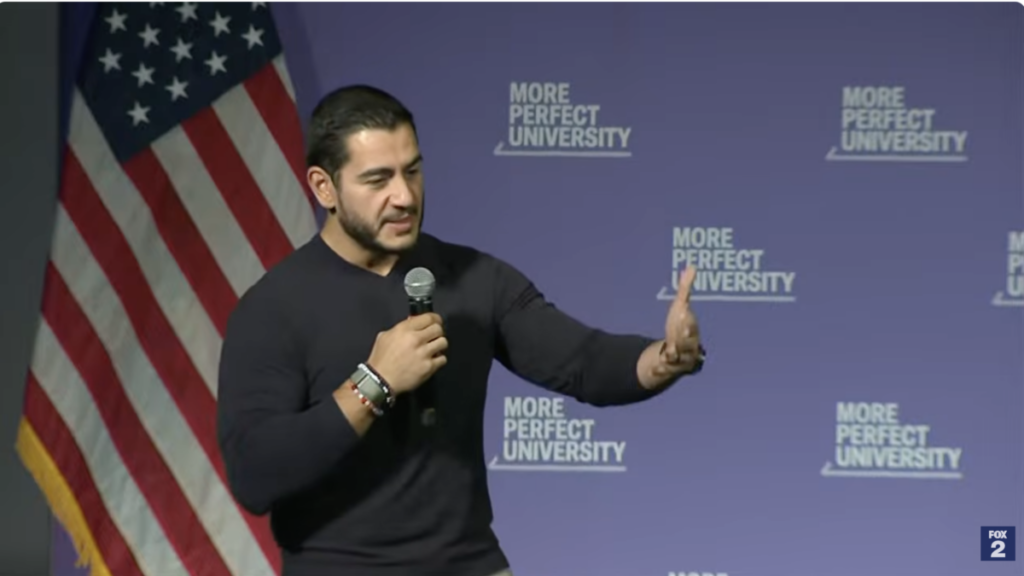
The Free Beacon noted that the letter remains online but that its direct link appeared to have stopped working by late Wednesday, returning an error message. Conservative commentator Laura Loomer, who first publicized the declaration in April, included an image of the letter in her original post.
The Trump administration has designated the Muslim Brotherhood a terrorist organization.
What followed Morsi’s power grab in Egypt gives the letter’s language a particular weight. According to contemporaneous media accounts cited in the reporting, journalists critical of the Morsi government were harassed, suppressed and in some cases put on trial or attacked in the street, with some targeted for the offense of “insulting Islam.”
The Committee to Protect Journalists responded at the time with a public appeal. “This is a troubling backward step that Egypt’s newly elected President Mohamed Morsi should not be taking,” CPJ deputy director Robert Mahoney said in an Aug. 16, 2012 report. “We urge President Morsi to reverse this course immediately and demonstrate his commitment to press freedom.”
The Free Beacon also pointed to a HuffPost op-ed El-Sayed wrote during the protests of the so-called Egyptian Spring, in which he argued the United States had nothing to fear from the Brotherhood — the same group that would later be designated a terrorist organization by the U.S. government.

A contrast in kinds of pressure
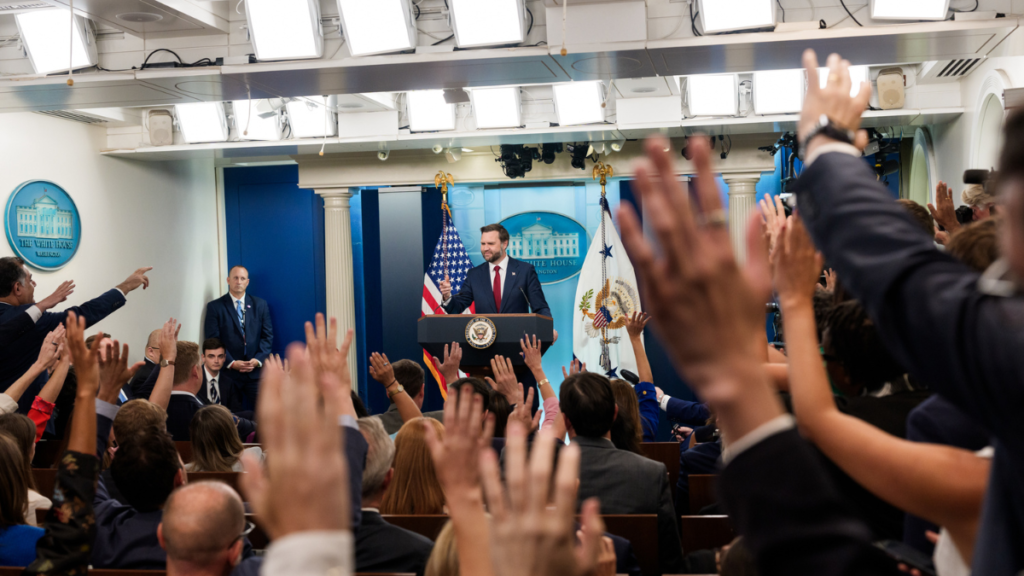
The reporting draws a sharp distinction between the White House credential fight and the crackdown El-Sayed is accused of endorsing. MS Now, CNN and Politico lost their White House passes but retain the right to seek redress, and they have done so — filing a First Amendment lawsuit almost immediately. As the Free Beacon notes, Egyptian journalists under Morsi had no comparable recourse.
In a court filing, the Department of Justice argues the three outlets “failed to maintain basic minimum ‘standards of professionalism and decorum expected of those given access to the White House Complex,'” including by publishing sensitive or classified information. The DOJ, asking a D.C. court to deny the outlets’ motion for an injunction, contends the president’s action was not retaliatory because “the government would have taken the same action anyway, notwithstanding Plaintiffs’ speech criticizing the President — indeed, the President has not revoked access to other outlets that have equally criticized the President.”
The piece also argues Trump is not the first president to clash with news organizations over perceived bias. It points to former President Barack Obama’s administration, which sought to block Fox News pool reporters from interviewing an administration official, with his communications director calling the network “the source and the outlet for Republican Party talking points.” Obama told NBC News at the time he wasn’t “losing a lot of sleep” over the move. His Justice Department also spied on journalists, according to the reporting.
Obama weighed in on the current fight this week during an appearance at Colgate University. “I’m trying to think what would have happened if I had said, you know what, Fox News, you’re out of here! It’s unimaginable!” he said.
The Free Beacon also cites The New York Post’s reporting that the Biden administration “repeatedly cut the New York Post out of access to various events and targeted other conservative outlets at times as well,” and notes a lawsuit alleging that Biden and his Big Tech allies teamed up to censor The Federalist and The Daily Wire.
A fact-check fight in Michigan
The reporting takes aim at news organizations it says have been uninterested in the 2012 letter — or have actively dismissed it. It singles out a Sept. 3 Bridge Michigan headline, “No evidence Abdul El-Sayed ‘pledged support’ to Muslim Brotherhood,” which sought to rebut statements from El-Sayed’s Republican opponent, Mike Rogers, and GOP allies.
That fact-check asserted El-Sayed “did not pledge support for the Muslim Brotherhood, as detractors claim,” and that he did not do so “in a 2012 group letter defending then-Egyptian President Mohamed Morsi, who was backed by the Muslim Brotherhood and had been elected earlier that year.” The Free Beacon notes the link in that article is no longer active and argues that “defending” the Morsi government amounts to supporting it, pointing to the letter’s explicit language of support for “the revolutionary decisions taken by the president.”
Morsi, who died in 2019, served as chairman of the Muslim Brotherhood’s Freedom and Justice Party. The reporting argues the letter amounts to support for the Brotherhood-backed regime — including its treatment of journalists — a point it says the fact-check omitted.
The article also contends that corporate media outlets have deployed a standard line of defense against criticism of Muslim political candidates, though the passage describing that argument is cut off in the source material provided.
El-Sayed’s campaign has not responded publicly to the renewed attention on the 2012 statement, according to the reporting. The race in Michigan remains one of the most closely watched Senate contests in the country.
Source: thefederalist.com — https://thefederalist.com/2026/09/24/report-abdul-el-sayed-cheered-on-an-oppressive-islamist-regimes-assault-on-the-press/