
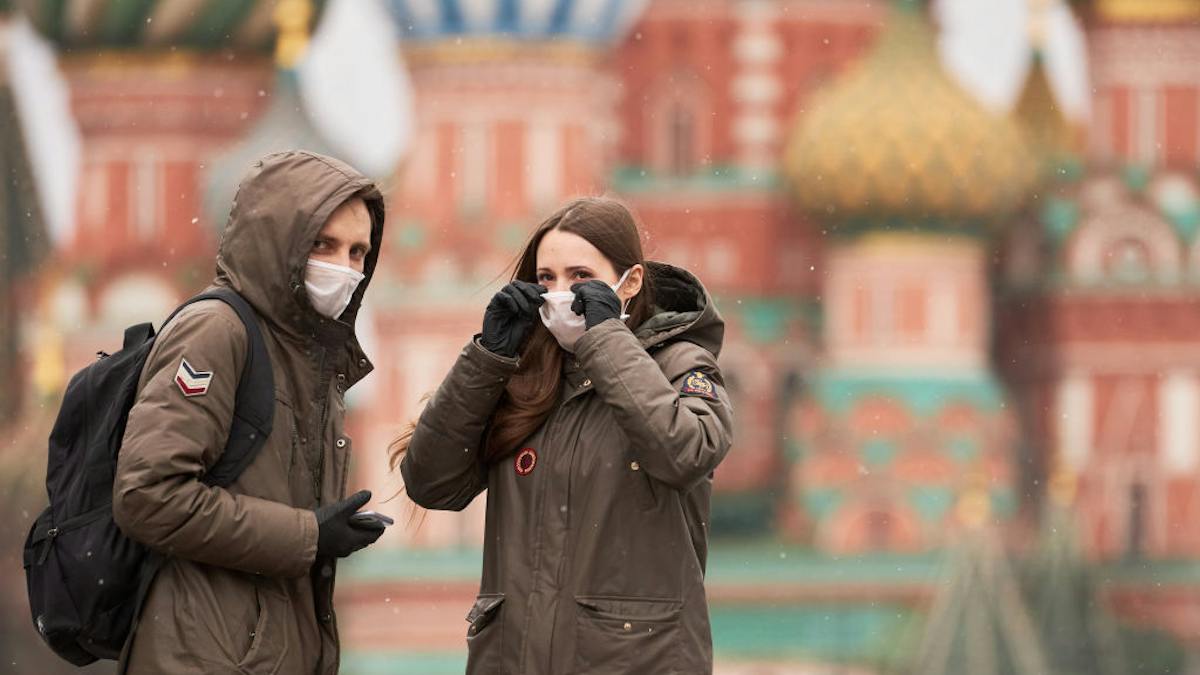
A 28-year-old laboratory worker in Siberia has died from what Russian authorities suspect was pneumonic plague, triggering a forced quarantine of more than 200 people and raising uncomfortable parallels to the earliest days of the coronavirus pandemic.
Daria Shipilova, who worked at the Anti-Plague Research Institute in Shelekhov, a town near the Mongolian border, was admitted to a hospital with severe pneumonia and died overnight between October 1 and 2, according to Axios and other outlets. Russian media initially reported that Shipilova was exposed after breaking a test tube while collecting samples — an account that at least one prominent Russian epidemiologist has publicly questioned, telling The Moscow Times that the broken-test-tube narrative bears the hallmarks of a cover-up.

Russia’s public health agency has described her illness as “pneumonia of unknown etiology,” a deliberately vague diagnosis that leaves open the possibility she contracted pneumonic plague — the only form of the disease capable of passing from person to person, and the same infection that killed tens of millions during the Black Death in the Middle Ages.
Quarantine and hospital lockdowns
In the days since Shipilova’s death, Russian authorities have ordered 200 people who came into contact with her into quarantine and issued quarantine orders for at least five nearby hospitals. Local news outlets report a shortage of antibiotics in the area surrounding the institute, while employees at a nearby aluminum plant have reportedly been instructed to wear masks on the job.

Russian officials have sought to project calm. The government claims no other cases of the virus have been reported and says that the onset of cold weather will help slow transmission. Anna Popova, head of Russia’s public health watchdog, has not commented on the outbreak. But her reported travel to the region — the New York Post notes she journeyed roughly 2,600 miles from Moscow — suggests a level of concern that official statements have not fully conveyed, according to regional reports.
Plague symptoms, per the Centers for Disease Control and Prevention, include headache and fever along with “a rapidly developing pneumonia with shortness of breath, chest pain, cough, and sometimes bloody or watery mucous.” The disease is treatable with antibiotics if caught in time, which makes the reported antibiotic shortage around the institute particularly concerning.

Echoes of Wuhan
The incident has drawn inevitable comparisons to the early weeks of the coronavirus pandemic, which emerged following a lab leak at the Wuhan Institute of Virology in late 2019. A White House spokesman told Axios that the administration “is aware, monitoring the outbreak, and assessing options.”
Little is publicly known about the Anti-Plague Research Institute itself. It is unclear why Russia maintains a facility dedicated specifically to a disease that, while potentially lethal, is curable with timely antibiotic treatment. Questions about the institute’s operations — and about how exactly Shipilova was exposed — remain largely unanswered, with Russian authorities offering few details beyond the initial test tube explanation.
For residents of Shelekhov and the surrounding region, the practical effects of the incident are already visible: restricted movement, mask mandates at industrial worksites, and the lingering uncertainty that comes with a pathogen whose name alone carries centuries of fear.
Source: www.dailywire.com — https://www.dailywire.com/news/mystery-lab-death-sparks-fears-of-plague-outbreak-in-russia
Source: www.dailywire.com
Related coverage
- Caitlin Clark’s Laugh at Angel Reese’s Missed Layup Goes Viral
- Mike Flanagan’s ‘Carrie’ Reboot Is a Chilling Portrait of a Decadent America, Daily Wire Critic Says
- Jonathan Turley Predicts Post-Election ‘Buyer’s Remorse’ as Democrats Eye Investigations, Impeachments
- Gaza Man Accused of Aiding Hamas in Oct. 7 Attack to Stand Trial in Louisiana in 2027