
The ghost of Babe Ruth’s smoked-filled parlor car is haunting modern sports media. Back in the 1920s, baseball writers traveling with the Yankees had an unspoken pact: if a scandal unfolded in front of them — say, a married woman chasing a disrobed Ruth down a train aisle with a butcher knife — they’d keep their notebooks shut unless someone actually got stabbed. It was the original access journalism: cozy, protective, and ethically gaslit.
Fast-forward to 2026, and the parlor car has been replaced by the group chat. But the dynamics, according to a searing new essay from veteran journalist Karen Crouse, remain disturbingly familiar.
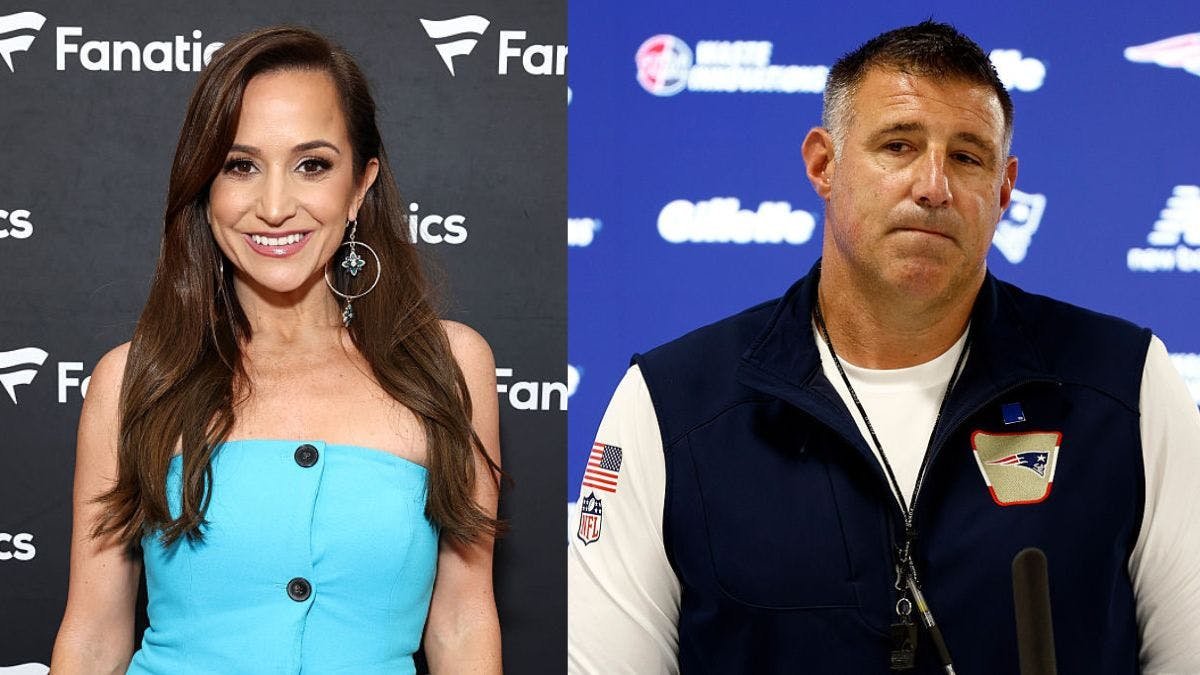
Crouse, writing on Clay Travis’s Sport & State platform, cites The Athletic’s months-long investigation into NFL reporter Dianna Russini and her close relationship with New England Patriots head coach Mike Vrabel. The Athletic concluded the relationship — which came to light after photos surfaced of the two, both married to others, getting close at a couples’ resort — was in “clear violation of The Athletic’s standards.”
The bigger question Crouse raises isn’t just about Russini’s behavior. It’s about what that behavior means for the integrity of sports journalism — and who gets to decide what’s a story and what gets buried.
The Cost of Access
Crouse draws a direct line from Vrabel-Russini to the long, tangled history of journalists sacrificing hard truths for proximity to power. The 2026 version of the parlor car is the Augusta National Media Center — a palatial press palace built at the Masters, complete with free snacks, transcripts of every interview, and video of every shot. Crouse calls it ironic: reporters are given every comfort to keep them in their cubicles, away from the course where real stories might unfold.
“If that’s the price for access — a cubicle for your soul,” she writes, “then the Tennessee Titans did YouTuber Jared Stillman a tremendous favor by revoking his press credential.” Stillman had been critical of the team, and the Titans revoked his access. But Crouse argues that’s barely a punishment; it’s liberation from the very system that corrupts independent judgment.

She points to a double standard: ESPN’s Adam Schefter, the NFL’s alpha insider, was slow to report on a car accident involving 49ers head coach Kyle Shanahan — whose father, Mike Shanahan, Schefter collaborated with on a book when both worked in Denver. Jay Glazer of Fox Sports hosts an annual pool party for NFL head coaches and holds professional grudges against players who won’t be his workout buddies. Pearlman, the sportswriter, has called this out directly.
Meanwhile, Russini’s relationship with Vrabel potentially raises questions about her ballot for the Associated Press Coach of the Year award. Did it influence her vote? Crouse says it’s worth exploring for anyone who cares about the integrity of the process.
Outsider Success
The irony is that the best journalism often comes from those who are deliberately kept at arm’s length. Gay Talese’s 1966 Esquire profile of Frank Sinatra — famously written without Sinatra’s cooperation — remains a master class in turning rejection into reportorial gold. Talese relied on observation, ingenuity, and interviewing everyone but the subject himself. The result wasn’t less revealing; it was more.

Crouse, who publicly acknowledged a standards violation of her own at The New York Times in 2021 for entering into a business collaboration with swimmer Michael Phelps, isn’t casting stones from a glass house. She’s arguing that the entire ecosystem rewards reporters who trade tough questions for camaraderie — and punishes those who refuse to play along.
The truth is that fans don’t need another access whisperer. The rise of independent and entrepreneurial content creators, she says, proves that audiences are hungry for what’s real and true, not for whatever the insider class decides to serve up.
In an era when a knife-wielding woman in a train aisle would be live-streamed on TikTok and dissected on 24-hour sports talk, the old pact of silence seems almost quaint. But the modern version — a reporter cozying up to a coach, a network ignoring a story out of loyalty, an outlet protecting its access at the cost of its credibility — is just a different shade of the same corruption.
The question is whether anyone will have the courage to write about it before someone actually gets stabbed.
Source: www.dailywire.com — https://www.dailywire.com/news/russini-vrabel-saga-shows-that-access-journalism-takes-backseat-to-the-real-truth