
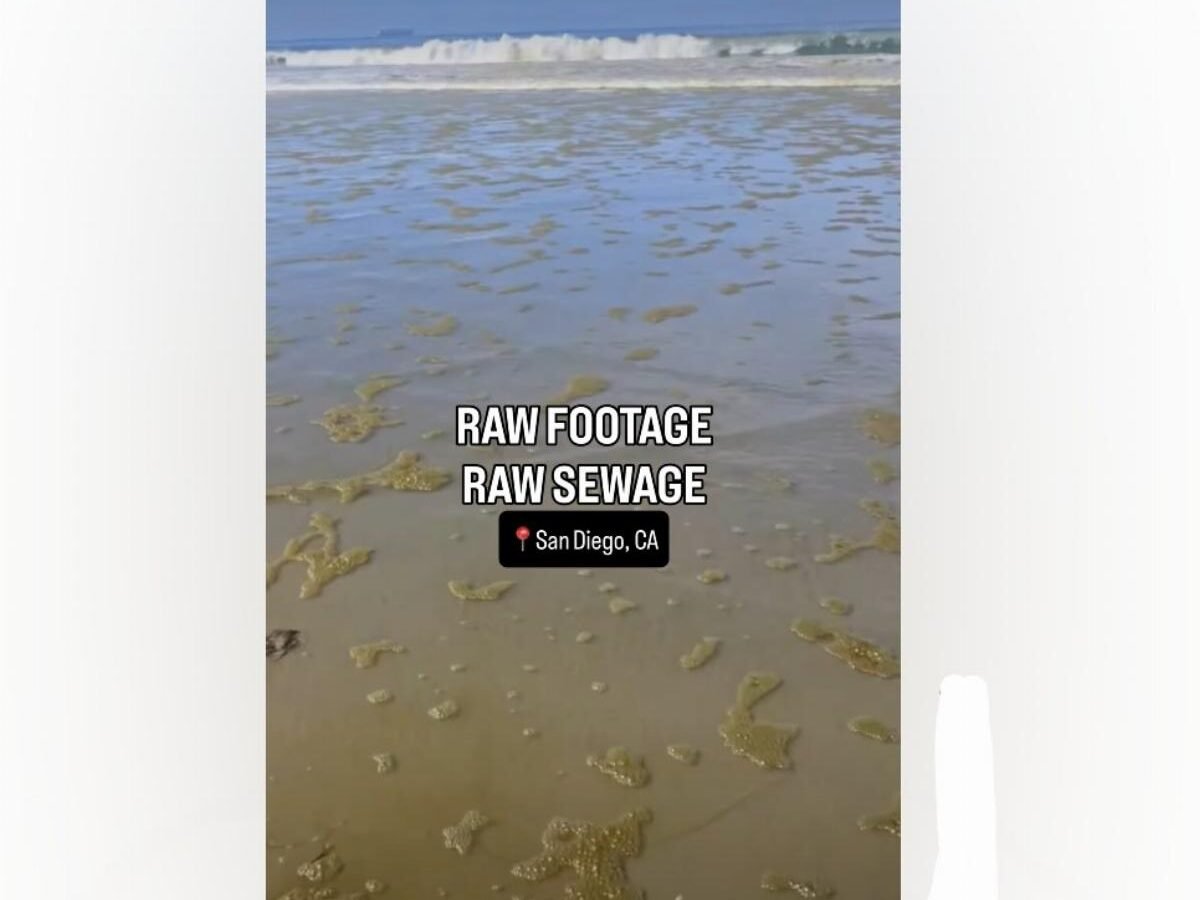
San Diego County supervisors have unveiled a plan that critics say would make local taxpayers foot the bill for a cross-border sewage crisis—with no direct financial consequences for Mexico.
According to a report by the San Diego Union-Tribune, as cited by American Thinker, the proposal centers on a countywide sales tax measure set to appear on the November ballot. The measure, which qualified after organizers submitted roughly 151,000 signatures, would raise the county sales tax from 7.75% to 8.25%. That increase is projected to generate $360 million in new revenue in its first year, with 22.5% of that total—about $80 million—dedicated to Tijuana River Valley sewage mitigation efforts.
Supervisor Paloma Aguirre, a former Imperial Beach mayor, said the revenue could be used to bond for up to $1 billion in infrastructure funding. The plan would essentially allow the county to leverage future tax revenue to borrow large sums for sewage-treatment projects, rather than requiring Mexico to cover the cost of pollution that originates south of the border.
A Permanent Tax for a Temporary Problem?
Critics have been quick to point out that the proposed tax increase is permanent, while the sewage problem is ongoing. The ballot measure is titled the “Protect San Diego County Health and Safety Act,” but opponents argue the name obscures what they see as a flawed financial structure: only a fraction of the new revenue is earmarked for sewage mitigation, with the rest going to other county projects.
American Thinker’s Monica Showalter, writing in a strongly worded opinion piece, characterized the move as “taxpayers’ jobs to pay for what Mexico sends over.” She noted that the plan would not impose any penalties on Mexico for polluting the shoreline, even as the county seeks to address the contamination in the Tijuana River Valley.
“We can’t control what happens across the border, but we can control what we do on our side of it,” Aguirre said, according to the report. That reasoning has drawn sharp criticism from those who argue the county should be using leverage—such as withholding water sales to Mexico from Otay Mesa—as a bargaining chip instead of raising taxes on local residents.
Calls for Accountability
Showalter and other critics argue that the tax measure would actually create a perverse incentive for Mexico to continue allowing untreated sewage to flow north. If the U.S. consistently cleans up the mess at its own expense, the reasoning goes, there is little financial pressure on Mexican authorities to invest in their own infrastructure or enforce environmental regulations.
Some have gone further, suggesting that the county could build a dam to redirect the sewage back to Mexico or simply send Mexico the bill for cleanup costs. Showalter wrote that engineers have said such a dam is feasible, though no such proposal is currently under official consideration.
The controversy also touches on Aguirre’s history with the issue. She has been involved in efforts to address the pollution for over a dozen years, first as a beach conservationist and then as an elected official. Critics, including some local activists quoted by American Thinker, have accused her of creating policies that actually facilitated the importation of Mexican sewage—specifically referencing SB 507, a state law that some say allowed decommissioned infrastructure in Mexico to be used to dump untreated waste on the U.S. side of the border.
What’s at Stake for Voters
For San Diego County voters, the November ballot measure represents a significant ask: a permanent sales tax increase that would push the rate even higher than the current 7.75%. Proponents frame it as necessary public health investment; opponents call it an unfair burden on residents who are already dealing with the consequences of a problem they did not create.
American Thinker’s coverage also raises a broader point about the structure of the funding. The measure’s language dedicates a specific percentage to sewage mitigation, but the rest of the funds are not clearly tied to the crisis. Critics see that as a missed opportunity to ensure that new tax dollars actually solve the problem rather than being absorbed into general county spending.
As the November election approaches, the debate over who should pay for the Tijuana sewage crisis is likely to intensify. The federal government is already working on sewage-treatment projects, according to the report, raising questions about whether the county’s bond-and-tax approach is redundant or complementary.
For now, the measure has qualified for the ballot, and county supervisors, including Aguirre and Terra Lawson-Remer, are moving forward with what they describe as a necessary step to protect public health. But the political optics are difficult to ignore: a tax hike on local residents to clean up pollution that originates in Mexico, with no direct financial responsibility placed on Mexican authorities.
Whether voters will accept that trade-off will be tested at the ballot box in just a few months.
Source: www.americanthinker.com — https://www.americanthinker.com/blog/2026/09/san-diego-county-supervisors-unveil-plan-to-hike-taxes-on-locals-so-that-mexico-can-keep-sending-its-sewage/