
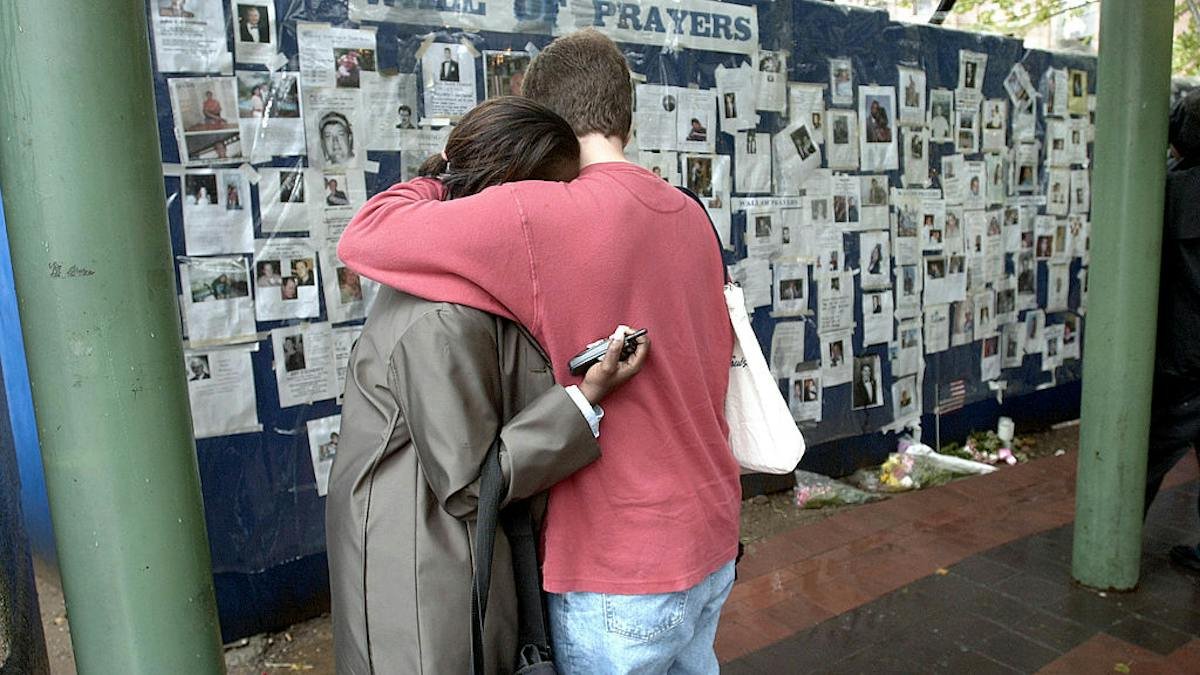
Twenty-five years after the September 11 attacks, a theologian and ethicist is arguing in a new essay that the national response to the tragedy exposed what he calls the “impotence of secularism” — the inability of nonreligious moral frameworks to meet the demands of a moment defined by mass murder and grief.
Writing for The Daily Wire, the author recounts his personal experience of the day as a 16-year-old high school sophomore in central Illinois, then pivots to a broader cultural argument: that the attacks functioned as a real-world stress test of the secularization thesis that scholars had been heralding in the years before 2001. The essay was published on the 25th anniversary of the attacks.
‘Where were you when you heard the news?’
The piece opens with the question that has become ritualized in American life — where were you on the morning of September 11, 2001? For the author, that morning found him driving to Springfield, Illinois, on Interstate 72 with his mother for a follow-up appointment with a surgeon, still recovering from major injuries sustained in a skiing accident earlier that year.
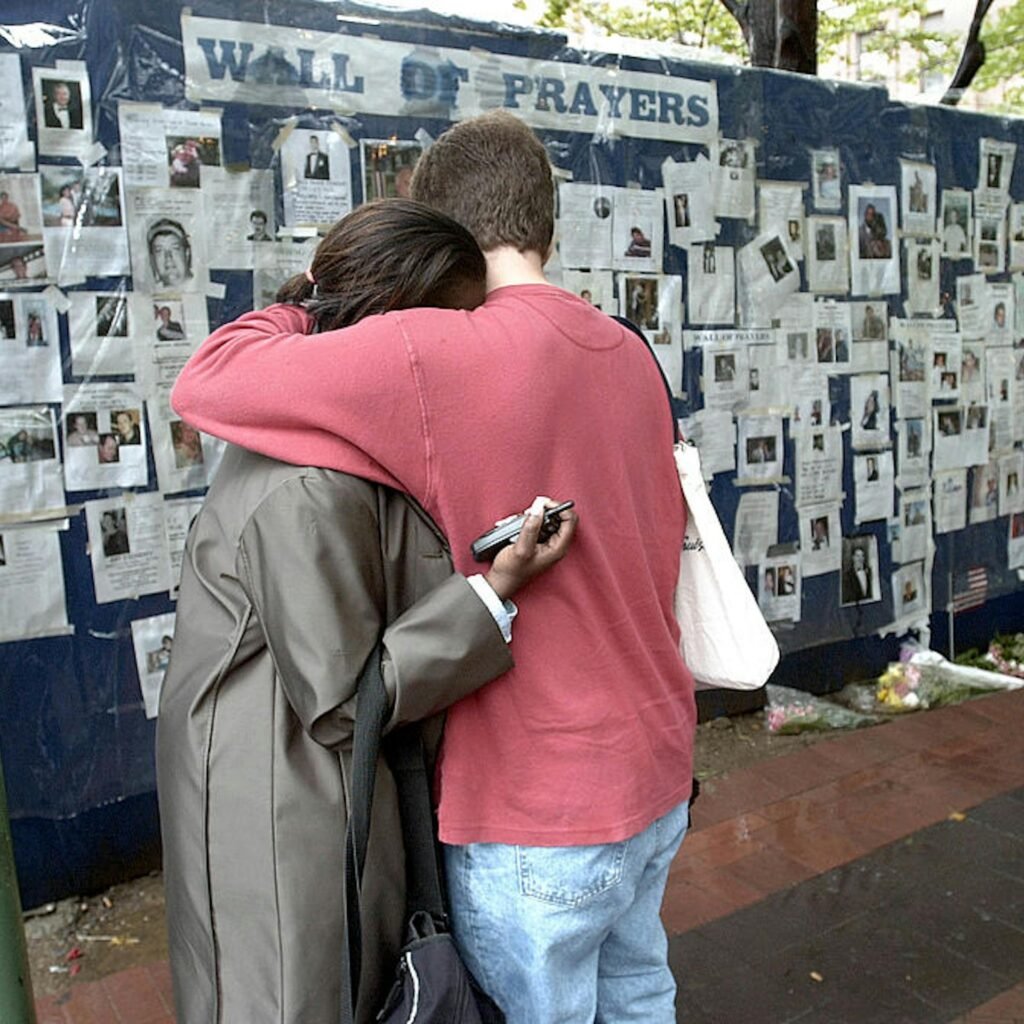
He notes the now-familiar detail that nearly everyone who retells the day mentions the weather — an uncannily crisp, cloudless early-fall morning. He interprets that collective memory as the mind’s way of framing moral memory, setting images of beauty against the carnage that followed: the breaking news alert from local radio station WLDS about a plane striking the World Trade Center, the second plane, the audible silence that fell over the doctor’s waiting room as people processed that the United States was under attack.
Back at school that day, televisions were set up in a common area where students and faculty watched the coverage in real time. At lunch, the principal suddenly ordered everyone out of the cafeteria and into the parking lot — an alarm that turned out to be caused by an electrical breaker fire, though in the moment, the author writes, students feared the terrorism of New York had spread nationwide. School was canceled for the rest of the day, and he and his then-girlfriend, now his wife, watched the news at his house.
He describes the realization that settled over him that afternoon as he drove her home: that his generation — emerging millennials — had just had its Pearl Harbor moment, and that many of his high school friends would go on to serve in the War on Terror in Iraq and Afghanistan. He writes candidly that his injuries would have prevented him from serving had America declared a traditional war, and that he now understands the shame described by World War II-era men who were medically disqualified from service. He also reflects, with some self-criticism, on how compartmentalized the long war became for Americans who stayed home while a generation of young men fought and died abroad.

From personal memory to moral argument
The author is explicit that the essay is not ultimately about himself — it gains urgency, he says, because he now teaches students who were either too young to remember 9/11 or were not yet born. He catalogues the day as a display of humanity at both its worst and its best: roughly 3,000 innocent Americans killed by what he describes as Islamist barbarians, and, alongside that, the firefighters who climbed burning towers to save trapped victims, the long lines at hospitals and blood banks, the patriotic resolve of Americans demanding justice, and President George W. Bush standing on the rubble declaring that the terrorists would pay.
He also cites the 2011 killing of Osama bin Laden by Navy SEALs as an “epic, unforgettable coda” to a decade of tumult, invoking biblical justice and Romans 13, and recalling President Obama — then in a crowd of applauding New Yorkers, many of whom likely had not voted for him — throwing a World Series pitch that signaled resolve and solidarity.
That foundation sets up the essay’s central claim. In the early 2000s, the author writes, America was statistically more Christian than it is today, but the secularization thesis was already well underway. And yet, he argues, when the Twin Towers fell, no one reached for an atheist manifesto or pulled Nietzsche from the shelf. They chose Psalm 23. No one, he writes, wondered what the neighborhood atheist thought. He contrasts the worldview of the late Christopher Hitchens with that of Billy Graham, arguing that Hitchens’s framework “could not satisfy the longings for justice, but Billy Graham’s could.”

Secularism, in his telling, was exposed as “fleeting and intellectual, divorced from the needs of objectivity, affection, and explanation.” What served grief-stricken Americans that day was moral realism — the idea that morality is real, objective, and felt in the inner recesses of the soul. He points to the dramatic increase in church attendance in the weeks after the attacks as evidence of where Americans turned for answers.
The author situates 9/11 within a broader pattern: moments of moral convulsion, from the Nuremberg Trials after the Holocaust to the cultural upheaval of the 1960s, have a way of jarring societies awake from their moral slumbers and calling into question the ambient assumptions of secular life. Events of such heinous evil, he writes, leave people crying out for a form of justice that no human court can finally deliver. Political justice can rectify wrongs in a temporal sense, he allows, but a guilty verdict cannot bring back a deceased son or daughter.
He closes with an explicitly religious appeal, invoking Jesus as “the resurrection and life” in John 11:25-26 and the idea from Romans 2:15 that the law is “written on the heart” by its Creator. September 11, he concludes, reminds Americans that they must reach for a higher court — a divine court — to believe that evil will ultimately be answered with perfect justice.
An argument aimed at a post-9/11 audience
The essay fits a genre of anniversary reflection that has become more pointed as the distance from the attacks has grown. The author identifies himself as a theologian and ethicist and repeatedly frames his argument in explicitly Christian terms, but the cultural claim he is making — that a secular society revealed its own limits on that particular morning — is one that has circulated on the American right for years and now arrives at a 25-year marker with a generation of students who have no first-hand memory of the day.
He is direct about that audience gap. What was, for his generation, a lived rupture is, for his current students, a historical event. That transition, he suggests, is precisely why the argument matters now: the moral categories Americans instinctively reached for in September 2001 are no longer the assumed default, and the question of what remains when tragedy strikes a society that has moved past them is one he believes the day itself already answered.
Source: www.dailywire.com — https://www.dailywire.com/news/september-11-and-the-impotence-of-secularism