
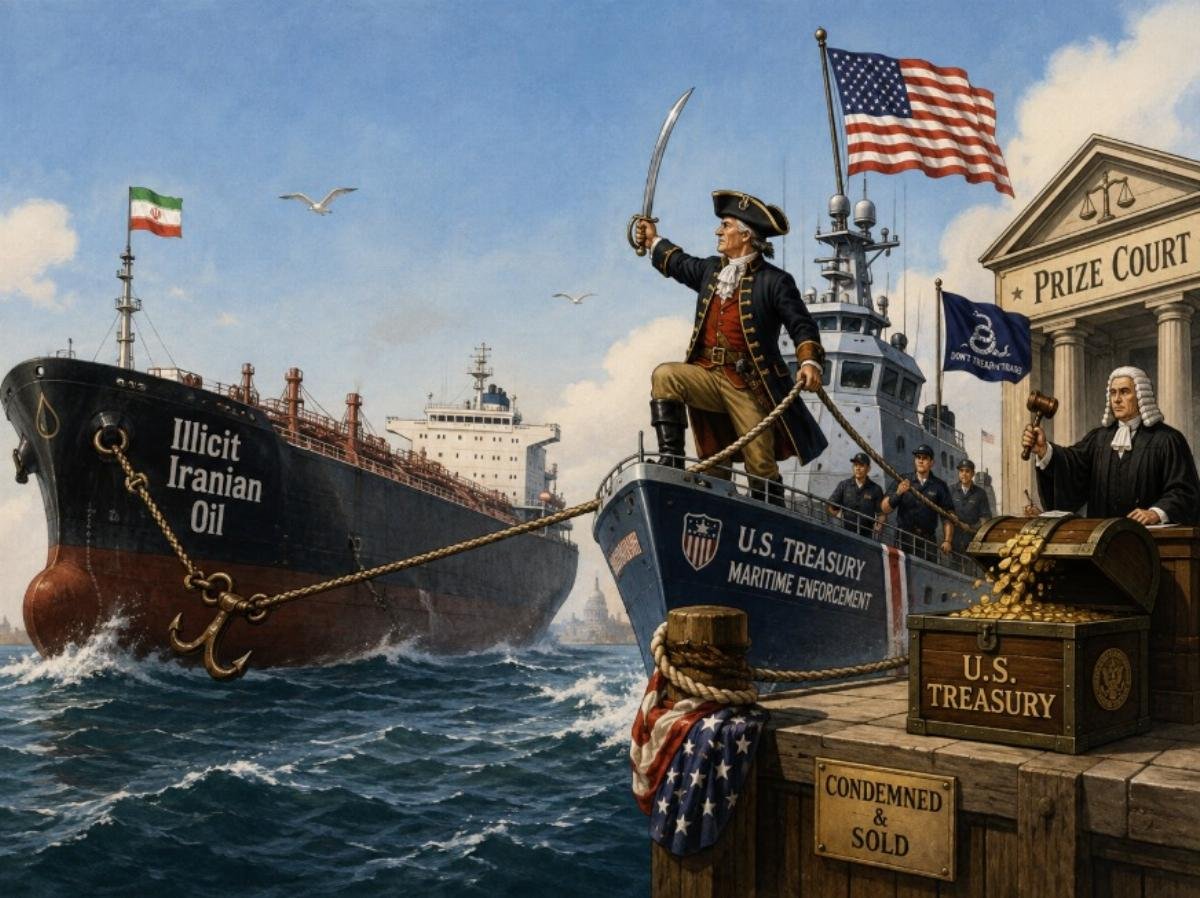
The Trump administration is reaching deep into maritime history books for its latest economic weapon against Iran: prize courts. According to a report by S. David Sultzer in American Thinker, Treasury Secretary Scott Bessant’s Operation Economic Outcast—announced August 24—includes plans to capture, condemn, and sell tankers transporting illicit Iranian oil, with proceeds going directly into the U.S. Treasury.
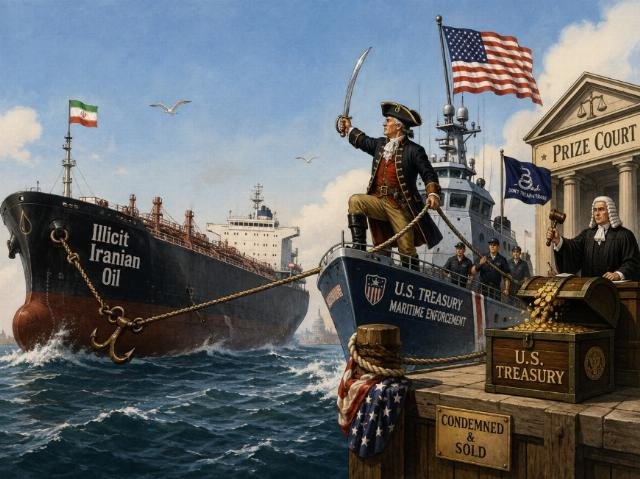
The strategy revives a legal institution that has largely fallen into disuse since the 19th century. Prize courts are special-purpose tribunals designed to quickly determine whether the seizure and forfeiture of an enemy merchant vessel was legal. Under the plan, U.S. forces would seize ships on the high seas carrying Iranian oil, bring them to American ports, and—if a court approves—sell the vessels and their cargo, banking the proceeds.
It’s a distinctly old-school approach, with roots stretching back over 400 years in British and American history. And notably, it has a solid constitutional foundation that supporters say makes it more than just a colorful historical curiosity.
Letters of marque are still in the Constitution
While the administration isn’t quite issuing letters of marque to private citizens—the practice of commissioning private ships to harass enemy shipping—the legal framework for such captures remains embedded in U.S. law. Article I, Section 8 of the Constitution explicitly grants Congress the power “to grant Letters of Marque and Reprisal, and make Rules concerning Captures on Land and Water.” As the report notes, these letters are instruments that permit private citizens to seize enemy vessels, their cargos, and crew.
More importantly, the Prize Act—passed shortly after the Constitution’s adoption and now codified at 10 U.S.C. § 8851 et. seq.—remains good law. The act directs how captured “prizes” should be handled, whether they come from privateers operating under letters of marque or from the U.S. Navy itself. Under the act, any U.S. district court can serve as a prize court. When a captured vessel and its cargo are brought into an American port, the court must verify it was a legitimate prize taken “during war by authority of the United States or adopted and ratified by the President.” If so, the court may condemn the prize and its cargo, order its sale, and deposit the proceeds in the U.S. Treasury.
The privateer distinction: why not just piracy?
The historical context here is rich. Privateers were private ships or fleets that governments commissioned through letters of marque and reprisal. Unlike pirates, who kept everything they captured and faced execution if caught, privateers operated with a degree of legal protection. They brought captured ships and cargo to friendly ports where prize courts legitimized the captures, then split the proceeds with the government.
Why didn’t privateers just go full pirate? Because of a crucial difference in treatment. Since European nations all used privateers, practicality dictated they give enemy privateers greater rights than pirates. A captured privateer holding a letter of marque was treated as a prisoner of war; a captured pirate was hanged.
In a nod to that swashbuckling history, the report quotes a vivid image: “We’re going to party like it’s 1776.” It also references the most famous privateer of all—Francis Drake—who led hit-and-run attacks on Spanish ports and ships in the Pacific in the 1570s, capturing enormous wealth. The Spanish, terrified of the red-bearded menace, nicknamed him “El Draque”—The Dragon. Though as the report wryly notes, Drake’s reputation has since become “controversial” due to his participation in the slave trade.
Legal challenges likely
But before anyone hoists the Jolly Roger, there are significant legal hurdles. The Treasury’s current plans for prize courts are not yet finalized, according to the report. And they’re likely to face legal challenges over whether the situation constitutes sufficient “war” or hostilities to trigger prize jurisdiction.
That question is central. The Prize Act requires a “war” context for captures to be legitimate prizes. While the U.S. has been engaged in various forms of conflict with Iran for decades, and Iranian-backed forces have attacked American interests, there is no declared war. Whether the administration can successfully argue that ongoing hostilities meet the threshold remains an open question—and one that courts will likely have to resolve.
The economic stakes are significant. Iran’s oil exports have long been a lifeline for its economy, and smuggling operations have proven resilient against sanctions. By capturing and selling the tankers themselves—not just seizing the cargo—the administration aims to make the cost of smuggling prohibitive. Operations Economic Outcast, as the name suggests, is designed to crash the Iranian economy by any legal means available.
The approach carries echoes of earlier American history. In the early days of the Republic, privateers were a key naval asset, supplementing the small official navy with privately owned armed ships. The prize system funded much of that effort. Now, the administration is dusting off those tools for a new era of economic warfare.
Whether the courts will bless the strategy, or whether it will survive legal scrutiny, remains to be seen. But the administration is signaling it’s willing to go old school on the high seas—and that, in its view, the legal architecture for such captures has never really gone away. As the report puts it, just the thought of reestablishing prize courts makes one want to “put on an eye patch, hoist the jolly roger, and strap on a cutlass.”
For now, the details are still being finalized, and the plan faces an uncertain legal path. But the message is clear: the United States is prepared to use every tool at its disposal—including some dormant for 400 years—to cut off the flow of Iranian oil.
Source: www.americanthinker.com — https://www.americanthinker.com/blog/2026/08/trump-is-bringing-privateers-back-to-stop-smuggled-iranian-oil/