
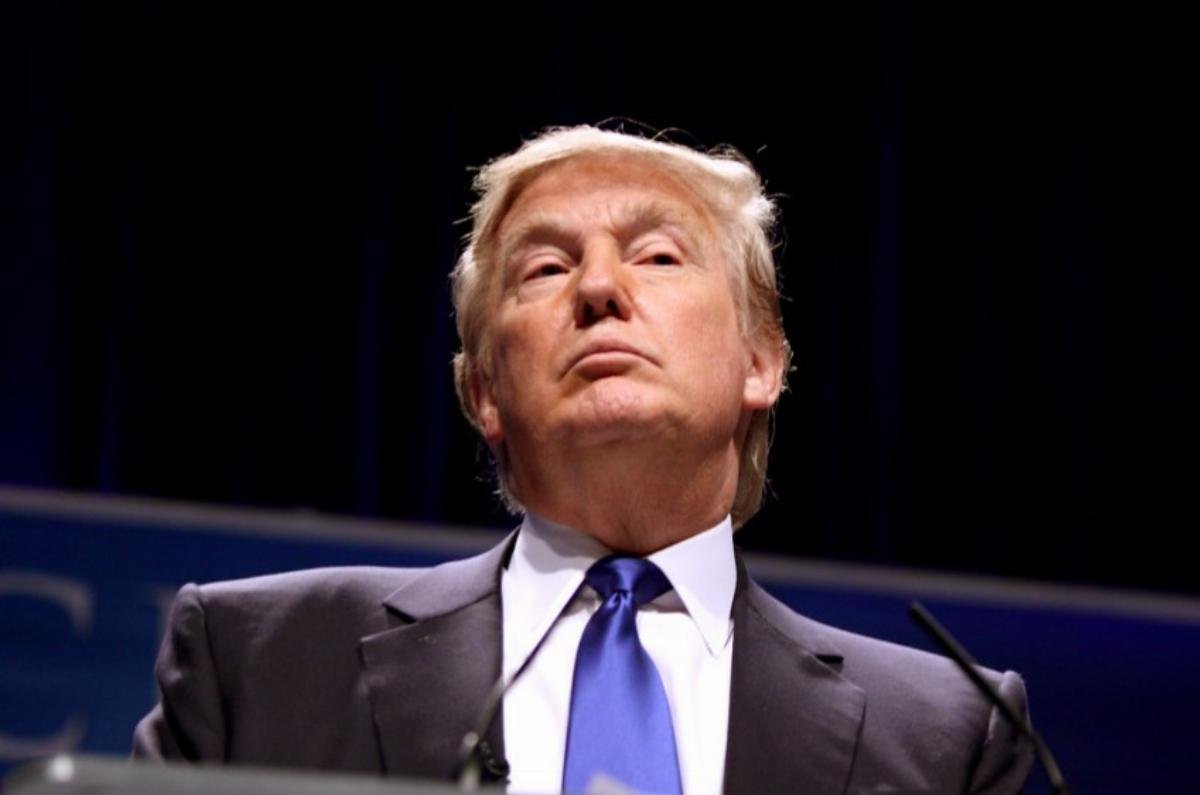
When former President Donald Trump promised that a Republican victory in the 2026 midterms would mean a $5,000 check for every adult citizen, much of the political class reached for the same word: bribe. Writing for American Thinker, Jeremy Egerer argues that the label is doing more work than the idea itself — and that the outrage says more about how we’ve been conditioned to think about government spending than it does about the promise itself.
Egerer places the $5,000 pledge alongside a familiar catalog of Trump-era payout promises: a $2,000 tariff dividend, a government-efficiency dividend, and $9,000 for stay-at-home moms. Seen from one angle, the $5,000 check is an escalation. From another, Egerer writes, it’s simply the same species of offer — and therefore not materially different from promising to preserve Medicaid, promising tax cuts while the debt climbs, or promising cheaper gas at the pump.
His claim is not that those other promises are any less cynical. It’s that the $5,000 check only looks novel because it pretends to benefit everyone at once. That universalism, he suggests, is precisely what makes people call it unaffordable and crazy.

The affordability test only applies to some people
Egerer’s sharpest move is to point at the inconsistency in how Americans talk about the deficit. He notes the standard complaint: America will go bankrupt if it pays its poorest citizens, its wealthiest citizens, or most of everyone in between. Yet the same country, he writes, can promise aid to around 175 countries without touching off a comparable existential panic at home. When the proposal is to send aid to Americans instead, he writes, it suddenly presents what critics describe as significant moral and legal hurdles — on top of the economic ones.
Underneath that argument sits a mechanical objection. A government can’t pay everyone, the thinking goes, because someone has to be squeezed to fund it. Egerer doesn’t accept that as a serious limiting principle. He argues it is an illusion that collapses the moment the people receiving the money turn out to be the very same people getting taxed — an illusion, he adds, that was always there in other forms. The belief that most of politics today is anything other than bribing, he writes, was part of the same illusion.
This is where the piece shifts from an argument about fiscal policy to something closer to a moral diagnosis. Egerer doesn’t dispute that someone — or everybody — is getting paid. His complaint is about what the arrangement conceals: the fiction that everyone isn’t going broke, and that American voters haven’t already been for sale for a long time.
An electorate that lost the moral high ground
The core of Egerer’s argument is that the reason a $5,000 check seems plausible as a campaign promise is that the electorate it’s aimed at has lost the premise that voting should be about the best interest of the country. Politics, in his telling, has become a contest in which voters openly shop for their payout — and the campaign-trail auction only looks absurd because somebody finally said the quiet part at full volume.
He turns to a blunt metaphor to describe where that leaves the democratic process: election season is a pissing contest, and it is happening directly onto our feet.
What the target audience is being told
The American Thinker piece is directed at conservative readers, and its criticism cuts inward. Trump’s payout proposals aren’t laundered here as a winning political strategy or a clever rebrand — Egerer uses them as evidence that the whole system has degraded, and he lays a substantial share of the blame at the feet of ordinary voters. That’s an unusual posture for commentary published in a right-leaning outlet during the run-up to midterms, and it’s precisely the point: the check isn’t the disease. In Egerer’s reading, the check is a symptom of an electorate that has been morally bankrupt for decades and has grown comfortable being bought.
Whether one agrees depends on where the blame for the situation really lies. His argument treats the $5,000 promise less as an outlier and more as a mirror — a proposal that only looks shocking because it stops pretending that entitlements, tax cuts, and price promises are somehow categorically different from writing a check directly to voters. If all of it is a payment, and all of it is pitched to secure a vote, then the objection to the $5,000 check can’t rest on its purity. It has to rest on affordability, feasibility, or the fact that it’s aimed at everyone instead of a targeted bloc.
Egerer doesn’t pretend to offer a solution. The piece reads more like a bill of indictment than a policy brief, and its target is not a particular administration or party but the transactional relationship between voters and the promises they reward. The question it leaves hanging is uncomfortable in either direction: if voters reward whoever offers the largest payment, the promise itself is merely accurate — and the outrage over it is mostly stagecraft.
Source: www.americanthinker.com — https://www.americanthinker.com/blog/2026/09/americans-are-too-easily-bought/