
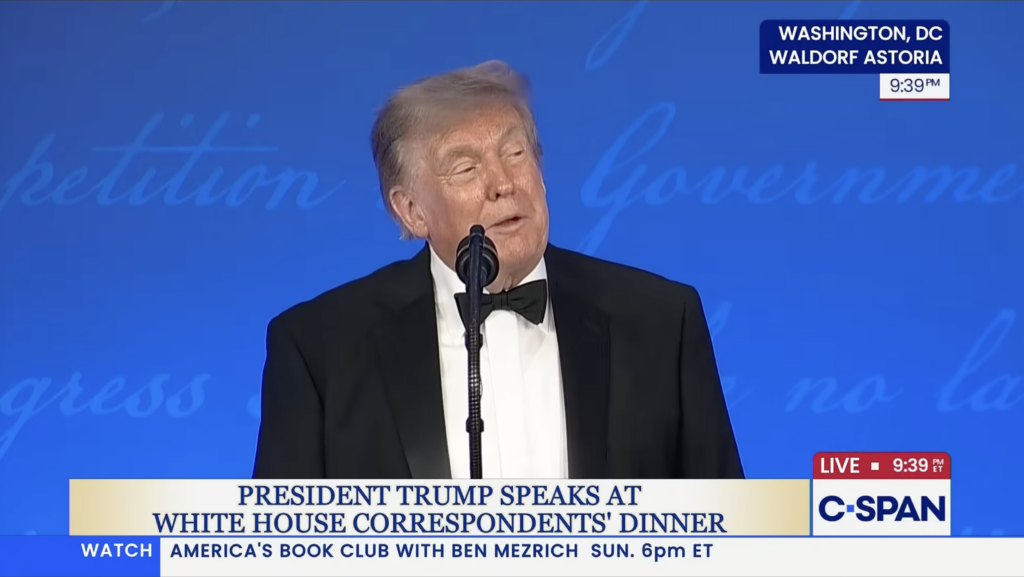
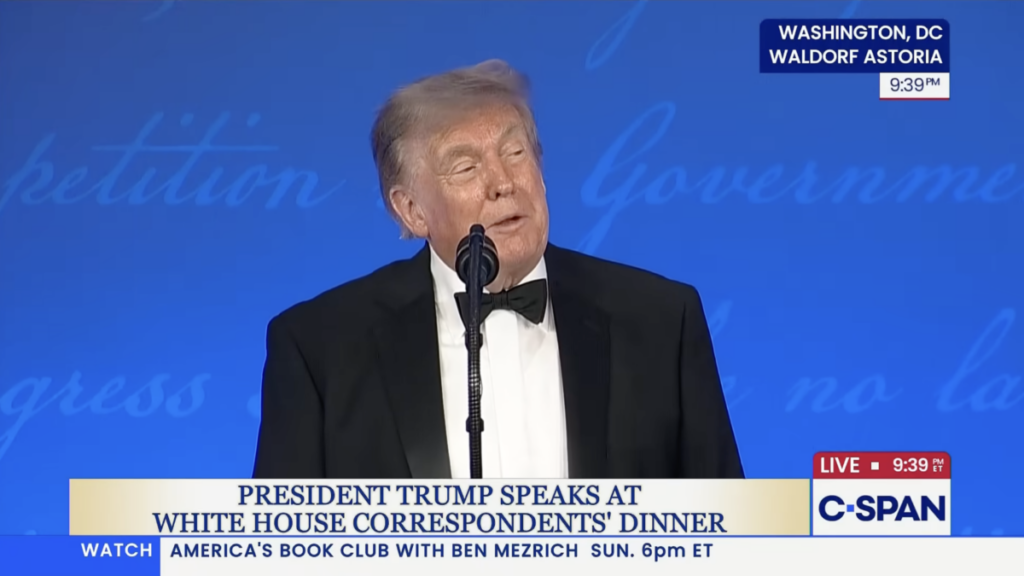
President Donald Trump’s joke comparing CNN anchor Kaitlan Collins to transgender influencer Dylan Mulvaney during Friday’s White House Correspondents’ Dinner has triggered a wave of criticism from mainstream media outlets, which characterized the remark as offensive and demeaning.
During the dinner, Trump quipped that he initially thought Collins “had really made it big with a major new sponsorship, but then I informed her that it wasn’t her on the Bud Light can; it was Dylan Mulvaney.” The reference alluded to Mulvaney’s controversial partnership with Bud Light three years ago, which sparked a consumer boycott that significantly impacted the brand’s sales.
Collins responded to the joke by posting a series of photos on Instagram, including one featuring a quote from Eleanor Roosevelt: “No one can make you feel inferior without your consent.”
Media Outlets Frame Remark as Attack
Multiple news organizations reacted strongly to Trump’s comment, with several prominent outlets describing it as an attack on the CNN journalist. Rolling Stone, People Magazine, The Independent, and the Daily Beast all covered the incident with critical framings.
The Daily Beast characterized Trump’s comparison as “what appeared to be a transphobic gibe.” The outlet Advocate reported that “Trump weaponized trans actress Dylan Mulvaney’s image to attack Kaitlan Collins” and claimed Trump “tried to demean the CNN journalist by comparing her to Mulvaney.”
AL.com described the joke as an “insult” to Collins and said Trump’s subsequent comments the following day amounted to “mocking” the journalist.
Conservative Commentary Questions Media Response
According to The Federalist, the media reaction raised questions about consistency in coverage of transgender issues. The outlet’s Editor-in-Chief Mollie Hemingway questioned on social media why the comparison would constitute an insult if media outlets maintain that transgender women are women.
The Federalist argued that the media’s characterization of the comparison as demeaning contradicts their stated position on gender identity. The publication pointed out that if outlets truly believed there is no meaningful distinction between women and transgender women, then comparing Collins to Mulvaney would not inherently be insulting.
Previous Media Coverage Cited
The Federalist referenced previous instances where outlets like The Advocate and The Daily Beast criticized public figures for making distinctions between women and transgender women. The Advocate previously accused author J.K. Rowling of “misgendering trans women” when she liked a tweet referring to them as “men in dresses.” The Daily Beast accused feminist author Chimamanda Ngozi Adichie of “transphobia” for stating she “doesn’t believe trans women are women.”
The conservative publication suggested that the media’s treatment of Trump’s joke as an attack implicitly acknowledges a distinction that these same outlets have demanded others not make.
Background on Mulvaney-Bud Light Controversy
Dylan Mulvaney became a polarizing figure three years ago following a promotional partnership with Bud Light. The collaboration sparked widespread controversy and led to a significant boycott of the beer brand, resulting in substantial sales declines for the company.
The incident became a flashpoint in broader cultural debates about corporate involvement in social issues and transgender representation in advertising.
The White House Correspondents’ Dinner, an annual event that brings together journalists, politicians, and celebrities, has historically been a venue for presidential humor, though jokes often generate controversy depending on their targets and subject matter.
Source: thefederalist.com — https://thefederalist.com/2026/07/27/media-meltdown-over-trumps-dylan-mulvaney-joke-proves-they-know-trans-ideology-is-a-lie/