
When the Supreme Court issued an emergency hold on September 14, 2026, regarding the U.S. Postal Service’s implementation of mail-in ballot regulations tied to Executive Order 14399, headlines across major outlets declared the administration’s election integrity effort effectively dead. But writing for American Thinker, conservative political consultant Jack Gleason argues that reading gets the ruling almost exactly backwards.
Gleason contends the Court’s intervention was a narrow, temporary procedural pause — not a ruling on the order’s constitutional merits — and that the provision with the greatest real-world effect was never about barcodes or postal portals at all. It was about putting individual election officials on notice that federal criminal liability now attaches to their decisions.
What the Court Actually Did
According to Gleason, EO 14399 was issued on March 31, 2026, directing the Postal Service to enforce citizenship verification and administrative integrity measures in federal elections. USPS subsequently finalized rules requiring uniform envelope designs, standardized Intelligent Mail barcodes, and mandatory uploads of state voter lists to a centralized Federal Ballot Mail Portal. Under the order, postal workers were instructed to hold or return ballot envelopes lacking proper tracking or failing verification.
A coalition of Democratic attorneys general and election officials sued, arguing that Article I, Section 4 of the Constitution assigns election rulemaking authority to the states, not federal agencies. Gleason notes the timing of the suit as strategically significant: plaintiffs did not file when the order was signed in March but waited until late summer, after postal rules were finalized and mail-in ballots were about to go to print. That delay, he argues, allowed them to invoke the Purcell principle — a judicial doctrine discouraging changes to election procedures close to Voting Day.
By the time the administration appealed, the Supreme Court had little time for full argument. On September 14, SCOTUS issued what Gleason describes as an emergency hold to avoid disrupting active election preparations, while explicitly leaving the broader legal questions undecided. Federal district court injunctions from Judges Indira Talwani and Carl Nichols remained in place, and media coverage framed the outcome as a total victory for state election authority.
The Enforcement Mechanism That Remains
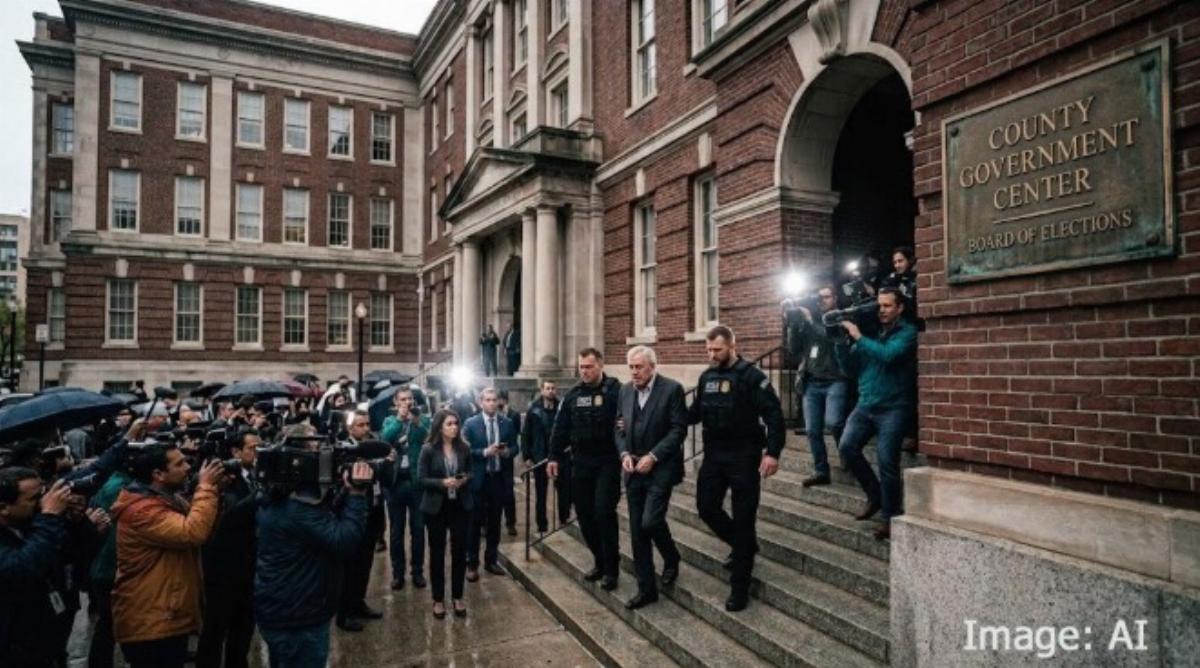
Gleason’s central argument is that this framing misses the order’s most consequential components. Sections 1 and 3 of EO 14399, he writes, direct the Department of Justice to prioritize criminal investigations and prosecutions of state and local officials who issue federal ballots to ineligible individuals or otherwise violate election law.
Under this framework, he explains, an election administrator who mails absentee ballots to deceased voters or to addresses known to be invalid can no longer take cover behind explanations like “poor list maintenance” or “administrative backlog.” If the DOJ establishes that an official knowingly violated election rules, that person faces the prospect of personal legal fees, a federal investigation, and potential prison time under federal criminal statutes.
That shift, Gleason argues, changes the incentive structure at the ground level. The calculation moves from what officials can get away with to strict adherence to statutory procedure. He describes this as a self-policing mechanism operating at the lowest levels of election administration — the precincts, county offices, and municipal clerks where ballots are actually handled.
“Federal court stays can temporarily pause specific operational mandates imposed on postal workers,” he writes, “but no district judge can grant local election workers or election boards immunity for breaking federal criminal law.”
The distinction matters legally. A stay binds the parties before the court — here, the Postal Service and the federal agencies implementing the operational rules. It does not extend immunity to local officials who might violate separate federal statutes. And because the Supreme Court did not reach the merits, the underlying constitutional questions about executive authority over federal elections remain open for the appeals process.
The Debate Over Federal Authority
The plaintiffs’ constitutional argument is not trivial. Article I, Section 4 grants states primary authority over the “Times, Places and Manner of holding Elections,” subject to congressional override. Whether a presidential executive order can impose verification requirements on state-administered federal elections is a genuinely unsettled question — one the Supreme Court has now deferred rather than resolved.
Critics of the order have characterized the DOJ enforcement provision as federal overreach into local administration and warned of a chilling effect on election workers already facing harassment and staffing shortages. The prospect of criminal prosecution for administrative errors, they argue, could drive experienced officials out of the profession entirely.
Gleason’s response is essentially that the chilling effect is the point. He frames decades of loose local practices, informal rule-shaving, and gray-area procedures as a structural vulnerability that persisted precisely because accountability was absent. The order, in his telling, substitutes personal legal risk for post-election reviews and polite warnings.
The Practical Landscape for November
What does this mean for the midterms? The operational requirements on USPS — barcode scanning, portal uploads, envelope standardization — are paused for the current cycle while appeals proceed. Gleason concedes these were always secondary. The enforcement framework under Title 18, he maintains, remains active.
That leaves election officials navigating an unusual environment: postal procedures unchanged from prior cycles, but with a federal law enforcement posture that, according to Gleason, has already altered behavior. Whether that translates into measurable changes in how ballots are processed — or into litigation over what constitutes a knowing violation — is likely to be tested well before November 3.
Gleason closes by urging readers who witness irregularities to document and report them, arguing that public vigilance compounds the deterrence the order is designed to create. It is an appeal to civic participation and a signal that the legal fight over EO 14399 is far from finished, whatever the September headlines suggested.
Source: www.americanthinker.com — https://www.americanthinker.com/articles/2026/09/trump-s-executive-order-has-election-officials-terrified/
Source: www.americanthinker.com
Related coverage
- American Thinker Claims USPS Is the DNC’s ‘Fail-Safe’ for Election Tampering
- North Carolina Democrat Candidate Faces Backlash Over Facebook Post Telling Trump Supporters to Visit Dachau Crematorium Ovens
- ‘Mind Viruses’ Author Argues America’s Gender Obsession Is a Contagion of Sanity
- Newsom’s ‘legal fraud’ scheme: How California taxed insurers, billed feds, and blames victims