
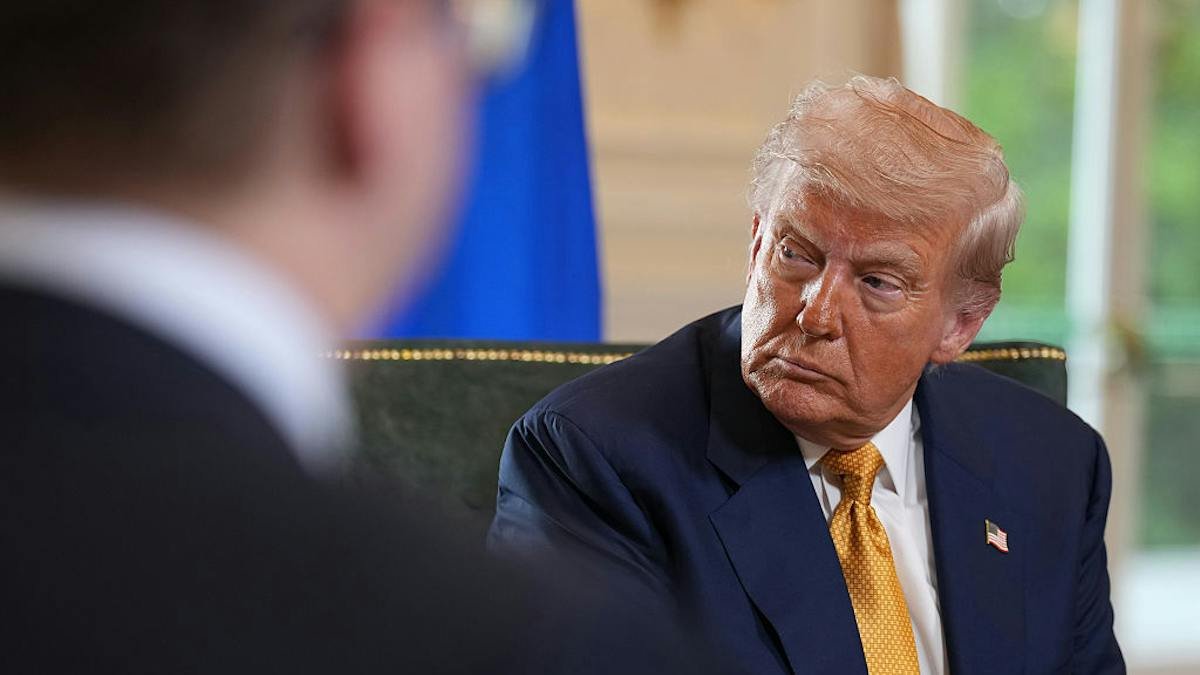
More than a month after President Trump directed his administration to open a trade investigation into Europe’s treatment of American technology companies, the probe has yet to get underway, and no one in Washington has offered a public explanation for the delay. Writing in The Daily Wire, commentator Ben Ferguson pressed the question of who, exactly, is standing in the way.
Trump announced on July 24 that the United States would “immediately” open a Section 301 investigation after the European Commission fined Google another $1 billion for alleged violations of its Digital Markets Act. Ferguson noted there was “nothing ambiguous” about the word immediately — yet the investigation still hasn’t formally begun.
A pattern Ferguson says is repeating with Canada
The delay comes as the administration works through a separate trade breakdown with Canada. According to U.S. Trade Representative Jamieson Greer, the two countries had found a path toward a deal before Canadian negotiators abruptly backed away from the near-final agreement because they “wanted more,” Ferguson wrote. Canada is now imposing retaliatory tariffs and blaming the United States for the collapse in talks.
For Ferguson, the two situations share a common thread: close allies operating on the assumption that they can take economic advantage of the United States and that Washington will eventually shrug and move on. Trump, he argued, was elected in part to end that thinking.
The case against Europe’s tech regulations
The source of the frustration is what European officials have done to some of America’s most successful technology firms. For years, Ferguson wrote, European regulators have buried U.S. tech companies under investigations, regulations and massive fines — forcing product redesigns, demanding access to proprietary technology and extracting billions of dollars in penalties.
Ferguson framed the dynamic as a competitive problem for Europe rather than a legal one. Europe, he argued, has struggled to produce technology companies capable of competing with their American counterparts, so instead of beating them in the marketplace, European regulators increasingly appear determined to regulate them into submission.

Notably, the delay does not appear to be coming from the companies themselves. Google publicly thanked the Trump administration for its engagement after the investigation was announced, and Amazon, Apple, Meta, X and other American firms have spent years fighting Europe’s regulatory attempts.
Nor does it appear to be coming from the president’s top trade official. Ambassador Greer has been blunt about European actions, describing them as “de facto forced technology transfer and intellectual property theft” backed by “unreasonable financial penalties.” Ferguson pointed to one striking figure in Greer’s public remarks: Europe’s fines against Google alone add up to more than 2 percent of the entire European Union budget — meaning the company is effectively contributing more through penalties than many EU member countries do.
Questions without answers
That leaves Ferguson asking who, precisely, is preventing the investigation from moving forward. He raised several possibilities: holdover career bureaucrats slow-walking another piece of Trump’s America First agenda, someone inside the government more worried about offending Brussels than carrying out a presidential directive, or simply a sprawling federal bureaucracy incapable of acting with the urgency the president has demanded.

Whatever the cause, Ferguson argued the result serves Europe’s interests. The European Commission has not withdrawn its Google fine, eased regulations targeting American tech companies or offered meaningful concessions, and so far there have been no formal consequences. Each additional week of delay, he wrote, signals to European officials that they may be able to wait Trump out.
Europe’s ‘Tech Sovereignty Package’ moves ahead
While Washington stalls, Europe is pressing forward. Ferguson pointed to the EU’s so-called “Tech Sovereignty Package,” which puts up to €10 billion in public funding behind the effort and awards another €180 million in sovereign-cloud contracts — all explicitly designed to reduce reliance on “foreign” technology providers.
In Ferguson’s reading, the package amounts to Europe reducing its dependence on American technology companies while simultaneously using European regulatory power against those same companies. If European firms want to compete on the merits, he wrote, that is fair game — but using regulators and billions in public money to tilt the playing field, then acting shocked when an American president says enough, is another matter.
That, Ferguson argued, is why the Section 301 investigation carries weight beyond a single European fine. It is a test of whether the United States is finally willing to defend American companies when foreign governments use regulatory power to disadvantage them.
There is also a broader audience. Every major American trading partner is watching to see whether Trump’s threats carry consequences and whether his administration will follow through when another country pushes the United States around. The president has made his position clear, Ferguson wrote, and his chief trade official has made his clear. What remains unanswered is why the directive hasn’t been carried out — and every day Washington waits, in his telling, is another gift to Brussels and another signal that America’s resolve can be tested without a price.
Source: www.dailywire.com — https://www.dailywire.com/news/who-is-slowing-down-president-trumps-investigation-into-europe