
The cost of housing asylum seekers in UK hotels has climbed sharply even as the government moves to shut the scheme down, according to figures presented to Parliament this week.
Home Office minister Anna Turley told the Home Affairs Committee that taxpayers were paying an average of £199 per night per migrant in hotel accommodation as of April — a 37 per cent increase from the £144.98 recorded last October. As GB News reported, that works out at roughly £1,393 per week for each person housed.
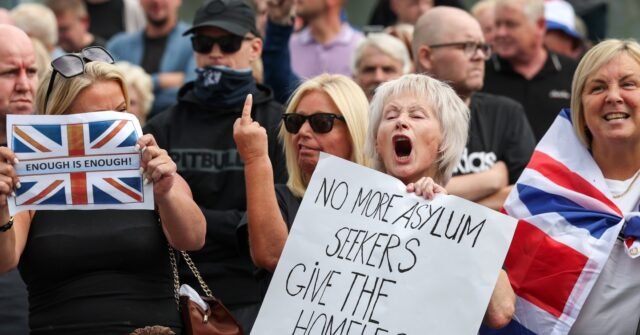
The rising per-head figure sits awkwardly alongside the government’s stated goal of ending the hotel system inherited from the previous Conservative administration, which has drawn sustained local opposition in towns and villages where large numbers of mostly young male migrants have been placed.
Fewer Hotels, Higher Bills
The number of migrants in hotels has fallen substantially. As of the end of June, 16,021 people were being housed in hotel rooms, down from 36,273 last September and well below the peak of 56,018 recorded in 2023. The estate itself has shrunk from around 200 hotels last September to 160 by June.
Turley attributed the higher per-person cost to that very decline, explaining that the government is still paying for rooms it is no longer using while sites are wound down in stages.
“This figure has increased since the figures we last provided in October 2025, as hotel closures are being implemented in phases,” she told the Commons. “As occupancy falls ahead of full site closure, the department continues to incur costs for some unoccupied rooms, which increases the average cost per person accommodated.”
The dynamic means that as the government accelerates closures, the headline cost per migrant is likely to look worse before the scheme disappears entirely — an awkward political problem for ministers who have promised savings.
From Hotels to Military Sites and Shared Housing
As hotel use is scaled back, the government has turned to other forms of accommodation. Former military sites are being converted into large-scale reception centres, and officials have said some of the burden will shift to middle-class areas. Plans are also being pursued to house asylum seekers in Houses in Multiple Occupation (HMOs), where three or more people share a residential property.
Critics of the HMO approach argue it will push up local housing costs and make it harder for residents to know where migrants are being placed. As of June, 73,068 asylum seekers were being accommodated at taxpayer expense outside the hotel system.
Opposition to specific sites has been intense. At the former Bicester Garrison near the Oxfordshire village of Piddington, the government intends to house around 1,256 young male migrants at a facility close to a village of roughly 350 residents. The plan prompted Piddington to hold a referendum on seceding from the United Kingdom; the measure passed with 92 per cent support, 285 votes in favour to 26 against.
Tim McNally, who leads the Piddington Parish Council, has hinted at further steps, saying in July that residents want their grievance aired across the Atlantic. “We want President Trump to know about this,” he said, raising the unlikely prospect of petitioning to become a US state.
Government Defends Progress
A Home Office spokesman pushed back on the suggestion that costs are out of control, arguing the overall direction of travel is toward savings.
“The Government is closing every asylum hotel, saving taxpayers over £1 billion on asylum support since the election,” the spokesman said. “Numbers in asylum hotels have been slashed by 50 per cent in the last year and 71 per cent since the peak in September 2023. We are working to fairly house asylum seekers across the country, moving asylum seekers into alternative accommodation, including former military sites which are designed to be self-contained to reduce impact on the local community.”
The figures presented by Turley cover a period in which the government has faced pressure from both sides: voters in affected communities demanding an end to hotels in their areas, and critics of the alternative sites warning that dispersal into military camps and shared housing carries its own costs and tensions. For now, the arithmetic of the transition is working against the Treasury — fewer people in hotels, but a higher bill for every one of them.
Source: www.breitbart.com — https://www.breitbart.com/europe/2026/09/23/cost-of-housing-hotel-migrants-jumps-by-third-despite-govt-attempts-to-shut-down-scheme/