
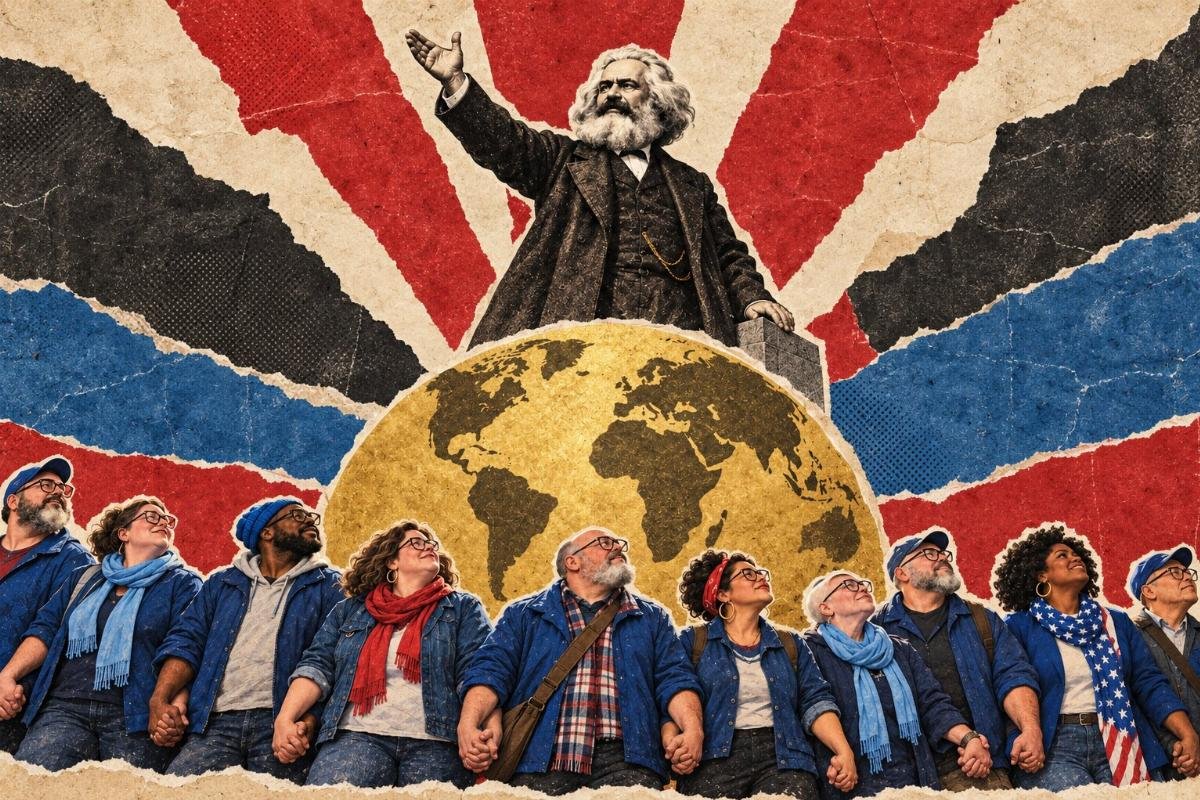
A recent opinion piece on American Thinker argues that the resurgence of socialist ideas, championed by figures like Mamdani and DSA supporters, is rooted in persistent economic misconceptions. The author, Bill Ponton, suggests that America’s historical avoidance of socialism’s worst excesses does not insulate it from the allure of promises that offer something for nothing, particularly in the form of labor unions.
Ponton’s argument centers on the claim that while employers are largely barred from acting in concert through associations, employees are actively encouraged to unionize—a legal asymmetry he finds troubling. He calls for a dispassionate look at unions’ economic impacts, moving beyond the emotional attachments many Americans hold due to personal or family union membership.
The UAW and the Rise of Foreign Competition
Ponton uses the history of the United Automobile Workers (UAW) as a prime example. He acknowledges that the union secured significant gains for its members, including better wages, job security, and workplace rules. However, he contends that these added costs raised car prices and made American vehicles less competitive against Japanese and other foreign automakers at home and abroad.
Citing industry history, Ponton notes that in 1950 the United States produced roughly three-quarters of the world’s automobiles, while Japan produced less than one percent of that amount. By 1970, Japan was making nearly two-thirds as many vehicles as the U.S., and a decade later it surpassed American production. By 1990, Japanese manufacturers held about one-third of the U.S. car market, with models like the Honda Accord and Toyota Camry occasionally outselling every American-made passenger car.
Job Losses and Non-Union Plants
The financial consequences extended to employment, with the American auto industry employing about 200,000 fewer workers in 1990 than in 1980, according to Ponton. Political pressure on Japan to restrict exports led to Japanese manufacturers building plants in America—many of which operated non-union workforces. Employees at these plants repeatedly voted against union representation in secret-ballot elections overseen by the government.
By the early 2000s, the contrast was stark: Detroit automakers were laying off workers by the thousands while Toyota and other foreign-owned manufacturers were hiring American workers. Ponton argues that this decline in unionized auto employment reflects a broader trend of shrinking union membership among industrial workers.
Flexibility and Conflict of Interest
Beyond specific job losses, Ponton argues that unions hamper an employer’s ability to adapt to competitive challenges. Union-imposed restrictions on wages, staffing, hours, and working conditions limit flexibility, he claims. He also criticizes unions for fostering a “false dichotomy” that worker and employer interests are fundamentally opposed, rather than cultivating a culture that aligns them.
Ponton directs even stronger criticism at public-sector unions, saying they pose an inherent conflict of interest. Because public employees’ unions finance and support political candidates who serve their needs, he argues, their influence may clash with the broader public’s wishes.
Marx’s Legacy and Modern Vulnerability
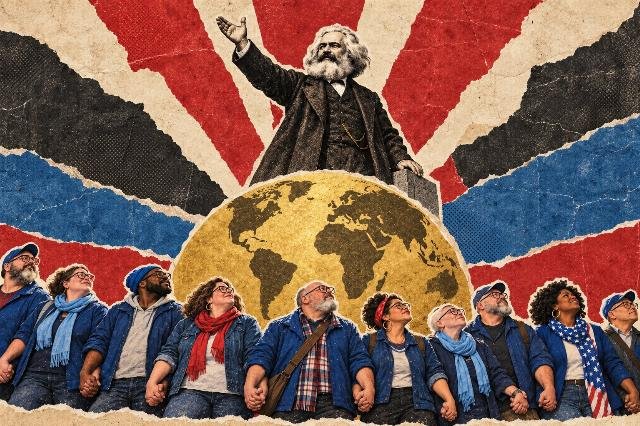
Ponton invokes Karl Marx’s famous slogan—“Workers of the world, unite! You have nothing to lose but your chains”—to illustrate what he sees as a long-standing disconnect between socialist theory and economic reality. He points out that Marx himself lived in Brussels with his family, supported by family money and Friedrich Engels, whose income came from capitalist textile profits. Marx, in Ponton’s view, had little understanding of business or working-class life, yet his “flair for the dramatic” continues to influence otherwise sober thinkers today.
The column concludes that this theatrical showmanship still shapes economic thinking, leaving the country vulnerable to demagogic promises. Ponton emphasizes the importance of free speech in addressing these challenges, urging readers to consider the economic consequences of union policies beyond emotional appeal.
Source: www.americanthinker.com — https://www.americanthinker.com/blog/2026/09/workers-of-the-world-unite/