
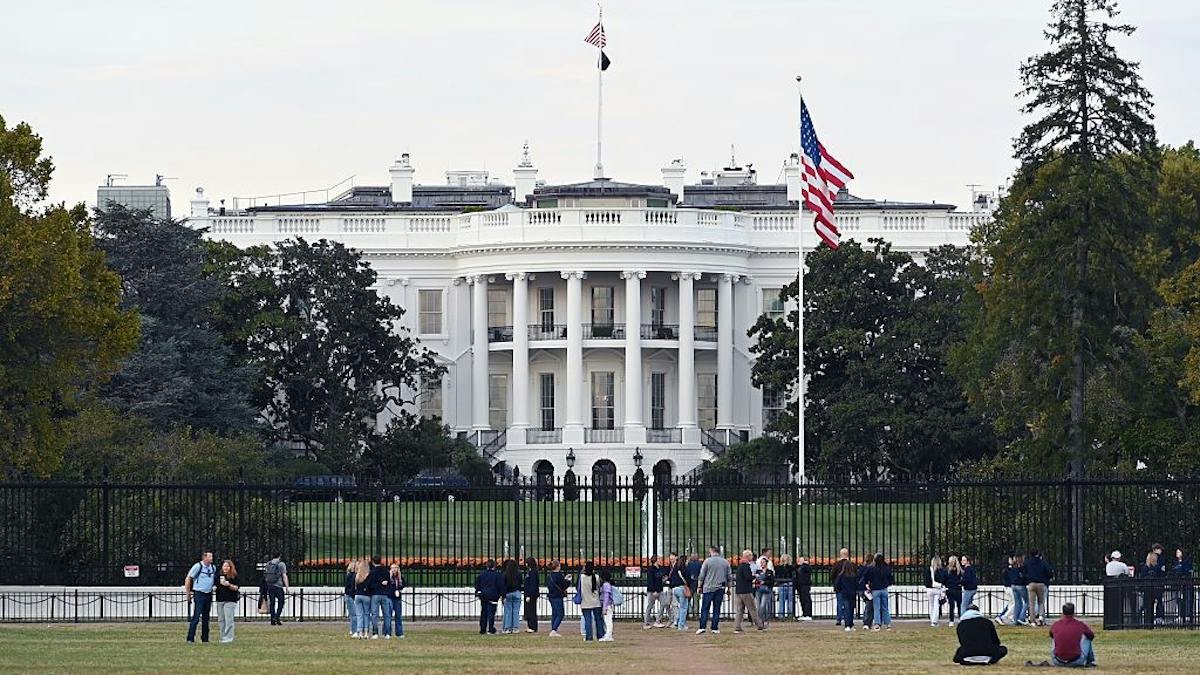
The White House launched a 24-hour streaming channel on Monday, billing it as a direct line to the administration’s messaging after the five major television networks suspended their shared coverage of the president. The announcement, made from the official White House account, came just days after the administration moved to bar several outlets from the press pool and the networks responded by pulling their collective camera crews.
“Trump TV IS STREAMING NOW,” the White House posted, describing the channel as “24/7, updated in real time, with top past moments, announcements, and the latest and greatest from the administration all in one place.” The post added: “Not every big moment has made it on your tv, now it can.”
According to the New York Post, the channel’s first broadcast was a July 3 speech the president delivered at Mount Rushmore.
A Pool Boycott, Then a Channel
The launch caps a week of escalating friction between the White House and the press corps. On Friday, President Donald Trump banned Politico, CNN, and MSNOW from the White House. By Monday, the White House television pool — Fox News, ABC News, CBS News, CNN, and NBC News — had suspended TV pool coverage of the president.
Under the long-standing pool arrangement, each network takes turns serving as “pool chair,” supplying video of presidential events designated as pool events. The networks share a single video feed, a cost-saving practice designed to keep television coverage available to all five outlets without duplicating crews at every stop.
The pool networks issued a joint statement condemning the administration’s decision to exclude certain outlets. “The public has a vital interest in receiving accurate, independent information about its government,” the networks said. “No administration should restrict a news organization because it objects to its reporting.”
All five networks agreed to suspend TV pool coverage of the president’s trip to the United Nations General Assembly, leaving no television crew to provide video of that travel.
An Evolving Fight Over Access
The dispute marks a fresh chapter in a years-long back-and-forth over which outlets get access to the president and on what terms. Pooled coverage has historically functioned as a backstop: even news organizations that are not granted a one-on-one interview or a seat in the room still receive the same raw video as their competitors. Suspending that arrangement removes a baseline of visual documentation that outlets across the ideological spectrum have relied on.

In place of that shared feed, the administration is now positioning its own channel as the way for viewers to see the president’s events. The White House’s promotional language emphasized continuity and volume — past speeches, announcements, and daily output — rather than any specific editorial mission.
The timing was pointed. Announcing the channel on the same day the networks declined to send a crew to cover the UN General Assembly trip framed the launch as a workaround, not just an addition. If the pool does not provide video, the administration’s own stream becomes the primary source of moving images from presidential events — at least for viewers willing to watch it.
What It Means for Coverage
For the networks, the calculation is delicate. Walking away from pool coverage is a visible statement, but it also cedes the field. If the only televised feed of a presidential trip comes from the White House’s own channel, the networks lose the ability to frame, contextualize, or fact-check the visuals in real time — the core of what television news adds to a pool feed.
The White House, meanwhile, gains a channel it controls end to end, without the editing or editorial judgment of outside newsrooms. Whether that channel reaches an audience comparable to the network evening broadcasts is a separate question — the announcement did not include distribution details beyond the streaming link.

The joint statement from the networks leaned on principle rather than process. By casting the exclusion of specific outlets as a punishment for reporting, the outlets framed the dispute as a press-freedom question rather than a logistical one. The administration has not responded to that characterization in the material available.
For now, the standoff remains unresolved. The networks have not said how long their suspension will last, and the White House has not indicated whether the banned outlets will be reinstated. What was once a behind-the-scenes arrangement about sharing camera feeds has become a public argument about who gets to show the president — and to whom.
The launch also raises practical questions for the press corps going forward. Pool coverage exists in part because it is impractical for every outlet to travel with the president at all times. If that system breaks down, smaller newsrooms without the resources to send their own crews could find themselves relying almost entirely on the White House’s stream or on whatever individual networks choose to gather independently.
The White House’s post did not address the pool suspension directly, instead promoting the channel’s round-the-clock availability and its catalog of past moments. The framing suggested the administration sees the channel as filling a gap its critics say it created.
Reporting from the New York Post identified the Mount Rushmore speech as the channel’s opening broadcast, a choice that signals the administration intends to lead with moments from the president’s own appearances rather than new, made-for-stream programming. Whether the channel evolves into a live feed of daily events or remains a curated archive will shape how much it actually substitutes for the pool coverage it is replacing.
Both sides have dug in. The networks say no administration should penalize a news organization over its reporting. The White House says viewers deserve to see moments it argues have been left off television. The next few days — and whether cameras accompany the president on future trips — will test which argument holds.
Source: www.dailywire.com — https://www.dailywire.com/news/trump-just-upped-the-ante-in-his-fight-with-left-wing-media