
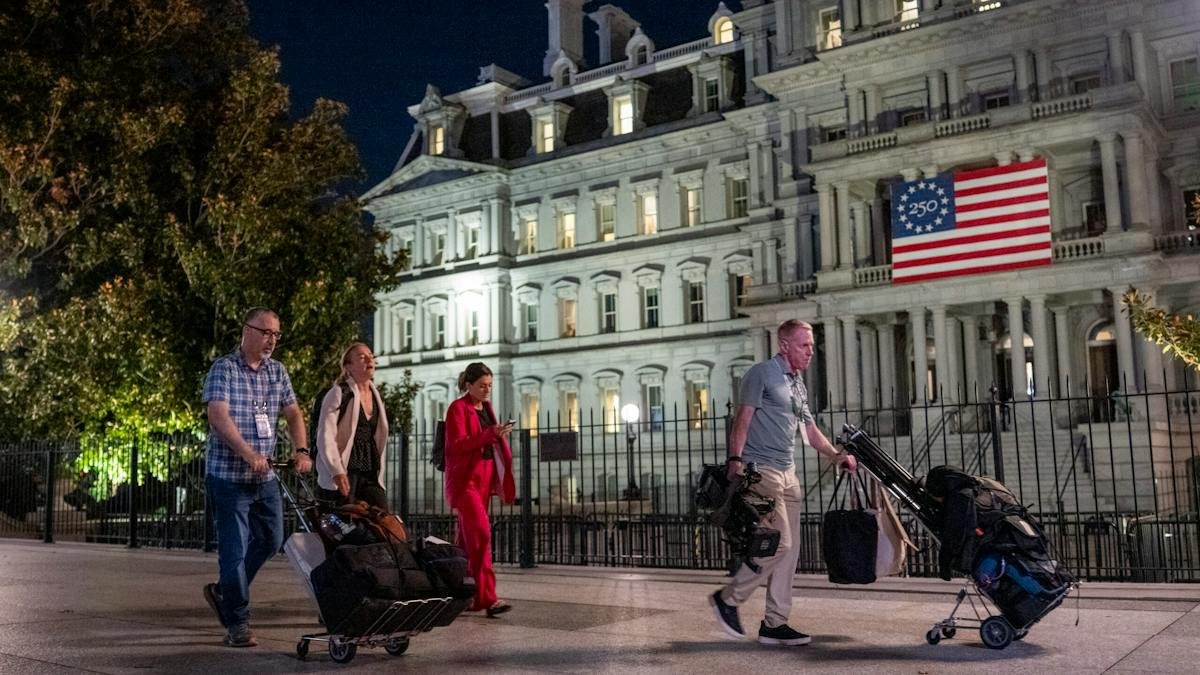
The White House started cutting off access to two major news networks on Saturday, deactivating the press badges of CNN and MS NOW journalists one day after President Donald Trump said he would bar the outlets — along with Politico — from the building.
According to The Daily Wire, MS NOW correspondent Akayla Gardner arrived at the White House gate Saturday morning to find that a guard had taken her credential and told her it had been disabled. The guard offered no further explanation beyond saying the order came from “above him.” A photographer working with her was also turned away, though a producer’s badge remained functional. CNN’s Betsy Klein reported being subjected to the same treatment about an hour later and was directed to the press office, which provided no explanation either. It remains unclear whether Politico staff encountered a similar block.
A Ban Announced, Then Enforced
Trump unveiled the ban Friday on Truth Social, writing that the three outlets “shouldn’t be able to constantly write or report FICTION and LIES” about him. When reporters questioned the timing of the announcement, the president was blunt: “No reason.” He described the scope of the restriction in loose terms, saying, “I don’t want them in my office. I don’t want them here.”
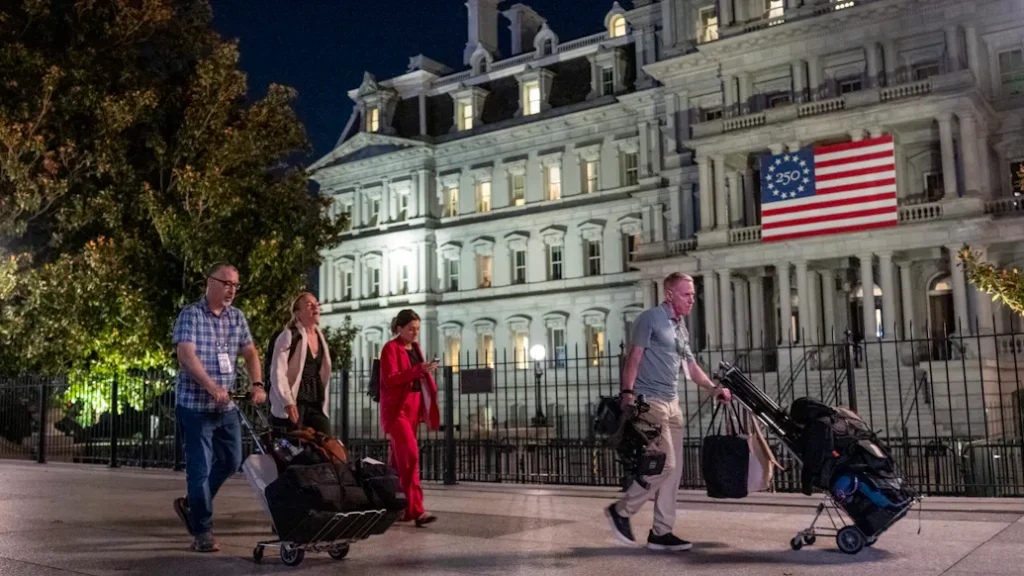
He also floated the possibility that other major outlets, including The New York Times and The Washington Post, could be added to the list. And he pointed to Politico specifically over roughly $8 million in federal subscription payments made in 2024 — a figure the outlet says does not represent government subsidies, which it denies receiving.
War Secretary Pete Hegseth weighed in with support for the move, saying his department “fully supports” the ban.
Networks Push Back
Both CNN and MS NOW condemned the decision as an unconstitutional infringement on press freedom and said they would continue covering the administration regardless. The reactions set up what could become another courtroom battle over White House access — a fight with a substantial legal paper trail behind it.

A 1977 federal appeals ruling established that once the White House opens its press facilities to credentialed reporters, it cannot revoke that access based on the content of their coverage. A federal judge leaned on similar reasoning in 2018 when he ordered the reinstatement of CNN reporter Jim Acosta’s credential after it was pulled. More recently, the Associated Press has been litigating its exclusion from the Oval Office and Air Force One, a dispute that arose after the wire service declined to drop “Gulf of Mexico” from its style guide.
A Familiar Pattern
The confrontation marks the latest chapter in a long-running struggle between the Trump administration and the press corps over who gets to occupy the limited space inside the West Wing. The White House press briefing room and the credentialed access that comes with it have historically been treated as a shared resource, with seats allocated by the Correspondents’ Association and access governed by a mix of tradition and First Amendment principles.
Trump’s decision to single out specific outlets by name — rather than through a formal credentialing review — is what makes the move unusual, even against the backdrop of past skirmishes. The 1977 ruling and the 2018 Acosta decision both turned on the idea that the government cannot use access as a cudgel against coverage it dislikes. Whether the White House’s latest action runs afoul of that precedent will likely be tested in court if the networks pursue legal remedies, as they have signaled they might.

For now, the practical effect is that two of the country’s largest television news operations have lost their ability to walk into the White House and report from inside, at least for the time being. Reporters from both outlets have continued to cover the administration from outside the gates, and the White House has offered no timeline for when — or whether — the badges might be restored.
The president’s reference to The New York Times and The Washington Post as possible future targets suggests the list could grow. That prospect has alarmed press freedom advocates, who warn that expanding the ban would further narrow the range of outlets with direct access to the president and his staff.
Politico’s situation remains unclear. The outlet has denied receiving government subsidies, pushing back on the characterization of the $8 million in federal subscription payments. Those payments, according to reporting on the matter, stemmed from subscriptions purchased by federal agencies during the previous administration — a common practice across government that long predates the current controversy.
Hegseth’s statement of support adds a Pentagon dimension to the dispute, signaling that the administration’s posture extends beyond the White House press office. The war secretary did not elaborate on how the ban might apply to his department’s own press operations or whether similar restrictions could be imposed on coverage of military matters.
Saturday’s events unfolded quickly and with little formal notice. Gardner’s account — a guard taking her badge and citing orders from “above him” — left open the question of who exactly issued the directive and whether it came from the press office, the Secret Service, or elsewhere in the West Wing. The White House press office has not publicly explained the basis for the deactivations.
For the networks, the immediate response has been defiance. Both CNN and MS NOW said they would keep reporting on the administration, a stance that echoes how outlets have responded to access restrictions in the past. Whether that reporting will continue to originate from inside the White House gates is now the central question — one that could be answered in a courtroom rather than a briefing room.
Source: www.dailywire.com — https://www.dailywire.com/news/cnn-ms-now-reporters-turned-away-from-white-house-as-ban-takes-effect