
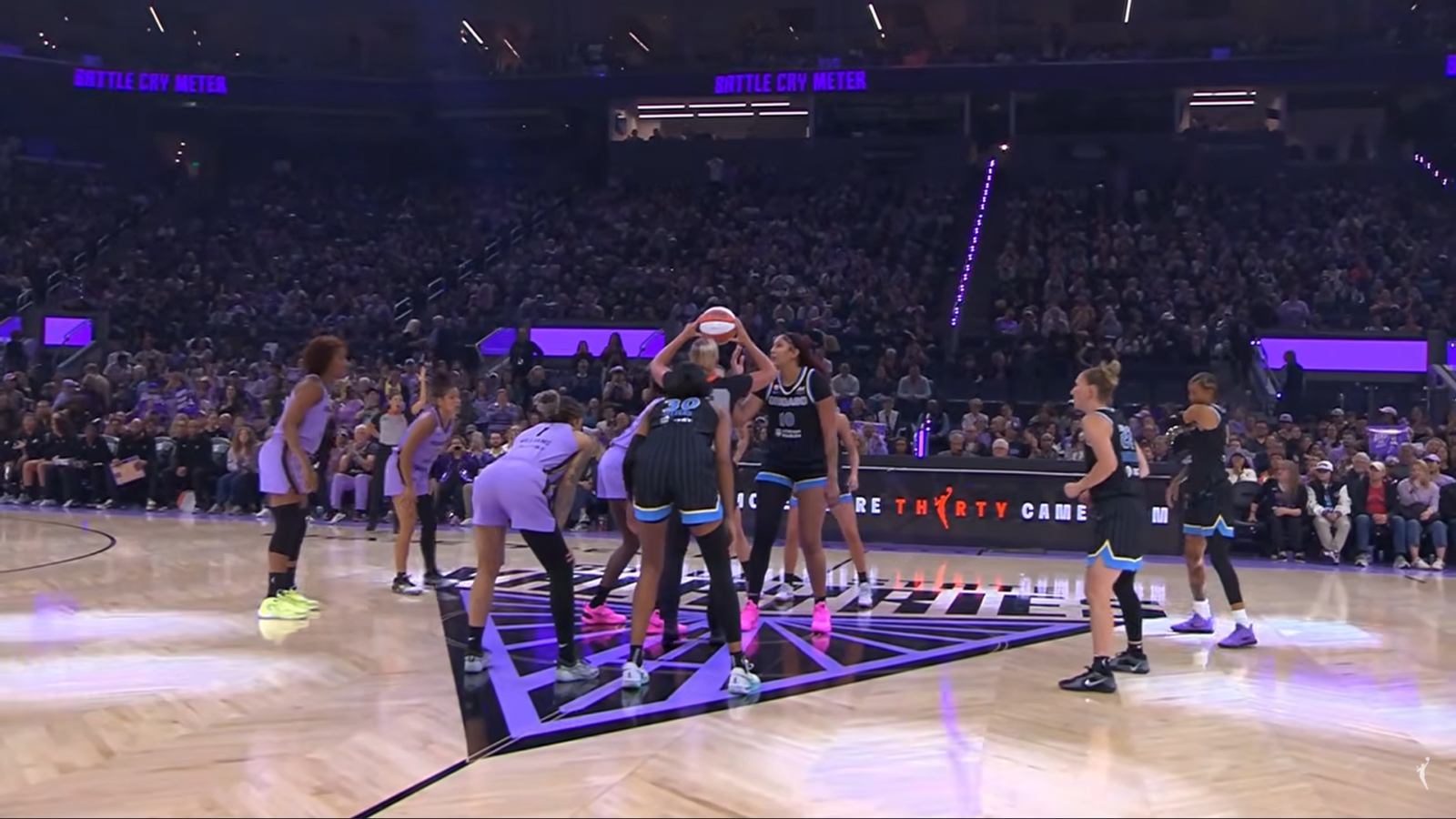
The WNBA is facing what some call the biggest crisis in its history: its leadership cannot agree on what defines a woman. That question was central to a Wednesday meeting of the league’s “task force” of general managers and team presidents, convened to discuss eligibility rules for transgender-identifying players. But after deliberation, participants failed to produce guidelines ensuring the women’s league remains exclusive to biological women.
Instead, the group issued a statement condemning what it called “bad-faith efforts to use these topics to demean or marginalize others,” a rebuke that seemed aimed at critics of allowing trans-identifying men to compete in women’s basketball. According to Fox News and ESPN, the league’s 2026 collective bargaining agreement does not define what a “woman” is, leaving the door open for continued ambiguity.

Players Speak Out
The debate has intensified in recent weeks, especially after Indiana Fever guard Sophie Cunningham voiced her concerns. “I got a lot of negative feedback about me hating trans. And I’m like, ‘I never once said that,'” Cunningham told ESPN. “I think that I am here to extend love. But I also think with that love is truth, being honest. And I want to protect young girls in a locker room, or young girls in sport who shouldn’t have to go against biological men.”
Rather than rallying behind Cunningham’s stance, many within the league attacked her, while others, including breakout star Caitlin Clark, chose to sidestep the issue entirely. The timing has been notable: both Cunningham and Clark have faced several hard fouls in recent games. Cunningham was recently dragged to the ground by her neck by Chicago Sky guard DiJonai Carrington, who was ejected and later attributed the incident to “white privilege” on social media. Carrington has since denied that she ever claimed the foul was about white privilege.
New Draft Entries
Adding fuel to the fire, former NBA players Enes Kanter Freedom and Royce White have declared for the 2027 WNBA draft, ostensibly identifying as women to qualify. Their entries underscore the league’s unresolved policy, as the task force’s inaction leaves the door open for such applications.
Critics argue that the league’s failure to define “woman” undermines its stated mission and the safety of female athletes. Supporters of the task force’s cautious approach contend that the issue is complex and requires deliberate consideration. Yet, with the 2026 CBA lacking clarity and high-profile players calling for protection, the WNBA finds itself at a crossroads — one that could shape the future of women’s professional sports.
Source: thefederalist.com — https://thefederalist.com/2026/08/13/womens-national-basketball-association-cant-decide-what-a-woman-is/