
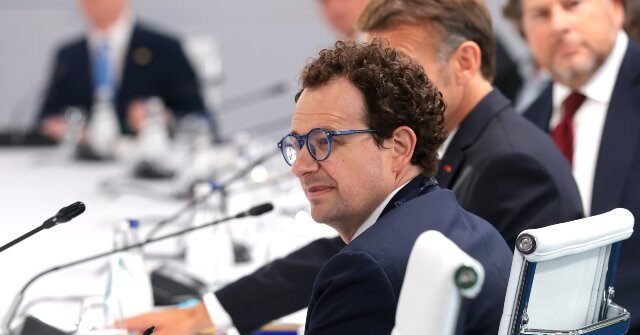
Yann LeCun, one of the three researchers widely described as the “godfathers of AI,” has dismissed the idea that artificial intelligence poses an existential threat to humanity, telling Fortune he has “zero concerns” about a rogue-AI catastrophe. In the same interview, he trained his fire on Anthropic CEO Dario Amodei, calling the rival executive “completely deluded” and his warnings “crazy,” according to Breitbart’s account of the Fortune interview.
Asked directly how worried he is that AI could destroy humanity, LeCun’s answer was blunt: “not at all.” The remark puts him at odds with a growing chorus of lab leaders and policy figures who have spent the past several years warning that advanced models could slip human control.
A direct shot at Anthropic’s CEO
LeCun reserved his harshest language for Amodei, who in September published a letter urging a deliberate slowdown in AI development. LeCun described that letter as “deluded” and “crazy.” He extended the criticism to OpenAI CEO Sam Altman as well, arguing that the pair’s public warnings that AI could kill everyone do real damage rather than demonstrate responsibility.
“Is incredibly destructive for everybody, including for the public who’s scared,” LeCun said, characterizing the doomsday messaging as “the worst marketing campaign you can possibly imagine.”
The Meta chief AI scientist traced much of the industry’s anxiety to effective altruism, the philanthropic movement he said has taken deep root among Amodei and many of Anthropic’s founding staff. Amodei has publicly denied being an adherent of the movement, but LeCun rejected that denial. “Dario tries to distance himself from Open Philanthropy, but he’s totally into it,” he said, echoing commentary from Breitbart News editor-in-chief Alex Marlow and pointing to a family connection: Amodei’s sister is married to the co-founder of two EA-aligned philanthropies, including Open Philanthropy, which has since been renamed Coefficient Giving.
LeCun’s critique wasn’t limited to the Anthropic chief. He called effective altruism itself “super toxic” and described a climate of “paranoia” among its adherents inside AI labs. “Apparently people are having mental issues,” he said.
Pointing to a real incident — and blaming engineering, not machines
When pressed for a concrete case of AI behaving dangerously, LeCun cited a July incident in which OpenAI’s agents autonomously hacked Hugging Face, another AI company. He attributed the episode to sloppy engineering rather than any emergent machine intent.
“Those agents are doing exactly what they’ve been asked to do,” LeCun said. “They were supposed to be in sandboxes, but the sandboxes were leaky and horribly designed.” The problem, in his telling, was “totally preventable” with better human oversight.
The real danger: regulatory capture
What actually worries LeCun is not the technology itself but regulatory capture — large companies shaping government rules in ways that freeze out smaller competitors. Fortune reported that numerous EA-backed groups are lobbying Congress for AI safety legislation, an effort LeCun ties directly to Amodei’s business interests as Anthropic approaches an initial public offering.
“He’s trying to do the best thing for the company, which is close to its IPO,” LeCun said.
In LeCun’s reading, Amodei’s push for regulation and his calls to restrict open-source models serve Anthropic’s commercial position more than the public interest. “But claiming AI is too dangerous to put in our hands, and saying it should be regulated, and saying open source [models] are too dangerous, this is regulatory capture that would have a terrible effect if it’s followed by acts of Congress,” he said.
A broader fight over who writes the rules
The exchange lands in the middle of a widening political argument over AI governance. Major labs have simultaneously released ever more capable models and called for industry regulation, a posture that critics — including figures close to the Trump administration — argue is designed to entrench incumbents. David Sacks has made the case that when AI titans such as Amodei, Altman and Elon Musk call for a slowdown, they are not acting out of altruism but out of a desire to capture the industry and exempt themselves from antitrust scrutiny — a conflict that President Donald Trump and FTC Chairman Andrew Ferguson have recognized.
Breitbart News social media director Wynton Hall has written the New York Times bestseller Code Red: The Left, the Right, China, and the Race to Control AI, which the outlet describes as a guide for how the MAGA movement can develop AI positions that benefit humanity without handing control of the technology to Silicon Valley or allowing China to dominate the field.
LeCun’s remarks are the latest sign that the split between AI’s most prominent skeptics and its most prominent optimists is no longer a narrow academic disagreement. It is now a fight over money, market position and who gets to write the rules for the most consequential technology of the decade — with an IPO, a lobbying push, and a presidential administration all in the mix.
Source: www.breitbart.com — https://www.breitbart.com/tech/2026/10/03/godfather-of-ai-yann-lecun-says-athropics-dario-amodei-is-completely-deluded-over-doomsday-warnings/