
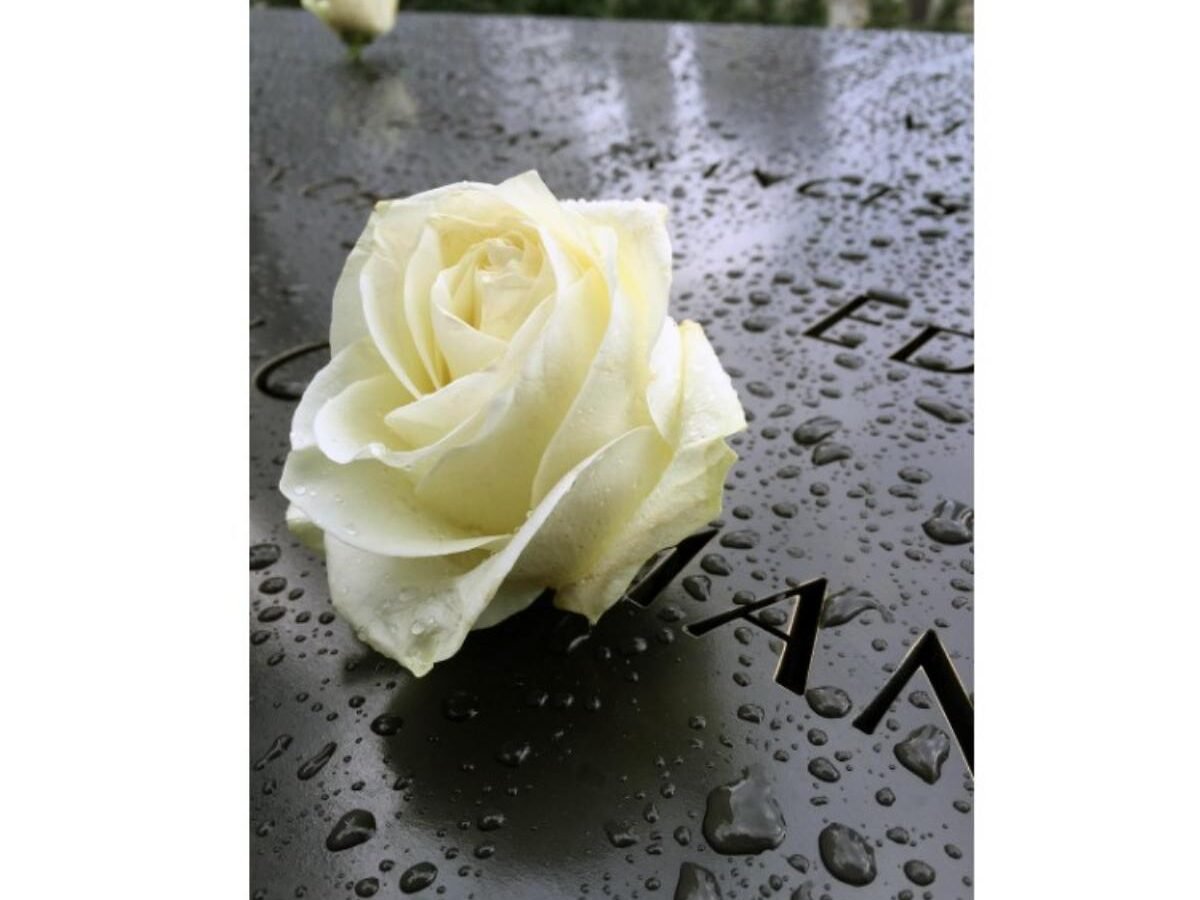
Twenty-five years after the September 11 attacks, the conservative outlet American Thinker has marked the anniversary not with a tribute to the dead or a retrospective on the wars that followed, but with an indictment — of the country’s own response. In a piece published September 11, 2026, contributor Eric Utter argues that the United States failed to answer what he calls the moral summons of that day.
Utter builds his argument on a line from author Mark Steyn: “demography is destiny.” He treats the claim as self-evident to anyone who studies history and geography, and uses it as the lens through which he reads the past quarter century. The thrust of the essay is that while America focused on the battlefield “over there,” it neglected the cultural and demographic battlefield “here.”
That framing is the emotional engine of the piece. “We were so focused on ‘there,’ we forgot about ‘here,'” Utter writes, insisting that the country was so intent on avoiding the “Islamophobic” label that it effectively surrendered rather than defend itself. The accusation is not aimed at any single administration. It is aimed at an entire national posture over twenty-five years.

What Was Lost
The essay walks through a list of what it treats as consequences rather than separate events: the withdrawal of American troops from Afghanistan, which Utter describes as an exit “in ignominy”; the near-disappearance of Christian communities in Iraq; the rise of Black Lives Matter and Antifa activism; prolonged pandemic lockdowns; and what he characterizes as a broader erosion of privacy. He presents these as a chain, not a coincidence — a quarter century in which the country drifted from the seriousness the attacks demanded.
Utter is particularly pointed about New York City, and about the office once held by Rudy Giuliani, who was called “America’s Mayor” after 9/11. He notes that a recent successor is a Muslim, describes that successor as a Marxist from Uganda, and says the office would be better suited to the mayor of Tehran, Kampala, or Ouagadougou. Later in the piece he returns to the same subject, referring to “the Ugandan mayor of New York City” winning election. Utter uses the same image for Dearborn, Michigan — a city he presents as a onetime auto-industry hub now, in his words, “a very short drive away” from being governed by Sharia law, and potentially on track to have few Christians left.
The through-line is Steyn’s second line, which Utter quotes with approval: “September 11th was a call to moral seriousness.” The country, he says, did not answer it properly.

Nostalgia for ‘Never Forget’ — and a Rejection of It
Utter recalls the posters and stickers that proliferated after the towers fell, some of them in government offices: “9/11/01—Never Forget.” His verdict on what happened to that sentiment is blunt. “We did worse than forget,” he writes. “We effectively surrendered.”
He is dismissive of the argument, made by many politicians in the years after the attacks, that the fight had to be taken to the enemy abroad so that it would not have to be fought at home. The stated logic was “we need to fight them over there, so we don’t have to fight them here.” Utter’s rejoinder is that “many of them over there came here” anyway, and that the country “didn’t lift a finger” in response. It is an argument about the limits of expeditionary war as a strategy for preventing domestic change — or at least about the gap between the promise and the outcome.
What remains, in Utter’s account, is a nation unwilling to make judgments. He observes that we may have “progressed” to the point where even mass murderers escape our condemnation, that a mother can kill all her children and be treated as a hero with a get-out-of-jail-free card. Against that, he sets what he sees as the one thing that will not relent: history. “Unlike us, history never sticks its head in the sand,” he writes. “History never takes a day — or a quarter century — off.” And his closing note is a warning: “History will judge us.”
An Essay in a Long Tradition of Anniversary Reckonings
What makes Utter’s column notable is not its policy content — there is little of that — but its insistence that the anniversary be treated as an occasion for accounting rather than consolation. He invokes President Obama as an accelerant of the changes he laments, linking to a satirical post he wrote in 2014, and frames the present as a moment when “far too many still cling to the bizarre notion that we are somehow on a holiday from history.”
The piece is written as a lament, and it is worth reading as one. Its claims about Dearborn, about the mayor of New York City, and about the state of Christianity in the Middle East are asserted rather than argued in detail; readers who accept the demography-is-destiny premise will find the rest of the essay follows naturally, while those who do not will find much to dispute. The one point that requires no interpretation is the emotional core: a quarter century on, the writer believes the country chose to move on rather than to take the call seriously.
Source: www.americanthinker.com — https://www.americanthinker.com/blog/2026/09/9-11-a-call-that-went-unanswered/