
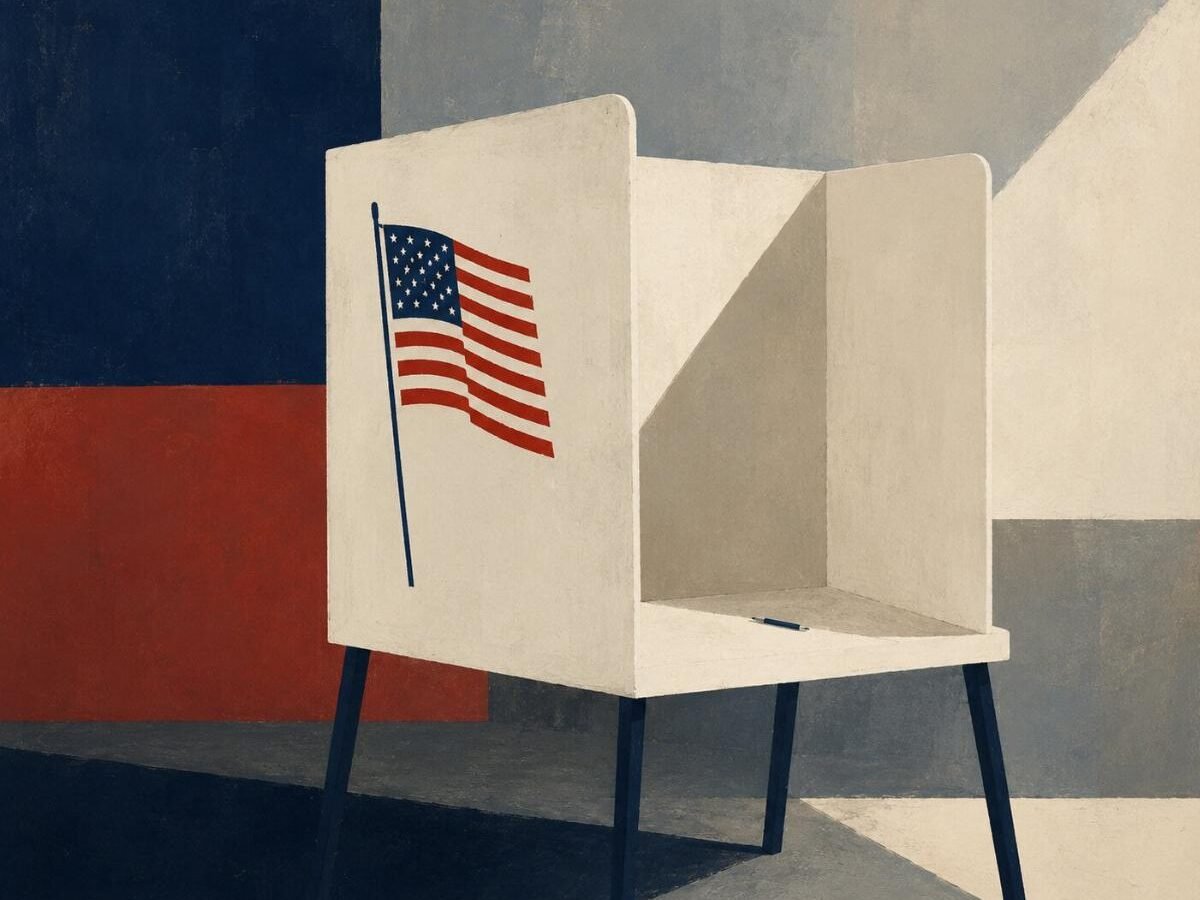
As the 2026 midterm elections approach, a prominent conservative voice is sounding the alarm that this November’s vote may be one of the most significant inflection points in American history. In a recent column published by American Thinker, commentator Rick Charles argues that the outcome will decide not just control of Congress, but the fundamental direction of the country—whether it continues on a path of limited government or lurches toward a socialist and more intrusive state.
The piece paints a stark contrast between the vision of the Founding Fathers and what it describes as the increasingly radical agenda of today’s Democratic Party. Charles invokes the Founders’ preference for a government that recognizes the rights of sovereign individuals, derived from a higher power, and balances those with equality and the rule of law. That vision, he contends, is at odds with the direction of the left’s proposals for the country.
Warnings of a Grim Future Under Democratic Rule
Charles warns that if the Democrats are victorious, Americans could face a future characterized by open borders, higher taxes, runaway inflation, rising energy costs, and diminished national and personal safety. He also predicts the expansion of a surveillance state working in concert with Big Tech, leading to the erosion of personal privacy.
The column goes further, suggesting that the left’s embrace of identity politics will continue to divide the nation by gender, race, religion, and political affiliation. It argues that the judicial system and the rule of law would be subverted, leading to the loss of individual constitutional freedoms. Moreover, Charles claims that political correctness is being used to restrict free speech, particularly suppressing conservative and opposition thought.
Education, he argues, would be increasingly dominated by left-wing orthodoxy rather than teaching vital life skills, while access to information through digital means would be controlled and censored by the state. The expansion of federal regulations would dictate every aspect of daily life, diminishing economic growth and increasing dependence on government, while the ruling class remains exempt from these consequences.
Comparing to a ‘Second American Revolution’
Charles asserts that the key objectives of current Democratic policy are to undermine the foundations of the country and replace its political system with one that is deeply involved in the personal lives of citizens. He goes so far as to characterize the party’s goals as a “second American Revolution” dedicated to socialism. He contends that the Democratic Party is more interested in seizing power by extraordinary means than in solving problems with practical, proven solutions, and that it has lost touch with the average American.
The article questions why the Democratic Party is advocating ideas that have failed elsewhere, especially when socialism is in retreat globally and populism is on the rise. The suggested answer is that the party lacks new, substantive, or innovative ideas.
A Mutable Government, Not a Revolution
Charles acknowledges that revolutions historically arise from intolerable oppression, failed leadership, lack of economic opportunity, and unpopular wars. But he argues that none of these conditions exist in the United States today. He points to the strength of the American form of government as being its mutability, capable of addressing pressing issues through the democratic process rather than through extreme overturn of the system.
The column criticizes the Democratic Party’s focus on identity politics, arguing that it reverses the good works of the civil rights movement and makes prejudice against groups such as white males, Jewish Americans, and observant Christians socially acceptable. It accuses Democrats of exploiting fault lines between groups for political gain, and questions what is “progressive” about fostering discrimination and promoting hate and violence.
The Call to Action
Charles ends with a call to action, emphasizing that the future of the country can still be decided by voters. He urges citizens not to be bystanders in these dangerous times, and declares that November 3, 2026, will be the day to “save America.” He emphasizes that the ability to speak freely is crucial to the republic, and asks readers to support American Thinker to help keep these ideas and voices strong.
As the midterm campaign intensifies, this column reflects a deep concern among conservative commentators about the future direction of the nation, framing the 2026 election as a crucial contest between two fundamentally different visions of governance.
Source: www.americanthinker.com — https://www.americanthinker.com/articles/2026/09/the-crucial-midterm-elections/