

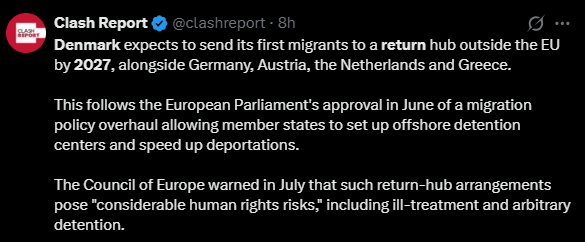
In a significant policy shift, five European Union member states are working to send migrants without legal residency to return hubs located outside the bloc by the end of 2027. Denmark, Germany, Austria, the Netherlands, and Greece — collectively known as the ‘Group of Five’ — are negotiating agreements with non-EU countries to host these centers, according to a report from The Gateway Pundit.
The move signals a hardening stance on immigration across parts of Europe, even in nations traditionally seen as more liberal on the issue. The plan mirrors a controversial approach championed by Italian Prime Minister Giorgia Meloni, who faced heavy criticism for sending asylum seekers to processing camps in Albania. That idea, once condemned, is now being adopted as a template by a broader coalition of EU states.
Denmark Pushing for Early Start
Denmark’s Immigration and Integration Minister, Morten Bodskov, said his country expects to begin sending the first foreigners to a partner country by the end of next year. Bodskov made the remarks ahead of a meeting in Copenhagen with counterparts from the other four nations to finalize concrete steps toward the bloc’s first partnership deal on a return-center arrangement.
‘We have come a long way in the work of establishing a return hub outside the EU, and we are now closer than ever before,’ Bodskov said in a statement. ‘That means that from the Danish side, we expect to be ready to send the first foreigners to a partner country by the end of next year,’ he added.
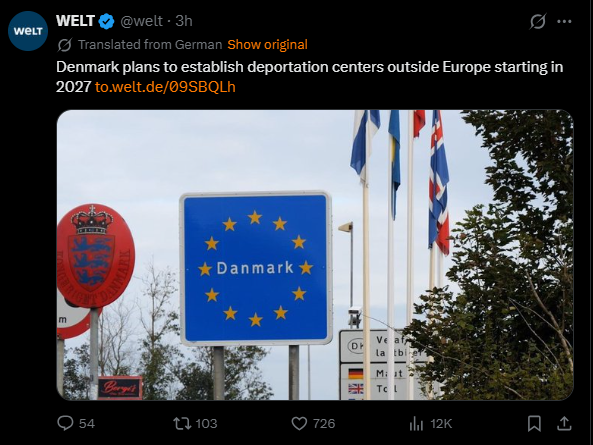
The five countries have agreed on a common model for deportation centers, which will be negotiated with non-EU governments. The first agreement is expected around the New Year, although the identities of the partner countries have not been disclosed. According to several press reports, Uganda and Rwanda are seen as the most likely possibilities.
Hubs Not Prisons, Officials Say
Officials from the participating countries have been careful to describe the hubs as something other than prisons or detention camps. The centers are intended to process individuals who have been ordered to leave the EU and facilitate their return to their home countries or another agreed destination.
Under the terms being discussed, the five EU nations are expected to fully finance the hubs and may also provide additional funding, commercial partnerships, or other incentives to partner countries. ‘A return centre scheme will be established through equal and mutually beneficial partnerships with countries outside the EU,’ reads a guiding principles document cited by The Gateway Pundit.
The new model is designed to produce a noticeable reduction in the number of people migrating illegally to the EU. Austrian Interior Minister Gerhard Karner stated, ‘Our common goal is pushing illegal migration towards zero.’
Shifting Political Winds
The development comes as support for the EU’s long-standing open-border policies wanes across the continent. Even countries with left-leaning or globalist-oriented governments are moving toward stricter controls on the entry and stay of failed asylum seekers, who are often categorized as illegal migrants.
The Group of Five’s plan marks a pragmatic attempt to operationalize returns, which have long been a stumbling block in EU migration policy. The bloc has struggled for years to deport individuals whose asylum claims have been rejected, often citing difficulties in securing cooperation from migrants’ countries of origin.
By establishing return hubs in third countries, the EU nations hope to streamline the process and make deportations swifter and more efficient. The centers would likely process individuals before they are repatriated to their home countries, although the exact mechanisms remain unclear.
The Gateway Pundit reported that Denmark has been at the forefront of this push, having previously joined forces with Italy to advocate for stricter immigration measures. The two nations have also pledged to protect Europe’s Christian cultural heritage, a stance that has drawn both praise and criticism.

Reaction and Next Steps
The announcement is likely to provoke a strong reaction from human rights groups and pro-migrant advocates, who have previously condemned such offshoring schemes as inhumane and legally questionable. Italy’s arrangement with Albania, for instance, faced court challenges and logistical difficulties before it was implemented.
Supporters of the plan, however, argue that it is a necessary response to overwhelming public pressure to reduce illegal immigration and ease the strain on national asylum systems. The move also reflects a growing sentiment among EU leaders that the bloc’s external borders must be more effectively protected.
Danish and Austrian ministers are expected to provide further details following their meeting in Copenhagen, where the group will finalize the guiding principles for the partnerships. The first agreement with a non-EU country is anticipated around the New Year, with the goal of having the hubs operational by the end of 2027.
The Gateway Pundit’s reporting cites official statements and press reports, but no partner countries have been confirmed. The identity of the non-EU hosts remains a key unknown, as do the legal and operational details of the arrangement.
As the EU grapples with one of its most divisive policy areas, the Group of Five’s initiative could set a precedent for other member states. Whether it succeeds in cutting illegal migration to zero remains to be seen, but the political will behind it appears stronger than ever.
Source: www.thegatewaypundit.com — https://www.thegatewaypundit.com/2026/09/denmark-germany-austria-netherlands-greece-start-sending-illegal/