
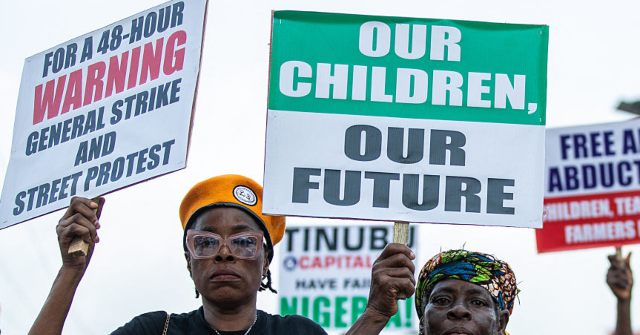
The International Criminal Court (ICC) has rejected a request to open an investigation into what the petitioner described as “systemic kidnappings in Nigeria,” according to reports in Nigerian media. The court’s Pre-Trial Chamber II dismissed the filing this week, ruling that the petition lacked “any legal basis.”
The decision has sparked a sharp rebuke from Nigeria’s government, which argued the ICC should never have entertained the request in the first place. Justice Minister Lateef Fagbemi issued a statement expressing “serious concern” that the court had assigned the anonymous submission to a pre-trial chamber, rather than routing it to the ICC’s prosecutor’s office — a position that is currently vacant.
The ICC has been without a permanent prosecutor since Karim Khan, who gained international attention for pursuing cases against Israeli Prime Minister Benjamin Netanyahu and Russian President Vladimir Putin, was suspended in late 2024 over allegations of sexual misconduct, which he has denied. Deputy prosecutors Mame Mandiaye Niang and Nazhat Shameem Khan are currently running the office.
Nigeria’s Growing Kidnapping Crisis
Nigeria, a country nearly evenly divided between Christians and Muslims, has endured more than a decade of violent extremism targeting Christian communities in the north and Middle Belt. Groups such as Boko Haram and the Islamic State West Africa Province (ISWAP) — a Boko Haram offshoot — have carried out mass kidnappings, often killing men and abducting women and girls. In the Middle Belt, ethnic Fulani jihadists have been accused of seeking to displace indigenous Christian populations and seize their land, a threat the government has been reluctant to acknowledge.
The security situation has deteriorated to the point that kidnapping has become a widespread crime beyond jihadist circles. While terrorists originally used abductions to finance their operations, criminal gangs with no political ties have adopted the tactic, seeing how frequently families and governments pay ransoms.
Humanitarian group Open Doors has documented a sharp rise in abductions, reporting a 153 percent increase in incidents between October and December 2025 compared to the same period a year earlier. SBM Intelligence, a Lagos-based research firm, estimated that kidnappers of all affiliations earned over $5 million (nearly 7.8 billion Nigerian naira) between July 2025 and June 2026.
“For every ransom that is paid for a kidnapping incident, you are simply birthing another kidnapping incident,” security analyst Kehinde Giwa told the Associated Press in August.
The Rejected ICC Petition
The petition, filed by an anonymous individual, asked the ICC to investigate “systemic kidnappings in Nigeria as crimes against humanity.” It was submitted to Pre-Trial Chamber II, which granted it standing but declined to proceed, ruling that the filing had no legal basis.
However, Nigeria’s Justice Minister Fagbemi criticized the ICC’s process, arguing that the court’s president “improperly initiated a procedural process” by assigning the “unverified filing from an anonymous submitter” to a pre-trial chamber. He said the petition should have gone to the ICC Prosecutor’s Office first and insisted that addressing kidnappings falls under Nigerian law enforcement’s jurisdiction — even though police and military forces have spectacularly failed to curb the violence.
Government’s Stance Faces Scrutiny
Under President Bola Tinubu, Nigeria’s government has repeatedly denied there is religious discrimination or systematic persecution of Christians. Tinubu expressed outrage in October when President Donald Trump restored Nigeria to the U.S. State Department’s list of Countries of Particular Concern for religious freedom, declaring: “The characterisation of Nigeria as religiously intolerant does not reflect our national reality.”
Local observers say jihadist violence is often mischaracterized as “banditry” or petty crime, which obscures its true nature and hampers an effective response. Jabez Musa, a lawyer in the Middle Belt who spoke to Breitbart News under a pseudonym in August, explained: “When you give them the name ‘hoodlums’ or ‘bandits,’ then the criminality is not a severe one.”
“What we see here — these are people who are militant and they kill,” he said. “They come in their hundreds on their motorbikes and their fellow attackers on the bike and with their AK-47 machine guns and attack a village or a community, kill them, and either take over or kill them, come back again, then take over the place. So it is more than banditry; they are more than bandits.”
Musa added that the abduction problem has expanded beyond jihadist attacks because terrorist organizations have demonstrated that demanding ransoms pays off.
The ICC dismissal comes as Nigeria’s security crisis shows no signs of abating, with critics accusing the government of downplaying the violence and failing to protect vulnerable communities.
Source: www.breitbart.com — https://www.breitbart.com/africa/2026/09/04/international-criminal-court-rejects-request-to-probe-jihadist-kidnappings-in-nigeria/