
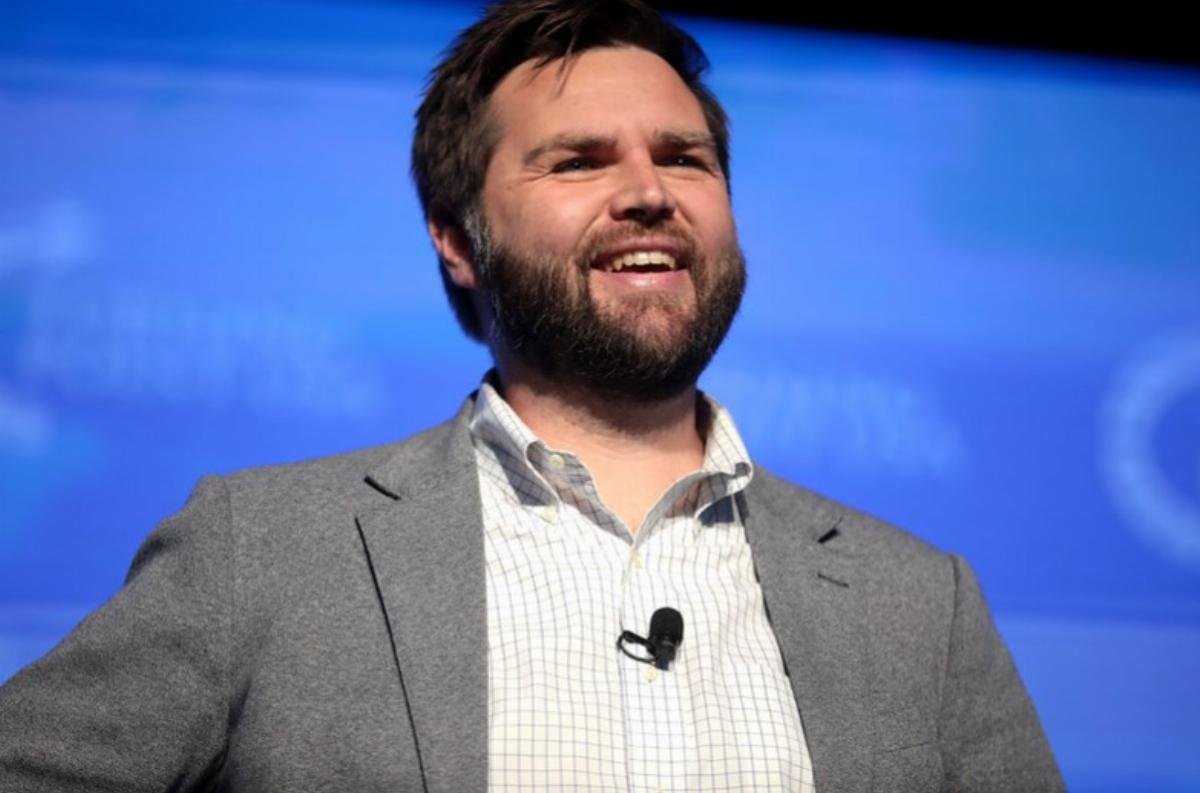
Vice President J.D. Vance has made his choice, and it’s a revealing one.
On September 3, standing in the White House briefing room, Vance refused to distance himself from Tucker Carlson. He acknowledged they are friends, conceded Carlson has said things he disagrees with — including remarks about President Donald Trump that Vance called “just wrong” — but insisted he would not “throw a friend under the bus” over political disagreements.
That sounds like loyalty. But critics, including the conservative outlet American Thinker, see something far less noble: evasion of a clear moral and political line.
A friend at war with the GOP
Carlson isn’t a disgruntled ally having a bad week. On June 18, he announced he would not support the Republican Party, calling it “disloyal” to the United States and “immoral.” He said it is not possible to vote for Republicans and expects others to follow him out the door.
He has accused the White House and Republicans of prioritizing Israel and big donors over American citizens — a charge he labeled “treasonous.” In his telling, America First has been abandoned in favor of foreign interests and campaign cash.
Trump has not taken this lying down. In April, he called Carlson “clueless,” “broken,” and “low-I.Q.,” noting Carlson never finished college and was fired by Fox News. Trump lumped him in with “lunatics and losers” who oppose strong action against Iran’s Islamist regime.
Vance, however, treats Carlson as an ally — and that relationship runs deep.
From mentor to defender
Carlson effectively made Vance. During the 2022 Ohio Senate race, Carlson gave Vance more airtime on his top-rated Fox News show than any other candidate, selling him as the working-class voice against endless wars. Carlson even called Trump to vouch for Vance, leading to Trump’s endorsement. In 2024, Carlson pushed for Vance as the GOP vice presidential nominee.
Now Vance returns the favor — but at what cost?
Carlson’s recent actions are hard to square with any notion of party loyalty. On August 28, he said Trump should be removed from office immediately over the theoretical use of nuclear weapons against Iran. He admitted he had opposed earlier impeachment efforts as “absurd,” but now asks why no one has moved to oust Trump.
On September 3 — the very day Vance defended their friendship — Carlson praised Abdul El-Sayed, the Democratic Senate nominee in Michigan, and said he would not vote for Republican Mike Rogers “at gunpoint,” calling Rogers a tool of Israel and the intelligence agencies.
The El-Sayed problem
Carlson’s endorsement of El-Sayed is particularly telling. El-Sayed has said that when he faces God, he wants to be able to say he took the path of sharia compliance. A documentary about his failed 2018 gubernatorial bid captured him asking filmmakers not to record his bookshelf, which held a book arguing that suicidal terrorism is not driven by Islamism, and featured commentary from a Muslim Brotherhood figure who called refusal to implement sharia “apostasy.”
El-Sayed has invested in sharia-compliant funds tied to a man identified by the FBI as a Muslim Brotherhood leader. He has not clarified whether his own daughters would follow sharia rules on courtship, marriage, and modesty.
Carlson, undeterred, called El-Sayed’s campaign “Trumpian.”
A pattern of hostility to Israel
Carlson’s animus toward Israel predates the current Iran conflict, according to watchdog groups. He has platformed guests who accuse Israel of blowing up churches and targeting Christians, claimed Israel steers American policy through donors and AIPAC, revived USS Liberty conspiracies, suggested Israel withheld 9/11 warnings, and pushed the idea that Israel starts wars to flood the West with refugees.
He has called Christian Zionists victims of a “brain virus” and has given airtime to a Holocaust denier.
This stands in sharp contrast to Republican voters. Gallup polling in February found 69 percent of GOP voters view Israel favorably, with 70 percent sympathizing more with Israelis than Palestinians.
The party’s establishment has also signaled that anti-Israel views are politically toxic. In the 2026 Kentucky House primary, pro-Israel groups and major donors spent more than $32 million to defeat Thomas Massie, a Carlson favorite and Israel critic. The message was unmistakable: contempt for Israel is political suicide in the GOP.
What does Vance gain?
Carlson has not been subtle about his frustration with Vance. In June, he said he feels sorry for Vance every day, claiming Trump has betrayed GOP voters and left Vance in an impossible position. His advice: march into the Oval Office, demand Trump change course, and threaten subversive press conferences if he refuses.
Vance’s response came from the White House briefing room: “He’s my friend.”
American Thinker argues this is not statesmanship — it’s weakness. The publication, known for its conservative perspective, says Vance’s loyalty makes him look either too weak to stand up to Carlson or, worse, a covert sympathizer with Carlson’s anti-Israel, anti-Trump agenda.
The piece also questions whether Vance needs Carlson more than he needs the Trump coalition that made him vice president. Carlson helped turn a memoirist into a senator and then vice president. That debt, it seems, is one Vance is unwilling to repay with distance.
Political risks ahead
The timing is especially delicate. A Harvard survey conducted August 28–30 shows Republicans leading Democrats 51–49 on the generic congressional ballot. If accurate, Democrats face serious midterm trouble. Carlson’s campaign against Trump and the GOP could undermine that momentum.
For Vance, the calculus is personal as much as political. He has called Carlson a friend, defended him, and refused to disavow him even in a closed-door July speech to the Republican Jewish Coalition, where he denounced antisemitism but declined to criticize Carlson by name.
As American Thinker frames it, a former Marine should know honor. Honor, the piece argues, is not publicly embracing a man who calls the president’s defense of the country treasonous. Honor is telling that man he is finished — not just in Republican politics, but in polite society.
Vance has chosen otherwise. Whether that choice costs him the 2028 nomination remains to be seen. But for many Republicans, the question is no longer whether Carlson is a problem — it’s why the vice president is standing with him.
Source: www.americanthinker.com — https://www.americanthinker.com/articles/2026/09/jd-vance-dishonored-himself-for-tucker-carlson/