
In an incendiary opinion piece published this week, American Thinker columnist J.R. Dunn poses a question certain to stir debate: What, exactly, is the difference between Magda Goebbels and Lindsay Clancy?
Dunn opens with a chance encounter — a viewing of a clip from Downfall, Oliver Hirschbiegel’s 2004 film depicting the final days inside Hitler’s bunker. That reminded him of the fate of the six Goebbels children, all murdered by their own parents in the spring of 1945 as the Third Reich collapsed.
Magda Goebbels was the wife of Joseph Goebbels, Hitler’s propaganda minister and a party member since 1923. They married in 1931, and the union was stormy. Dunn describes Joseph as physically small, with a club foot, and given to affairs — a parade of mistresses and one-night stands that infuriated Magda. Several times, the marriage teetered on dissolution, saved only by Hitler’s personal intervention.
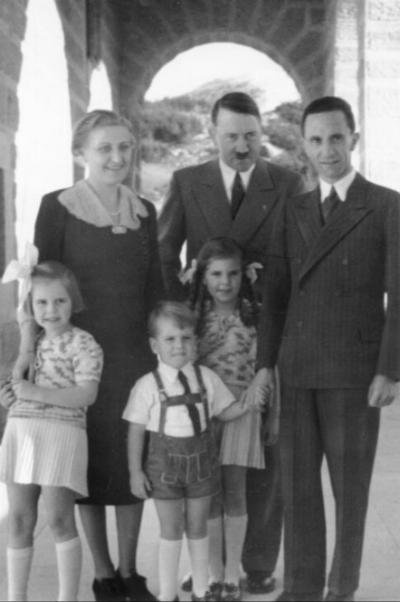
Despite the turmoil, the couple had six children — five girls and one boy. Hitler doted on them, and Dunn notes the existence of “extremely creepy photos” showing Hitler, in his chancellor’s uniform, playing with the toddlers.
As Soviet forces closed in on Berlin in April 1945, a rational parent would have sent the family to safety. Instead, Goebbels brought his wife and all six children into the damp, musty Führerbunker beneath the Reich Chancellery. Dunn speculates Magda may have insisted on that decision.
After Hitler’s suicide on April 30, Goebbels became acting chancellor. Knowing the Soviets would show no mercy, he and Magda opted for death — suicide for themselves, murder for their children. On May 1, SS dentist Helmut Kunz injected each child with morphine, and SS doctor Ludwig Stumpfegger administered cyanide. Twelve-year-old Helga evidently fought back; Russian doctors later found bruises on her face and neck. Dunn wonders aloud whether Magda merely watched or actively assisted the SS officers in killing her own children.
Magda died shortly after, shot by her husband, who then shot himself. Stumpfegger also committed suicide. Kunz survived, dying at 65 in 1976.
Then Dunn pivots to the case of Lindsay Clancy, the Massachusetts mother accused of strangling her three young children in January 2023 before attempting suicide. The case triggered intense public discussion around postpartum depression and the criminal justice system. Some commentators and activists have expressed sympathy for Clancy, framing her alleged actions as a product of mental illness exacerbated by inadequate support for new mothers.
Dunn, however, sees a far darker parallel. “Both committed a crime held to be universally vile,” he writes. “Both put in considerable planning and effort. Both were in the coils of an inhuman and murderous ideology. Neither showed anything resembling remorse.”
He dismisses those he derisively calls “pinkshirts” — a term he uses for feminists and left-leaning sympathizers — who reportedly assure the public that Clancy did nothing wrong. “Because if Clancy did nothing wrong,” Dunn argues, “it’s hard to see what crime we can accuse Magda Goebbels of committing.”
Dunn pushes the analogy further, contending that if Clancy is absolved, then so must be Magda Goebbels. And that, he claims, forces an uncomfortable conclusion: that the modern feminist vision is itself “another expression of the dark side of modernism.”
He reaches for grand historical comparisons: “Leftism has Stalin, Mao, and Pol Pot. Islamism has Osama bin Laden and Khomeini. Feminism has Magda Goebbels… and Lindsay Clancy.”
The only real difference, Dunn quips, is that Magda succeeded in killing herself via suicide-by-husband. “So that’s one for the Nazis.”
The column is deliberately provocative, as American Thinker opinion pieces often are. Critics are likely to note that comparing a mother accused of filicide to a high-ranking Nazi figure is hyperbolic and that Clancy’s case involves allegations of postpartum psychosis rather than ideological conviction. Dunn’s framing also glosses over the fact that the Clancy case is still before the courts, with her legal team pursuing an insanity defense.
Dunn’s rhetorical question — “What, exactly, is the difference between Magda Goebbels and Lindsay Clancy?” — is not really a question. It is an indictment, aimed not at Clancy alone but at a broader cultural movement he holds responsible. Whether his comparison will persuade anyone beyond his existing readership is doubtful. But it has already succeeded in one goal: forcing a confrontation with an unsettling question about moral accountability, gender, and the stories we tell ourselves about motherhood and violence.
As the article makes clear, Dunn is not interested in nuance. He concludes with a call to action, asking readers to support American Thinker’s mission of free speech — a sign that this essay is intended as a rallying cry, not a quiet meditation.
For those following the Clancy case, the column adds another layer to a tragedy that has already produced enormous grief and heated debate. Whether anyone will adopt Dunn’s extreme framing remains to be seen — but the question he poses is now on the table.
Source: www.americanthinker.com — https://www.americanthinker.com/blog/2026/09/how-lindsay-channeled-magda/