
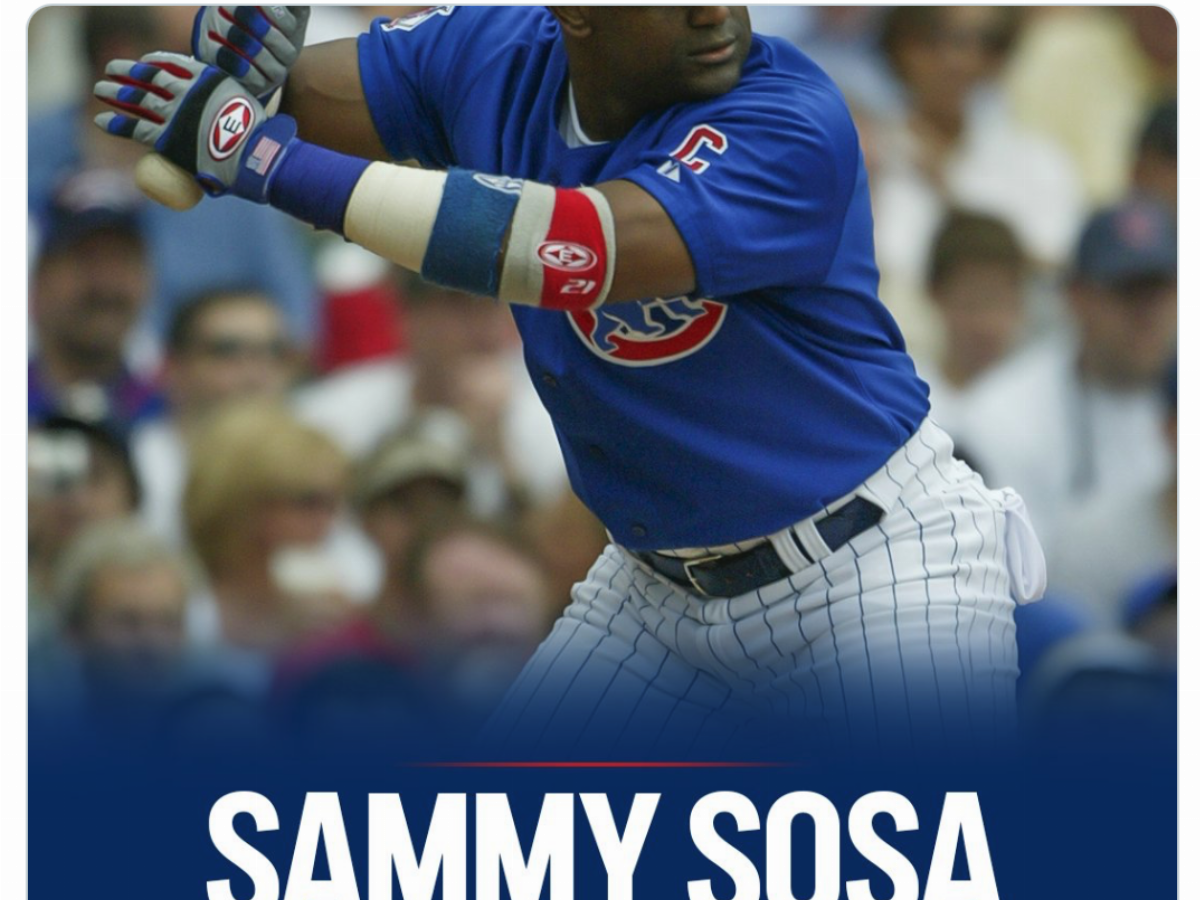
For baseball fans of a certain age, the summer of 1998 remains a golden memory — not just for the tape-measure home runs, but for what they allowed a weary nation to forget. In a reflective piece for American Thinker, Silvio Canto Jr. looks back at that extraordinary season with equal parts nostalgia and regret, remembering the joy of Sammy Sosa’s smile and Mark McGwire’s powerful swing against a backdrop of political scandal, global terrorism, and diplomatic failure.
What made the chase so captivating, Canto argues, was how unprecedented it was. Growing up in a baseball world where 50 home runs was considered a super season, he watched in disbelief as two players blew past the legendary marks set by Babe Ruth (60 in 1927) and Roger Maris (61 in 1961).
“It was so rare that only Willie Mays (52 in ’65), George Foster (52 in ’77), and Cecil Fielder (50 in ’90) did it over a 25-year span!” Canto writes, noting that just three players reached 50 homers between 1965 and 1990. Greats like Harmon Killebrew (49), Hank Aaron (47), Mickey Mantle (56 and 54 in the 1950s), Mike Schmidt (48), Reggie Jackson (47 in ’69), and Frank Robinson (49 in his 1966 Triple Crown year) defined power hitting in that era — yet none approached the 60-mark with regularity.
Then came 1998. McGwire hit his 62nd home run and embraced the Maris family in a national telecast shortly after Labor Day. Sosa followed him day by day through September, and by season’s end, McGwire had reached an unthinkable 69 and 70 homers on the final day of the regular season.
“It was incredible to watch McGwire and Sosa connect with the fans and bring baseball back from the unpleasant strike of ’94,” Canto recalls.
More Than a Game
But the home run chase was never just about sports. Canto paints 1998 as “a horrible year except for baseball,” listing the reasons Americans desperately needed that distraction.
On the local scene, his region endured one of the warmest summers on record — 29 consecutive days of 100-plus degree heat, peaking at 108 degrees, a stretch that even old-timers could not remember.
Nationally, the summer was dominated by the Monica Lewinsky scandal. By Labor Day, Canto writes, Americans were hearing about “oral sex” and White House interns. President Clinton’s behavior, he says, led to his impeachment in December. “I did not appreciate that,” he adds bluntly.
On the global stage, the news was even grimmer. Two US embassies were blown up in Africa, and Osama Bin Laden framed the attacks as another battle in a war against the United States — which Canto cites to debunk the notion that terrorists only became violent because of the Iraq invasion.
At the United Nations, Saddam Hussein kicked out weapons inspectors. Clinton went to the Security Council demanding a reaction, and Vice President Gore called Iraq a “virulent threat.” Nothing happened, Canto notes ruefully: “Saddam got away with giving the world the finger again.” By the end of 1998, he says, Saddam was a perfect 12-for-12 in defying UN resolutions, and was shooting at US planes enforcing those resolutions.
“So much for the theory that the UN was ever serious about the matter,” Canto writes, and “so much for the theory that Saddam never attacked the US.”
In that environment, McGwire’s moon shots and Sosa’s joyful sprints around the bases were not just entertainment — they were medicine.
The Asterisk That Followed
Of course, the story did not end happily. Canto remembers the bitter follow-up: both players were allegedly involved in the steroids controversy, testified before a congressional committee, and later admitted to steroid use. “What a shame,” he writes. “It was a great baseball summer.”
That admission shadows the legacy of the chase. The records still stand, but the innocence is gone. What remains, for Canto, is the memory of a moment when two athletes gave a distracted nation something pure to cheer for — even if the purity was, in hindsight, an illusion.
The piece serves as a reminder that sports, at their best, offer more than statistics. They offer a shared experience, a collective exhale, a reason to gather around the television and forget — if only for a few hours — the chaos of the wider world. In the summer of ’98, that was no small gift.
For those who lived through it, the image of Sosa and McGwire racing toward history remains a defining memory of a complicated year. For those who came later, it’s a cautionary tale about the stories we tell ourselves, and the ones we choose to believe.
Source: www.americanthinker.com — https://www.americanthinker.com/blog/2026/09/labor-day-1998-plus-sammy-mark/