
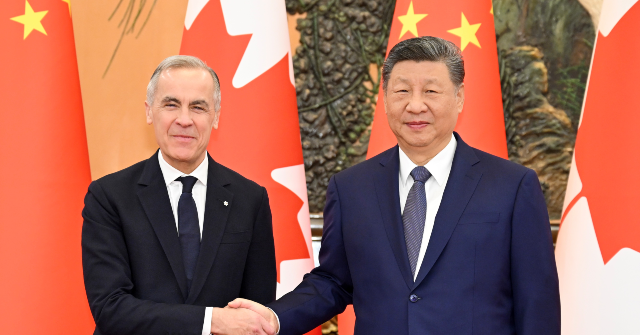
Canada has opened its first military talks with China in eight years, a diplomatic shift that comes as Ottawa finds itself increasingly at odds with the United States, according to a report from Breitbart News.
The new dialogue marks a notable departure from Canada’s recent posture toward Beijing, which had been defined by frosty relations and a suspension of high-level defense exchanges. The resumption of military conversations between the two countries underscores a broader realignment in Canadian foreign policy as tensions with its southern neighbor intensify.
Officials in Ottawa have not publicly detailed the agenda or the level of participants involved in the talks, but the very existence of the dialogue signals a willingness by the Trudeau government to re-engage with China on security matters—a step it had avoided since the relationship deteriorated over a series of diplomatic and commercial disputes.
A pivot away from Washington
The timing is striking. Canada has historically coordinated its defense posture closely with the United States, through NORAD, NATO, and a web of bilateral military agreements. But the past year has seen what many analysts describe as a marked cooling between the two allies, driven by disputes over trade, energy policy, and divergent approaches to China itself.
Washington has pressed its allies to take a harder line against Beijing, but Canada’s move to reopen direct military channels with China suggests Ottawa is carving out its own path—one that may not align neatly with U.S. strategic priorities in the Indo-Pacific.
The talks come amid growing frustration in Ottawa over what Canadian officials have described as inconsistent and sometimes heavy-handed American policy toward its northern neighbor. Trade disputes, particularly over softwood lumber and dairy, have simmered for years, but recent U.S. tariff threats and demands for renegotiation of key agreements have pushed the relationship to a new low.
Strained alliance, strategic consequences
Defense analysts note that the resumption of Canada-China military talks would have been unthinkable just a few years ago, when Canada was participating in U.S.-led freedom of navigation operations in the South China Sea and vocal in its criticism of Chinese human rights abuses. The Huawei dispute, in which Canada arrested a senior Chinese executive at Washington’s request, further poisoned bilateral ties with Beijing.
Now, with relations with Washington strained, Canada appears to be recalculating its strategic position. The move could be seen as an effort to diversify Canada’s security relationships and reduce its reliance on the United States, which has long been its dominant military and economic partner.
Chinese officials have welcomed the dialogue, describing it as a positive step toward rebuilding trust between the two nations. But Western security experts caution that Beijing will likely use the talks to test for divisions within the Western alliance and seek to peel Canada away from a more cohesive North American front.
Domestic political fallout
Within Canada, the decision has already stirred political debate. Opposition leaders have accused the government of abandoning its principles in a bid to appease Beijing and punish Washington. Conservative critics argue that engaging China on military matters while Canada’s own relationship with the U.S. flounders risks undermining decades of joint defense cooperation.
Supporters of the move counter that Canada must act in its own national interest and cannot afford to be pulled into every U.S.-China confrontation. They point out that Canada and China share significant commercial ties and that maintaining open lines of communication on defense issues can help prevent miscalculations in a region of increasing strategic competition.
What comes next
The talks are in their early stages, and it is unclear what concrete outcomes, if any, will emerge. But the very act of reopening the channel is significant, as it resets a relationship that had been frozen for nearly a decade.
For Washington, the development adds another layer of complexity to an already difficult alliance relationship. The U.S. has long assumed that Canada would stand with it on matters of great-power competition, particularly concerning China. That assumption is now open to question.
For Beijing, the talks represent a diplomatic win—a chance to demonstrate that not all Western nations are united against it, and that economic and political pressure can pull even close U.S. allies into a more neutral stance.
Observers will be watching closely to see whether the initial conversations lead to more substantive exchanges, such as visits by senior defense officials or agreements on information sharing. For now, the fact that Canada and China are speaking again at all is itself news—and a signal that the geopolitical map is shifting under Washington’s feet.
Source: www.breitbart.com — https://www.breitbart.com/national-security/2026/09/07/canada-opens-first-military-talks-with-china-in-eight-years-amid-hostility-with-u-s/